Choosing the right wall decor products to complement your home style
Learn how to pick wall decor that matches your home style and elevates every room.
Choosing the right wall decor products to complement your home style is less about chasing trends and more about reinforcing the vibe you want each room to convey. Whether your home leans minimalist, cozy, modern farmhouse, mid-century, or eclectic, the right wall accents can tie elements together and transform spaces with minimal effort. Below is a practical guide to help you select wall decor that truly fits your style.
Quick compare by wall decor style and function
| Style / Function | Key characteristics | Best rooms | Typical materials | Pros | Cons |
|---|---|---|---|---|---|
| Minimalist / clean lines | Sparse, functional | Living rooms, bedrooms | Metal, glass, wood veneer | uncluttered, modern | can feel cold |
| Boho / layered textures | Rich textures, layered patterns | Living rooms, hallways | Jute, woven fibers, natural wood | cozy, personal | can feel busy |
| Vintage / retro | Nostalgic motifs, aged finishes | dining rooms, study | Painted wood, brass, ceramic | characterful | may clash with modern |
| Gallery wall emphasis | Numerous small artworks | halls, stairwells | Framed prints, canvases | high impact | framing cost varies |
| Nature-inspired | Botanical motifs, earth tones | Bathrooms, bedrooms | Natural fibers, stone, wood | calming | themes can dominate |
Compiled November 2026; check the provider's site for current details.
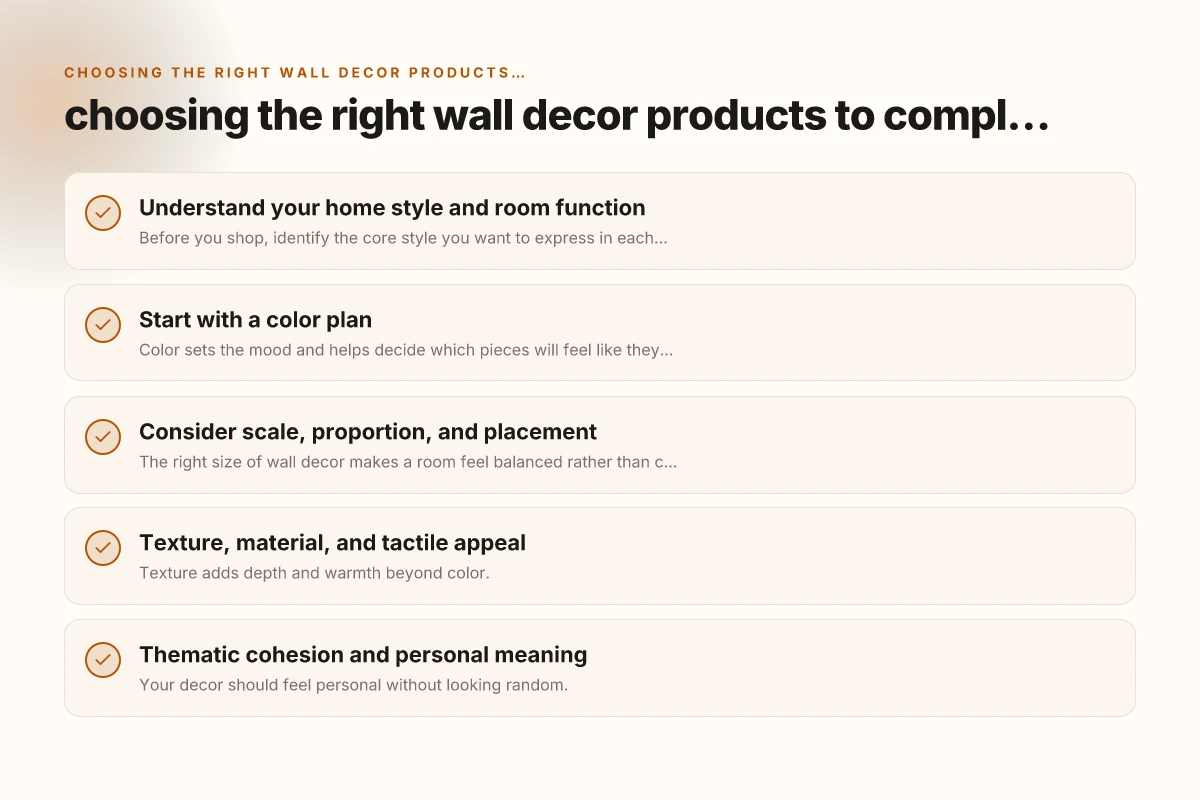
Understand your home style and room function
Before you shop, identify the core style you want to express in each space. This helps narrow choices and prevents clutter.
- Minimalist: clean lines, neutral tones, simple shapes
- Cozy or cottage: warm textures, soft colors, inviting imagery
- Modern farmhouse: a mix of rustic and refined, with natural materials
- Mid-century: bold silhouettes, retro-inspired pieces
- Eclectic: diverse textures and styles that feel curated, not chaotic
Also consider function. A study or home office may benefit from framed art that inspires, while a living room might lean toward relaxing, larger pieces. Bedrooms often favor calming hues and soft textures. Understanding purpose helps you pick decor that supports how you want rooms to feel.
Start with a color plan
Color sets the mood and helps decide which pieces will feel like they belong.
- Monochrome: choose variations of one color for a serene, cohesive look
- Complementary: pair a bold accent with neutrals to create contrast
- Analogous: use neighboring colors on the color wheel for harmony
- Accent pops: use a few brighter colors to energize a space without overwhelming
Practical color tips: Reasons to consider a patio fire pit for your home
- If your walls are busy or patterned, opt for artwork with simpler color schemes to avoid visual overload.
- In rooms with strong natural light, cooler tones can feel calming, while warm tones can create coziness.
- Use a color wheel to find harmonizing hues. Even a single piece with a contrasting color can act as a focal point.
Consider scale, proportion, and placement
The right size of wall decor makes a room feel balanced rather than crowded or hollow.
- Gallery walls: plan a layout with even spacing and a mix of frame sizes for visual interest.
- Large statements: a single oversized piece can anchor a wall.
- Symmetry vs. asymmetry: symmetric arrangements feel formal. Asymmetric layouts feel more dynamic.
- Ceiling height: for high ceilings, go larger or create vertical layouts that draw the eye upward.
Pro tips:
- Measure wall space, not the furniture, when planning a hang.
- Use templates or paper cutouts to test layouts before hammering a nail.
- Leave breathing room around art. Negative space helps pieces breathe.
Compare wall decor options by size, placement, and visual weight
| Option | Size range | Placement ideas | Visual weight | Placement cues | Notes |
|---|---|---|---|---|---|
| Large statement piece | 36-60 inches tall | Above sofa, focal wall | High | Centered, eye-level | anchor wall |
| Medium framed art | 18-30 inches | Side walls, above console | Medium | Group with other items | mix with negative space |
| Gallery of small works | 6-12 inches each | Corridor, stair wall | Varied | staggered or grid | cohesive framing helps |
| Textural wall panel | 24-48 inches | Accent wall | Medium to high | at eye level | adds dimension |
| Mirror or reflective piece | 20-40 inches | Opposite window, entry | Variable | maximize light | softens space |
Compiled November 2026; check the provider's site for current details. The appeal of custom finished furniture
Texture, material, and tactile appeal
Texture adds depth and warmth beyond color.
- Materials: wood, metal, fabric, glass, and natural fibers can convey different vibes
- Frames: sleek metal frames suit modern spaces. Rustic wooden frames fit farmhouse styles
- Textural art: textiles, fiber art, or canvas with visible brushstrokes add tactile interest
- 3D elements: wall sculptures, macramé, or relief pieces bring dimension
Mixing textures thoughtfully creates a layered look. For example, pair a glossy framed photograph with a woven wall hanging to balance smooth and tactile elements.
Thematic cohesion and personal meaning
Your decor should feel personal without looking random.
- Curate around a theme: nature, travel, or abstract shapes
- Repeat motifs: if you love circles, circles in different sizes and materials can unify a space
- Personal artifacts: a framed travel postcard, a family map, or a vintage find can anchor a room
- Seasonal rotation: swap pieces to refresh a space without a full redecor
Tip: create a “story list” of a few core motifs you want to see in each room. This helps you stay cohesive as you add new pieces over time. Why donating your furniture is one of the best decisions youll make
Quick comparison: wall decor options by style and function
| Style / Function | Typical Pieces | Best Rooms / Use | Pros | Cons |
|---|---|---|---|---|
| Minimalist | Framed monochrome photos, abstract line art | Living rooms, offices | Clean look, low maintenance | Needs careful spacing, can feel cold |
| Modern farmhouse | Framed botanicals, metal and wood combines | Kitchens, dining, family rooms | Warmth with refinement | Easy to overload if overused |
| Mid-century modern | Bold geometric prints, wood-framed art | Living rooms, bedrooms | Iconic style, strong focal points | Trends can date quickly |
| Eclectic | Mixed media, textiles, unconventional shapes | Any room with personality | Unique storytelling, highly personal | Requires a confident curatorial touch |
| Cozy / cottage | Soft textures, nature-inspired prints | Bedrooms, living nooks | Inviting, comforting | Can feel busy if not curated |
Note: The table helps visualize how choices align with style and function. Your space may blend several styles. Use the core idea of each row to guide selections that harmonize rather than clash.
Quick decision criteria by home style and room function
| Home style / room function | Color plan alignment | Scale suitability | Texture potential | Lighting impact | Personal meaning |
|---|---|---|---|---|---|
| Modern living room | Neutral base with accent | Large pieces welcome | Minimal texture | Bright, layered lighting | Less personal symbolism |
| Cozy family space | Warm hues | Comfortable, medium sizes | Rich textures | Soft, warm lighting | Family memories encouraged |
| Elegant dining area | Coordinated palette | Artful, balanced | Subtle textures | Layered, dimmable | Meaningful motifs welcomed |
| Calm bedroom | Soothing tones | Medium to small | Soft textures | Gentle, ambient | Personal keepsakes optional |
| Bright entryway | Contrasting accents | One or two bold pieces | Moderate texture | Strategic spot lighting | Welcome message themes |
Compiled November 2026; check the provider's site for current details.
Lighting and display considerations
Lighting dramatically impacts how wall decor reads. The top benefits of hiring a business interior designer
- Natural light: shows true colors but can fade art over time. Consider UV-protective mats or glass
- Artificial light: wall sconces, picture lights, or track lighting add drama and focus
- Battery-powered vs wired: battery options offer flexibility in rental spaces. Wired setups feel cleaner but require more planning
- Display height: hang art at eye level (roughly 57–60 inches from floor to center of piece for a standard wall)
Tips:
- Use lighting to highlight a statement piece. It can become the room’s focal point.
- If you have exposed beams or very tall ceilings, use vertical art or a tall sculpture to draw the eye upward.
How to shop with confidence
A thoughtful shopping approach saves time and ensures you end with pieces that truly fit.
- Create an inspiration board: collect images, color swatches, and samples that reflect your goal
- Set a budget per room: this helps you balance quality and quantity
- Start with one anchor piece: a large piece or a striking gallery wall can anchor the rest
- Buy strategically: prefer pieces you’ll love for years rather than chasing every trend
- Check returns and framing options: a piece that doesn’t suit your wall can be easily swapped if you have a flexible plan
Making the right choice also means knowing when to pause. If a piece doesn’t feel right after a few weeks, it’s often better to exchange or return rather than forcing it to work.
The recommendation: a practical plan to choose wall decor that complements your home style
- Define the style language per room: choose a primary style with a couple of supporting accents. This creates a consistent, intentional look across spaces.
- Build around a color strategy: select one or two base colors for walls and furniture, and then pick decor that echoes or pleasantly contrasts those hues.
- Plan the display as a small story: decide on a theme or motif, and curate pieces that reinforce that narrative. Don’t diversify so much that the story dissolves.
- Prioritize proportion and placement: measure walls, plan layouts, and test with templates. Ensure each piece has room to breathe.
- Add texture with variety: mix flat prints with tactile textiles or dimensional pieces to add depth without clutter.
- Treat decor as a living project: rotate elements with seasons or moods, and keep a small pool of go-to pieces that travel between rooms for cohesion.
If you’re unsure where to start, begin with a single anchor piece in a room, such as a large abstract canvas or a framed landscape. Build the rest of the arrangement around it with complementary pieces in similar tones and textures. Over time, you’ll see how small changes to artwork, frames, or placement can shift a space’s mood to align with your chosen style. The impact of the right office furniture on your business image
In short, choosing the right wall decor is about clarity, balance, and personal resonance. Start with your home’s core style and color direction, respect proportion and texture, and let personal meaning guide your curation. With a steady plan and thoughtful selections, your walls will tell a cohesive, inviting story that perfectly complements your home.