The impact of the right office furniture on your business image
How choosing the right office furniture enhances perception, professionalism, and performance.
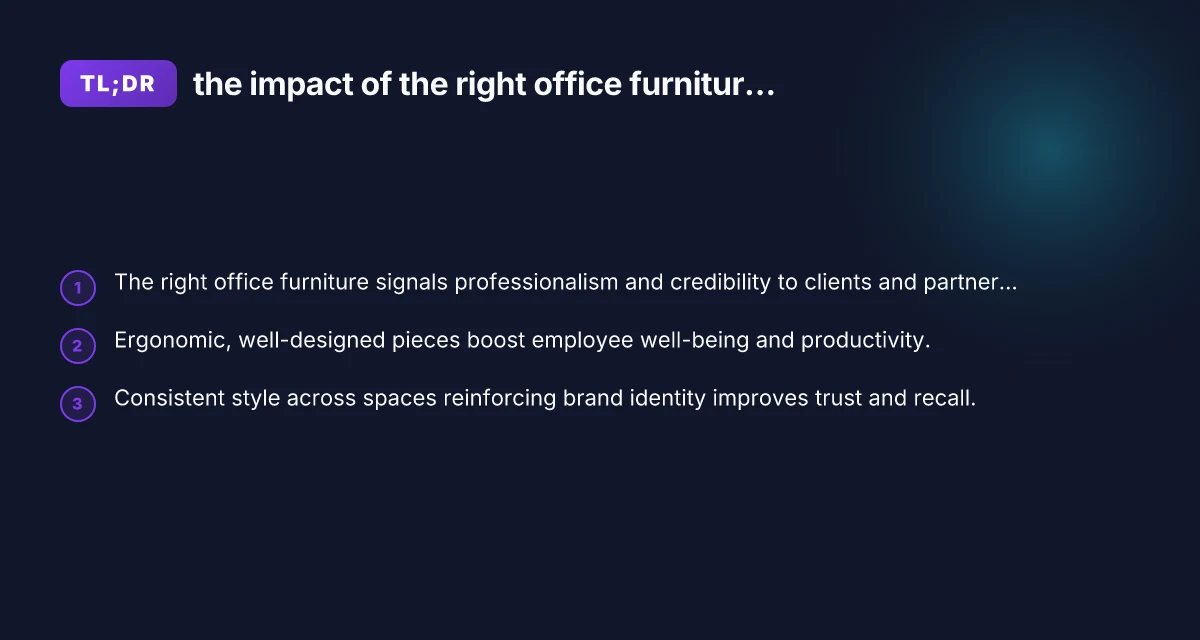
The image your business presents to clients, investors, and employees starts long before a single word is spoken. The right office furniture acts as a silent ambassador, projecting your brand values, signaling reliability, and shaping daily experiences. When you invest in furniture that fits your space, supports your people, and reflects your brand, you don’t just furnish an office, you craft an environment that communicates competence, care, and ambition. This article explores how the right office furniture impacts your business image and how to choose pieces that reinforce your message.
Compare key image drivers across furniture styles
| Style | Perceived professionalism | Brand alignment | Comfort level | Maintenance | Cost tier |
|---|---|---|---|---|---|
| Minimalist modern | High | Strong | High | Moderate | Mid to high |
| Classic executive | Very high | Very strong | Moderate | High upkeep | High |
| Scandinavian/soft | Positive | Moderate | High | Low to moderate | Low to mid |
| Industrial | Confident / edgy | Moderate | Moderate | Moderate | Mid |
| Luxury / premium | Premium | Very strong | Very high | High | Very high |
| Ergonomic ergonomic-focused | Practical | Moderate | Very high | Moderate | Mid |
Compiled November 2026; check the provider's site for current details.
What “business image” means in an office context
How furniture shapes perception
- First impressions are formed within seconds. The office environment is a major cue.
- Furniture conveys values: durability hints at stability. Modern lines hint at innovation. Warm materials suggest approachability.
- Consistency matters: mismatched pieces can erode trust and signal disorganization.
Brand alignment through physical space
- A branded look should extend beyond logos to color palettes, materials, and textures.
- The furniture should echo your brand personality, whether formal, creative, minimalist, or luxurious.
- Consider the customer journey: reception, meeting rooms, and workstations each tell a part of your story.
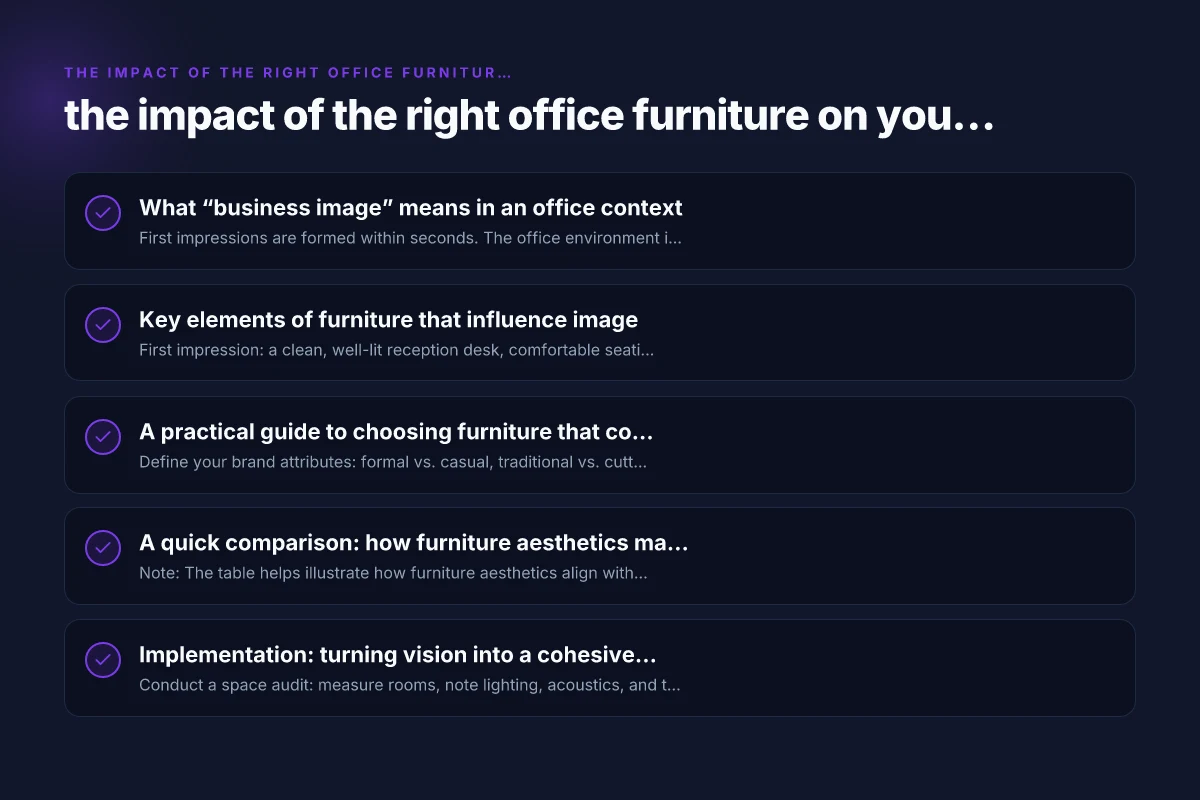
Key elements of furniture that influence image
Reception and guest areas
- First impression: a clean, well-lit reception desk, comfortable seating, and organized magazines or digital displays.
- Materials: wood tones for warmth, metal accents for a modern feel, glass for openness.
- Practicality: accessible layouts, easy-to-clean surfaces, and spaces for brochures or digital signages.
Workstations and collaboration zones
- Ergonomics: adjustable chairs, sit-stand desks, monitor arms, and cable management convey care for well-being.
- Style: cohesive desk systems or modular setups that align with brand colors.
- Flexibility: modular furniture for changing teams, project rooms, or pop-up collaboration spaces.
Conference rooms and executive areas
- Presence: a strong, well-proportioned conference table sets the tone for meetings.
- Acoustics: soft surfaces and appropriate panels help maintain professionalism during calls.
- Seating: comfortable, supportive chairs that promote long, productive discussions.
A practical guide to choosing furniture that communicates your brand
Start with a brand audit
- Define your brand attributes: formal vs. casual, traditional vs. cutting-edge.
- List color palettes, materials, and textures that reflect those attributes.
- Identify non-negotiables: durability, warranty, ergonomics, sustainability.
Material and finish choices
- Wood: conveys warmth and tradition. Dark woods for formality, lighter woods for openness.
- Metal and glass: signal modernity and efficiency. Best in tech or design-forward firms.
- Fabrics: performance fabrics for durability. Patterns should align with the brand vibe.
Color strategy
- Primaries and accents should match your brand palette.
- Neutral bases with branded color accents can keep spaces timeless and adaptable.
- Consider lighting: color perception shifts with daylight vs. artificial lighting.
Ergonomics and wellbeing as image drivers
- A healthy workforce is visible in productivity, attendance, and morale.
- Ergonomic furniture reduces risk of injury and signals that you value people.
- Adjustable items allow for inclusivity and flexible workflows.
Space planning and flow
- Reception to workspace transitions should feel seamless and welcoming.
- Meeting rooms should reflect a professional image without overwhelming the space.
- Storage and organization contribute to a tidy, efficient impression.
Practical criteria for selecting furniture to reflect brand
| Criterion | Description | Ideal match | Red flags | Notes |
|---|---|---|---|---|
| Brand values | What the brand communicates (tech, warmth, heritage) | Tech/modern = minimalist or glass | Clashing styles | Align with mission |
| Space efficiency | Use of space without crowding | L-shaped desks, modular | Overcrowding | Plan floor area |
| Material quality | Durability and feel | Solid wood, steel, high-grade laminates | Cheap veneers | Longevity matters |
| Finish and color | Visual tone | Neutral base with accent color | Mismatched finishes | Consistency key |
| Ergonomics | Worker comfort | Adjustable chairs/desks | Fixed nonadjustable | Impacts outcomes |
| Maintenance | Cleaning and upkeep | Easy-clean surfaces | Highly fussy finishes | Schedule needs |
| Cost impact | Total cost of ownership | Balance upfront and longevity | Cheap short-term | Consider warranties |
Compiled November 2026; check the provider's site for current details.
A quick comparison: how furniture aesthetics map to business perceptions
| Furniture Aesthetic | Business Perception | Ideal Use Case | Key Considerations |
|---|---|---|---|
| Warm wood, classic styling | Reliability, tradition, trust | Law firms, financial services, executive suites | Durable finishes, timeless design, proper maintenance |
| Sleek metal and glass | Innovation, efficiency, modernity | Tech startups, design studios, marketing firms | Balance with warmth to avoid coldness; acoustics matter |
| Light, minimal with soft fabrics | Approachability, openness, collaboration | Consulting, HR, customer service hubs | Comfort and ergonomics; avoid sterile feel |
| Bold colors and statement pieces | Creativity, bold brand personality | Creative agencies, media, fashion brands | Use as accents; maintain balance with neutrals |
Note: The table helps illustrate how furniture aesthetics align with business signals. Your selection should harmonize with location, client expectations, and the sensitive balance between brand identity and practicality.
Implementation: turning vision into a cohesive space
Step-by-step planning
- Conduct a space audit: measure rooms, note lighting, acoustics, and traffic flow.
- Define zones: reception, workstations, collaboration areas, private spaces, and breakout corners.
- Set a budget range and prioritize pieces by impact: seating and desks for daily interactions, then conference and lounge furniture.
Sourcing and standards
- Choose a consistent line or family of products that share finishes, materials, and hardware.
- Check warranties, safety certifications, and repair options.
- Think sustainability: recycled materials, responsible manufacturing, and end-of-life reuse.
Implementation timeline
- Week 1-2: finalize design, approve color palettes, order samples.
- Week 3-6: delivery, assembly, and layout adjustments based on site checks.
- Week 7+: final touch-ups, signage, and branding integrations.
Budgeting considerations
- Prioritize ergonomic, durable desks and chairs for daily impact.
- Allocate funds for a signature reception piece or a standout conference table.
- Reserve a portion for accessories: task lighting, plants, textiles, and wall art to soften the space.
The impact of right office furniture on business outcomes
- Employee engagement and retention: people feel cared for when equipment supports comfort and health.
- Client trust and perception: a polished, cohesive environment signals competence and attention to detail.
- Collaboration and productivity: well-designed spaces reduce friction and enable efficient meetings.
- Brand consistency: consistent furniture choices reinforce memory recall and brand recognition.
Quick scoring guide for decision-making across domains Why look for a quality mattress for everyday sleep
| Domain | Criteria | Low impact (1) | Moderate impact (2) | High impact (3) | Notes |
|---|---|---|---|---|---|
| Image alignment | Brand fit, style coherence | 1 | 2 | 3 | Weighs heavily for public spaces |
| Employee experience | Comfort, adjustability | 1 | 2 | 3 | Affects productivity and retention |
| Space planning | Footprint, modularity | 1 | 2 | 3 | Flexible layouts matter in evolving spaces |
| Maintenance burden | Cleaning ease | 1 | 2 | 3 | Consider cleaning schedule |
| Cost of ownership | Purchase + upkeep | 1 | 2 | 3 | Include warranties and lifespan |
Compiled November 2026; check the provider's site for current details.
Final recommendations
- Start with your brand story: define the mood, values, and tone you want the space to convey, then choose furniture to support it.
- Invest in ergonomics: adjustable chairs, sit-stand desks, and proper monitor placement are non-negotiables for wellbeing and image.
- Aim for cohesion: select a core furniture family or system that can be extended across reception, work areas, and meeting rooms.
- Balance beauty and practicality: attractive pieces are important, but durability, warranty, and service accessibility matter as much.
- Pilot and iterate: begin with a key area (e.g., reception or a flagship meeting room), gather feedback, and scale thoughtfully.
If you want a concise path to a branded, professional image, work with a furniture partner who can translate your brand attributes into a tangible space. Seek demonstrations or renderings that show how the final look aligns with your identity, client expectations, and everyday workflows. With careful selection and thoughtful placement, the right office furniture becomes a strategic asset, not just a purchase.