
Why donating your furniture is one of the best decisions youll make
Discover the benefits, impact, and practical steps of donating furniture to help people in need and reduce waste.
Donating furniture is more than a charitable gesture. It’s a practical, impactful choice that benefits you, your community, and the planet. If you’re asking why donating your furniture is one of the best decisions you’ll make, the answer is multi-layered: it provides immediate help to those in need, reduces waste, can offer tax advantages, and strengthens local networks. Below is a clear guide to understanding the value of furniture donations and how to do it well.
Comparison table of donation impacts by beneficiary
| Beneficiary type | Typical needs addressed | How furniture helps | Time to see impact | Common donation formats |
|---|---|---|---|---|
| Individuals in need | Shelter, seating, storage | Improves comfort and safety | Short to medium | In-kind, vouchers |
| Families relocating | Space efficiency, kids’ rooms | Supports stability, routines | Short | In-kind, donation drives |
| Seniors | Accessibility, caregiving space | Enhances independence | Short | In-kind, cash-in-kind |
Compiled November 2026; check the provider's site for current details.
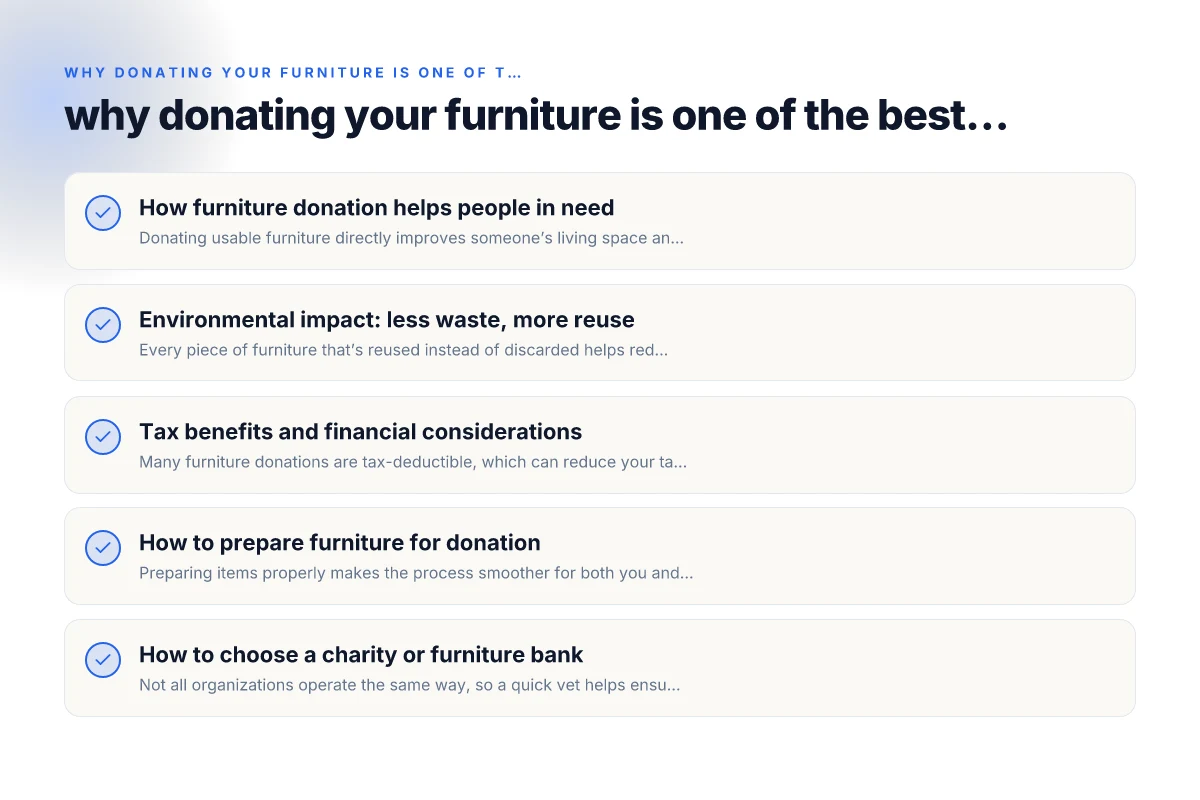
How furniture donation helps people in need
Donating usable furniture directly improves someone’s living space and comfort. If you or someone you know has ever rented or lived in crowded conditions, you’ve likely seen how a sofa, chair, or dresser can transform everyday life.
- Immediate relief: Furniture donations can furnish a bedroom, living room, or apartment, reducing the stress of starting anew.
- Dignity and stability: Access to a decent home environment supports mental well-being, study space for students, and a sense of stability for families.
- Community impact: When neighbors donate, it strengthens neighborhood ties and creates a culture of giving.
Common beneficiaries
- New renters and college students
- Families transitioning out of shelters
- Senior citizens moving to assisted living or smaller spaces
- Community housing programs and shelters
Environmental impact: less waste, more reuse
Every piece of furniture that’s reused instead of discarded helps reduce landfill waste, lower carbon emissions from production and disposal, and conserve resources.
- Resource conservation: Reusing furniture saves wood, fabric, metal, and energy that would be spent making new items.
- Pollution reduction: Fewer items in landfills means less methane production and chemical leaching.
- Circular economy: Donating supports a loop where products have longer lifespans and fewer wasted materials.
Practical tips to maximize environmental benefits
- Choose sturdy items in good condition, with minimal stains or smells when possible.
- Request a pickup or drop-off in one trip to minimize transportation emissions.
- Combine donations with a small spring cleaning to avoid extra trips.
Environmental impact of furniture donation
| Action | Reduction in waste | Reuse rate | Resource savings | Landfill avoidance | Certification / reporting |
|---|---|---|---|---|---|
| Donating usable items | yes | high | substantial | yes | provided by charity |
| Donating imperfect items | partial | moderate | limited | partial | varies by program |
| Recycling furniture components | yes | yes | yes | yes | program dependent |
Compiled November 2026; check the provider's site for current details. The top benefits of hiring a business interior designer
Tax benefits and financial considerations
Many furniture donations are tax-deductible, which can reduce your tax burden when you itemize deductions. It’s important to keep receipts and understand local regulations.
- Documentation: Get a written donation receipt with item descriptions and approximate value.
- Valuation: For larger items or high-value pieces, you may need an appraisal or a more detailed valuation.
- Local rules: Some regions allow higher deduction limits for charitable donations. Others have cap limits.
Note: Consult a tax professional and review the IRS or your country’s tax authority guidelines to maximize legitimate benefits.
How to prepare furniture for donation
Preparing items properly makes the process smoother for both you and the receiving organization.
- Clean and repair: Wipe surfaces, fix minor issues, and remove personal belongings.
- Make it safe: Ensure items are stable, with no sharp edges or hazards.
- Document condition: Take photos to verify condition and for your records.
- Include hardware and parts: If a bed frame or chair requires bolts or slats, include them.
What to donate vs what to discard
-Donate: Usable, clean, functional items in good condition. -Discard: Broken, heavily stained, unsafe, or unsalvageable pieces. The impact of the right office furniture on your business image
How to choose a charity or furniture bank
Not all organizations operate the same way, so a quick vet helps ensure your donation is used effectively.
- Mission alignment: Check that the charity focuses on furniture or home furnishings, not just general cash donations.
- Needs and capacity: Some programs rely on volunteers or have specific item requests.
- Transparency and accountability: Look for a charity that provides receipts, impact reports, and clear pickup/drop-off policies.
Quick comparison: furniture donation options
| Feature | Local charity thrift store | Furniture bank | Homeless shelter program |
|---|---|---|---|
| Primary purpose | Fundraising for programs | Rehousing and furnishing | Direct resident support |
| Pick-up availability | Varies; often limited | Often offers pickups | Usually accepts drop-offs |
| Tax receipt provided | Yes (typical) | Yes (often) | May vary |
| Item acceptance policy | Broad; sometimes restrictions | Specific lists | Dependent on program |
| Documentation for donors | Receipt and donation logs | Detailed appraisals sometimes | Receipt upon request |
Financial and tax considerations for donors
| Topic | Tax benefit | Documentation needed | Eligible items | Timing | Notes |
|---|---|---|---|---|---|
| Charitable donation of furniture | possible deduction | receipt, itemized list | new or used in good condition | annual tax filing | consult tax advisor |
| Valuation of items | standard deduction options | appraisals not typical | items over threshold | year-end | photos help |
| Donation drives via charity | no direct deduction for us | donation receipt | assorted items | at donation | check program rules |
Compiled November 2026; check the provider's site for current details.
Practical steps to donate today
If you’re ready to donate, here’s a straightforward plan. Why look for a quality mattress for everyday sleep
- Gather information: List what you want to donate, estimate value, and check item condition.
- Find a partner: Locate a reputable local charity, furniture bank, or shelter with clear donation guidelines.
- Schedule delivery: Arrange a pickup or drop-off window that fits your schedule.
- Get the receipt: Ensure you receive a donation receipt for your records and potential tax benefits.
- Follow up: If you can, ask how your items helped and consider volunteering time or spreading awareness.
Common obstacles and how to handle them
- Limited pickup schedules: Ask about weekend slots or alternative drop-off times.
- Large or heavy items: Enlist friends or hire a moving service. Some charities offer professional removal.
- Belts and borders of acceptability: Call ahead to confirm whether your items meet the charity’s guidelines.
The long-term value: why this is one of the best decisions youll make
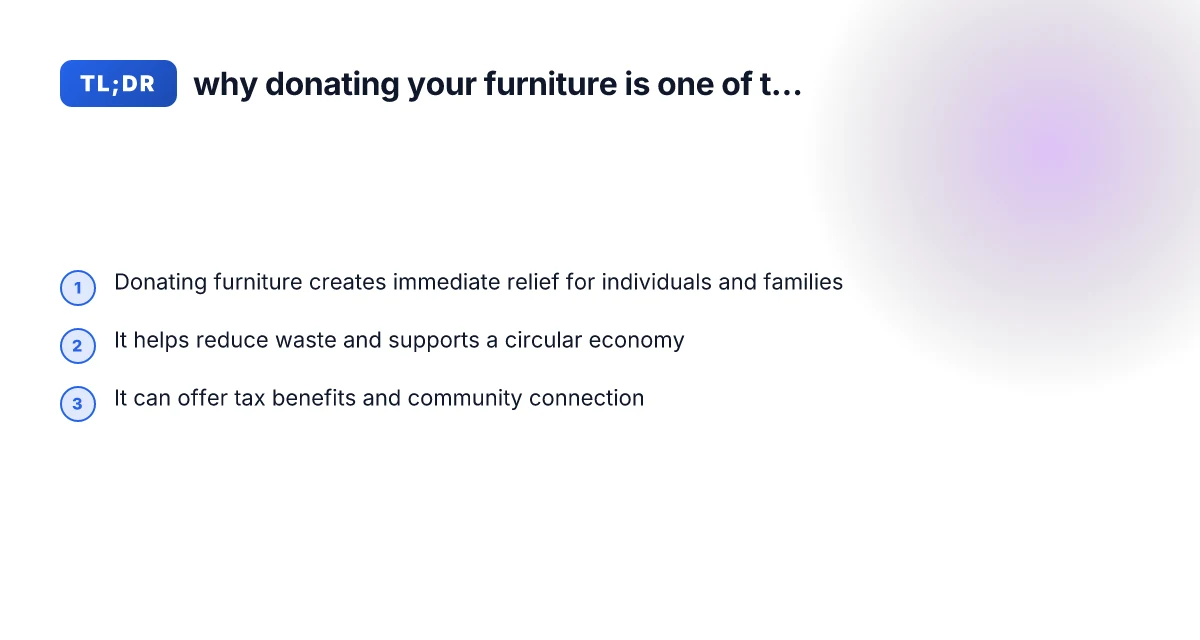
Choosing to donate furniture doesn’t just clear space in your home. It creates ripple effects across your community and the environment.
- Personal benefit: A tidy space can reduce stress, increase energy, and create a sense of accomplishment.
- Community benefit: Donations support people in need, enabling them to stabilize housing, focus on work or school, and improve overall well-being.
- Environmental benefit: Each donated item that goes to reuse reduces demand for new production, saving natural resources and emissions.
Final recommendation If you have usable furniture that could bless someone else’s home, donate it. Start by selecting items that are clean, safe, and functional. Research local furniture banks or charities, confirm pickup or drop-off options, and preserve a record of your donation. You’ll experience a clear sense of purpose, contribute to a healthier planet, and likely receive a tax benefit as a pleasant bonus. In short: donating your furniture is one of the best decisions you’ll make because it helps people, protects the environment, and strengthens your community, while also clearing space in your life for new possibilities.