Reasons to consider a patio fire pit for your home
Explore compelling reasons to add a patio fire pit, from ambiance and warmth to value, safety, and design versatility.
Outdoor living spaces have evolved into essential extensions of the home. A patio fire pit is a popular centerpiece that blends warmth, light, and social focus. If you’re weighing options for your backyard or deck, considering a fire pit can lead to a more usable, inviting, and stylish outdoor area. Below, we break down the strongest reasons to consider a patio fire pit for your home.
Comparison of fire pit types by placement and fuel
| Type | Placement flexibility | Fuel options | Aesthetic | Heat output | Maintenance |
|---|---|---|---|---|---|
| Wood-burning | High | Wood logs | Logs & flames | Moderate to high | Medium |
| Gel fuel | Medium | Gel canisters | Clean design | Low to moderate | Low |
| Gas (propane) | High | Propane tank | Modern | High | Low to medium |
| Built-in concrete/stone | Low to medium | Gas or wood (depends) | Integrated look | High | Medium |
| Tabletop / tabletop burner | Very high | Gel or propane | Compact | Low to medium | Low |
| Fire pit insert (existing pits) | Medium | Wood or gas | Varied | Medium | Medium |
Compiled November 2026; check the provider's site for current details.
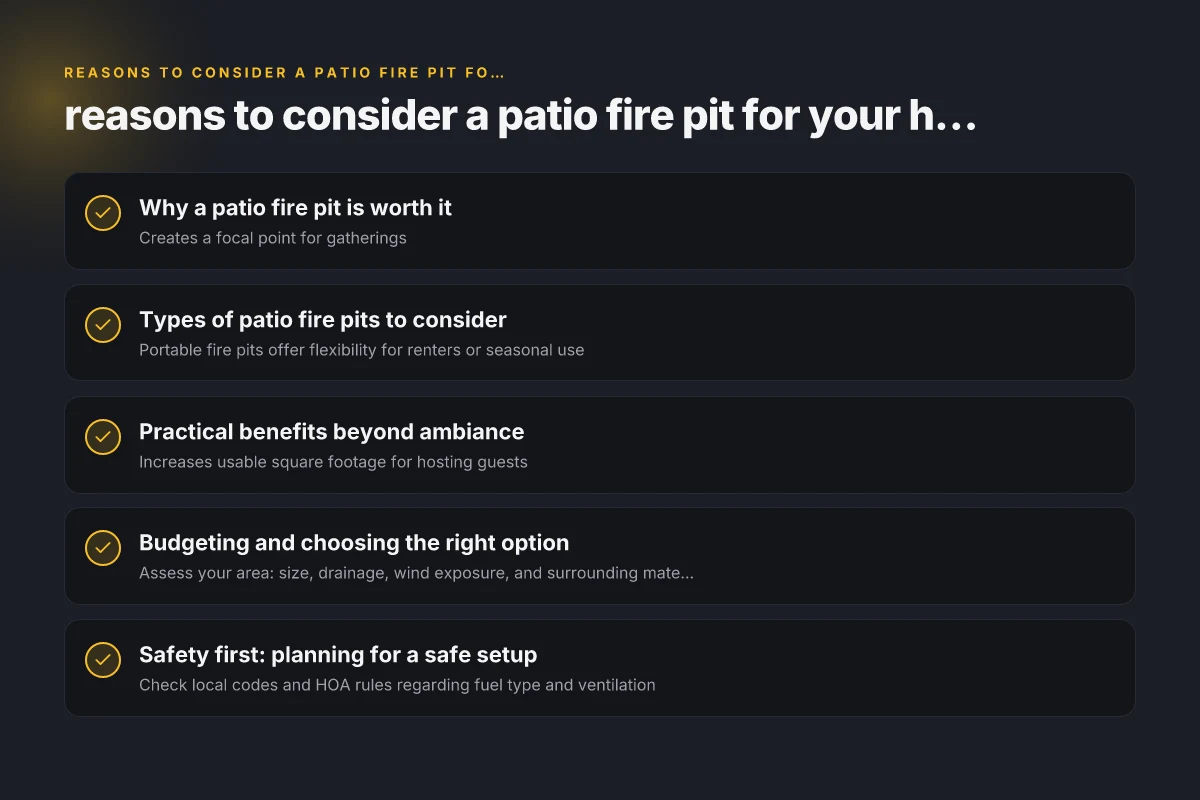
Why a patio fire pit is worth it
What a fire pit adds to outdoor life
- Creates a focal point for gatherings
- Extends outdoor entertaining into cooler evenings
- Encourages lingering and conversations rather than quick exits
- Sets a cozy mood with flickering flame and ambient glow
Usability through seasons
- Warmth on chilly nights makes outdoor spaces usable year-round
- Comfortable seating tends to stay out longer when a fire pit is nearby
- Winter gatherings can feel more intimate with a controlled flame
Design versatility and style
- Fire pits come in many shapes, sizes, and finishes to match your home
- Materials range from modern concrete to rustic stone, allowing seamless integration with existing aesthetics
- Accessories like spark screens, screens, and glass beads offer customization
Types of patio fire pits to consider
Portable vs. built-in
- Portable fire pits offer flexibility for renters or seasonal use
- Built-in pits provide a permanent, integrated look with higher resale appeal
Fuel options and safety considerations
- Wood-burning: classic crackle and aroma but requires more maintenance
- Gel or ethanol: cleaner burn with less mess but smaller flames
- Propane or natural gas: easy ignition and controllable flame height, but needs gas line or tank access
- Safety: choose products with proper lids, screens, and spark guards. Always follow local codes
Design categories
- Fire pits with seating: social layouts centered around heat and light
- Fire pit tables: functional surfaces for drinks and snacks around a flame
- Bowl or dish style: modern, low-profile silhouettes that blend with landscaping
Practical benefits vs ambiance and cost
| Benefit | Ambiance impact | Practical gain | Estimated cost impact | Longevity | Energy use |
|---|---|---|---|---|---|
| Aesthetics upgrade | High | Yes | Moderate increase | Long-term | N/A |
| Outdoor living space extension | High | Yes | Moderate to high | Long-term | N/A |
| Heating supplemental | Medium | Yes | High (if gas) | Long-term | Gas/propane or wood cost |
| Social centerpiece | High | Yes | Moderate | Long-term | N/A |
| Year-round use ability | Medium | Yes | Moderate | Medium to long | Fuel cost varies |
| Fire risk reduction with spark screen | Low | Yes | Low | Long-term | N/A |
Compiled November 2026; check the provider's site for current details.
Practical benefits beyond ambiance
Outdoor living and entertaining
- Increases usable square footage for hosting guests
- Encourages a relaxed, informal atmosphere, perfect for weekend gatherings
Value and curb appeal
- A well-chosen fire pit can boost perceived value and outdoor appeal
- Enhances photography and home viewing experiences for buyers
Safety and maintenance considerations
- Proximity to structures and low-clearance issues should be planned
- Clearances from furniture, railings, and plants are essential
- Regular cleaning of ash, debris, and gas lines ensures longevity
- Use heat-resistant mats or pavers to protect surfaces
Budgeting and choosing the right option
Cost ranges and what you get
| Option | Typical price range | Pros | Cons |
|---|---|---|---|
| Portable wood-burning fire pit | $150–$600 | Flexibility, classic aroma | Messy ash, requires wood and ventilation |
| Propane fire pit table | $400–$1,800 | Easy ignition, control flame | Needs gas source or tank management |
| Built-in gas fire pit | $2,000–$8,000+ | Sleek integration, higher value | Permanent installation, higher upfront cost |
| Gel/ethanol fire pit | $120–$500 | Clean burn, portable | Smaller flames, fragrance limited |
| Wood-burning built-in | $1,500–$5,000+ | Traditional feel, roasting marshmallows | Smoke, maintenance, creosote risk |
How to choose for your space
- Assess your area: size, drainage, wind exposure, and surrounding materials
- Consider climate: do you want year-round use or seasonal enjoyment?
- Determine maintenance tolerance: manual cleaning vs. gas line management
- Set a budget and compare total cost of ownership, including accessories
Budgeting and selecting the right option by priorities
| Priority | Best-fit option | Typical price range (USD) | Pros | Cons | Notes |
|---|---|---|---|---|---|
| Ambiance first | Gas fire pit | 500–2500 | Clean look, instant flame | Higher installation | Requires gas line or tank |
| Budget-conscious | Gel fuel table top | 50–200 | Very low cost, portable | Short burn time | Convenient for patios |
| Year-round warmth | Gas under-mitted / built-in | 800–4000 | Consistent heat | Higher upfront | Consider insulation |
| Realistic maintenance | Wood-burning with grate | 150–800 | Rustic feel | More cleanup | Fuel storage required |
| Space-limited patio | Tabletop or small bioethanol | 50–300 | Compact | Low heat | Safe indoors/outdoors |
Compiled November 2026; check the provider's site for current details. Why donating your furniture is one of the best decisions youll make
Safety first: planning for a safe setup
- Check local codes and HOA rules regarding fuel type and ventilation
- Maintain a clear radius around the fire pit, free of overhanging branches and flammable decor
- Use a spark screen or wind guard for unpredictable weather
- Store fuels safely and never leave a flame unattended
- Ensure smoke does not blow directly toward outdoor seating or indoor spaces
- Install carbon monoxide detectors if you’re using gas or gel alternatives indoors or near enclosed spaces
Environment and sustainability considerations
- Wood-burning pits produce more smoke and particulates. Consider alternatives if air quality is a concern
- Propane and natural gas burns are typically cleaner and more consistent
- Recycled or sustainable materials for the pit and surrounding seating can reduce environmental impact
- A well-placed pit can reduce the need for additional heating or indoor lighting
A maintenance mindset to keep it pristine
- Clean after each use: remove ash, wipe surfaces, and inspect for wear
- Cover when not in use to protect from rain and debris
- Inspect gas lines or cups regularly for leaks or damage
- Use heat-resistant sealants on stone or concrete to prevent cracking
- Schedule professional inspections for gas pits or complex setups
The final recommendation: should you add a patio fire pit?
If your home’s outdoor spaces lack a central gathering point and you value extended outdoor usability, a patio fire pit is a strong, worthwhile addition. It offers warmth, ambiance, social focal points, and potential value enhancement. The key is to pick the right type for your climate, lifestyle, and budget, while prioritizing safety, maintenance, and harmonious design with your existing outdoor aesthetic. For most homes, a well-chosen fire pit becomes a beloved feature that elevates evenings and weekend gatherings, turning a simple patio into a welcoming outdoor room.