
How to choose the right sectional for your home a comprehensive guide
A complete, practical guide to selecting the perfect sectional for your space, style, and budget.
Choosing the right sectional for your home can transform a room, creating comfort, footprint balance, and a cohesive style. This guide walks you through practical steps, from measuring to selecting fabrics, configurations, and accessories, so you end up with a piece that serves your everyday life and looks great doing it.
Space assessment and flow checklist
| Area to fit | Clearance needed | Traffic pattern | Door/aisle compatibility | Notes |
|---|---|---|---|---|
| Living room zone | 30–36 in | Avoid crossing paths | Measure for doors/windows | Detailed plan helps placement |
| Path width | 36 in min | Primary walkway | Swing clearance | Ensure no choke points |
| Window/sill intrusion | Yes/No | Light access | Privacy considerations | Align seating with light |
| Corner usage | Yes/No | Corner access | Avoid blocking outlets | Capable of partial wrap |
| Room proportions | Small/Medium/Large | Proportional scale | Visual balance | Use grid mockups |
Compiled November 2026; check the provider's site for current details.
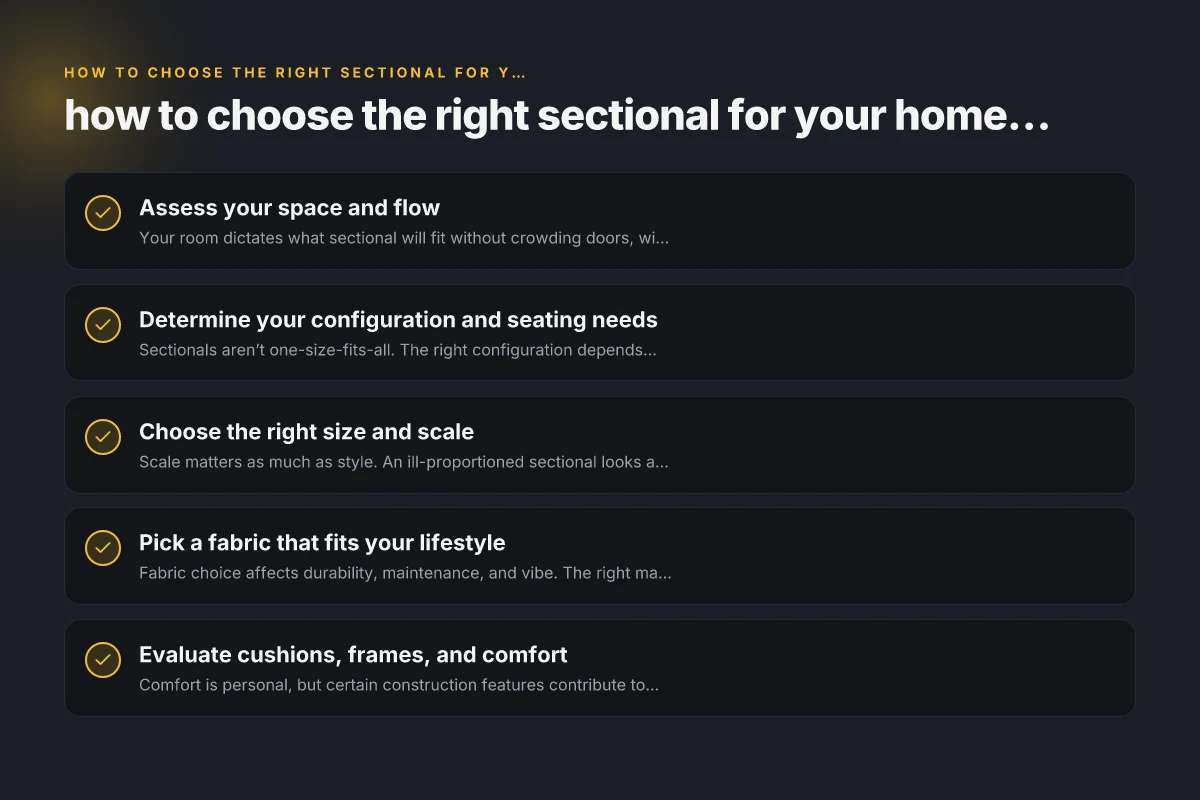
Assess your space and flow
Your room dictates what sectional will fit without crowding doors, windows, or walkways. Start with a floor plan and take exact measurements.
- Measure length, width, and ceiling height.
- Note doorways, stairways, and passageways the sectional must pass through.
- Consider clearance around the sofa for movement and other furniture.
- Decide if you need a left- or right-facing configuration (viewed from the seating area) or a modular setup.
Tips for space optimization
- Measure the available depth to ensure the sofa doesn’t intrude into the focal point (fireplace, TV, or coffee table).
- Leave at least 3 feet (about 1 meter) of clearance for traffic around the sofa and around other furniture.
- If you have a small space, consider a compact chaise or a sectional with a curved or armless end to reduce bulk.
Determine your configuration and seating needs
Sectionals aren’t one-size-fits-all. The right configuration depends on how you live.
- Classic L-shape: great for medium to large rooms and conversation-friendly layouts.
- U-shape or extended U: ideal for families, media setups, or entertaining.
- Chaise sectional: adds lounging space and softens a room’s lines.
- Modular: tailor the layout over time as needs change.
Questions to guide choices Discover the invaluable benefits of vehicle donation
- How many people do you regularly seat?
- Will you use the space for lounging, gaming, or formal seating?
- Do you need a sectional that can double as a guest bed? Consider a sleep-enabled sleeper feature or a chaise that converts to a bed.
- Is a built-in chaise necessary, or would a separate lounge chair suffice?
Choose the right size and scale
Scale matters as much as style. An ill-proportioned sectional looks awkward and can crowd a room.
- For a roomy living area, a large sectional can anchor the space without feeling overpowering.
- In a smaller space, a compact, low-profile sectional with light legs creates openness.
- If you have a focal point, such as a fireplace, place the sectional to face it while leaving clear sightlines.
Sizing tips
- Use painter’s tape on the floor to visualize the footprint before buying.
- Match the seat height to your other furniture for a cohesive look. Too-tall or too-short cushions disrupt comfort.
- Consider the depth of the seats. Deeper seats are cosier but can overwhelm a narrow room.
Pick a fabric that fits your lifestyle
Fabric choice affects durability, maintenance, and vibe. The right material depends on how you live.
- Performance fabrics: microfabric, synthetic blends, and solution-dyed fabrics resist stains and wear well in high-traffic homes.
- Leather or faux leather: durable, easy to clean, and gives a classic look. It can show scratches in high-use areas but resists spills.
- Linen and cotton blends: breathable and casual. They require more cleaning but offer a relaxed aesthetic.
- Velvet or boucle: add texture and luxury but may require more maintenance and regular brushing.
Maintenance basics Enhancing your living space with custom leather furniture
- Check cleaning codes and recommended treatments from the manufacturer.
- Use throw blankets and cushions to protect the fabric and prolong its life.
- For mixed fabrics, consider using a sectional with a durable fabric on the seating sections and a tougher fabric on the frequently touched areas.
Configuration and seating needs comparison
| Configuration | Typical seating | Conversation view | Cocktail/side tables | Storage options | Notes |
|---|---|---|---|---|---|
| L-shaped | 3–5 seats | Faces central focal point | Optional side table | Hidden storage possible | Great for corners |
| U-shaped | 6–8+ seats | Inclusive circle | Center table preferred | Built-in ottoman options | Social layout |
| Curved/arc | 3–4 seats | Broad sightlines | Compact side tables | Lightweight | Fluid space feel |
| Modular | 2–6 modules | Flexible arrangement | Mix of small tables | Moveable storage | Reconfigurable |
| Standard sofa + chaise | 3–4 seats | TV/view focus | End table(s) | Slim console | Classic setup |
Compiled November 2026; check the provider's site for current details.
Evaluate cushions, frames, and comfort
Comfort is personal, but certain construction features contribute to long-lasting support.
- Cushion fill: high-density foam or pocket springs offer better support and shape retention. Down or feather fills feel plush but require more care.
- Frame construction: kiln-dried hardwood frames are sturdy and durable. Engineered wood can be cost-effective but may not last as long.
- Seat depth and back height: deeper seats suit taller individuals. Taller backs provide neck support for lounging.
- Arm height and width: ensure arms complement your seating posture and don’t crowd the space.
Careful testing ideas Choosing the right wall decor products to complement your home style
- Sit for a few minutes to assess comfort: upper back support, seat depth, and leg room.
- Check for even sag or creases in cushions. Even wear indicates even support.
- Check the rebellion of the frame when you push on it, no creaking or wobbling.
Material and finish: matching style with function
Your sectional should harmonize with your decor while offering practical benefits.
- Style alignment: modern, transitional, traditional, or rustic aesthetics should guide color and silhouette choices.
- Color strategy: lighter shades brighten a room, darker tones create a grounded feel. Consider a mid-tone for versatility.
- Leg visibility: exposed legs can make a piece feel lighter. Hidden or blocky bases can read heavier.
Example color and style pairings
- Modern gray velvet with metal legs for a contemporary loft.
- Taupe performance fabric with walnut legs for a warm, timeless living room.
- Navy leather sectional with brass-tocked or wood accents for a sophisticated look.
- Light linen blend with white or light-wood legs for a fresh coastal vibe.
Table: quick comparison of common sectional configurations
| Configuration | Best for | Pros | Cons |
|---|---|---|---|
| L-Shaped | Medium to large rooms, conversation | Classic, versatile, site-friendly | Can dominate a room, may block traffic |
| U-Shaped | Large families, open-plan living | Lots of seating, intimate corner zones | Requires generous space, can feel overwhelming |
| chaise sectional | Small to medium rooms, lounging | Casual, luxurious lounging, saves space | Fewer seating configurations than full sofas |
| Modular | Any space, future-proof | Flexible, easy to reconfigure | May require planning to optimize layout |
Accessorize and coordinate with the room
A sectional often anchors a larger decorating plan. Accessories can elevate its look and function. Reasons to consider a patio fire pit for your home
- Rugs: anchor the seating group and define the space.
- Throw pillows and blankets: add color, texture, and comfort. Rotate seasonally for a refreshed feel.
- Coffee tables and side tables: ensure the table height is lower than the seat to maintain sightlines and usability.
- Lighting: layered lighting (overhead, ambient, and task) helps create a welcoming atmosphere around the sectional.
Budgeting and timing
- Set a budget range based on the total room plan, including delivery and potential protection plans.
- If you’re between two options, consider the longevity and warranty rather than the initial cost.
- Keep an eye on sales or manufacturer promotions to maximize value.
Size, scale, and room fit criteria
| Room size | Sofa length range | Depth/arm thickness | Proportion ratio | Ceiling height notes | Fit check |
|---|---|---|---|---|---|
| Small | 78–90 in | 30 in max | 0.5–0.6 ratio | Low ceilings | Visual proportion matters |
| Medium | 90–110 in | 34–38 in | 0.6–0.75 | Standard height | Balance with rug |
| Large | 110–140 in | 38–40 in | 0.75–0.9 | High ceilings | Allows multiple seating zones |
| Open-plan | Variable | Consider aisle width | Grouping effect | Connection with other zones | Coordinate with furniture layout |
| Compact apartments | 72–84 in | 28–32 in | Narrow footprint | Light and leggy frames | Avoid bulk |
Compiled November 2026; check the provider's site for current details.
How to decide: a quick decision checklist
- Do you have the space for the layout you want, with enough clearance for movement?
- Does the configuration accommodate your daily routines and gatherings?
- Is the fabric durable enough for your lifestyle and easy to clean?
- Does the cushion support feel comfortable and durable after a test sit?
- Does color and texture integrate with your room’s existing palette and lighting?
- Are you confident in the frame’s construction and warranty?
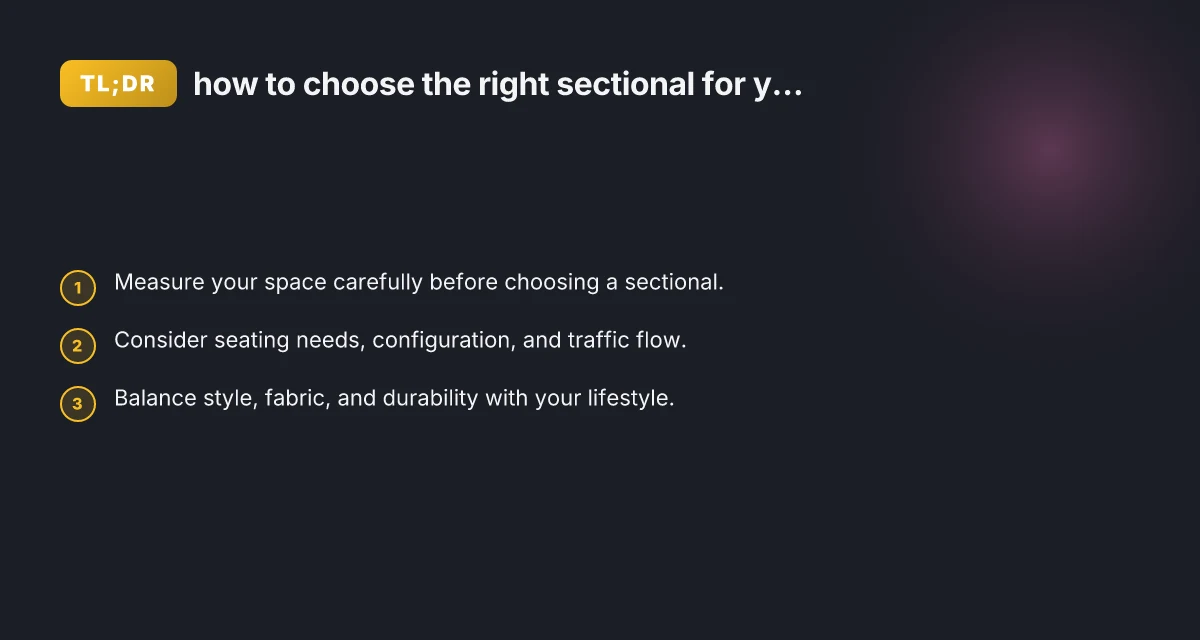
Final recommendation To choose the right sectional for your home, start with precise measurements and a clear sense of how you live in the space. Prioritize a configuration that suits your seating needs and traffic patterns, then balance fabric durability with your stylistic goals. Test comfort in-store or via samples, and size the piece to preserve flow and sightlines in the room. If you want a reliable, long-lasting option, favor a solid wood frame, high-density foam cushions, and a performance or durable fabric. For flexibility, a modular or sleeper option can grow with your home. By combining space planning, comfort testing, and fabric performance, you’ll select a sectional that feels tailor-made for your home. The appeal of custom finished furniture