Comfortable seating options to have in your hotel lobby
A practical guide to selecting and arranging comfortable seating options for welcoming hotel lobbies.
The lobby is the first conversation a hotel has with its guests. Comfortable seating options set the tone for a welcoming, functional space. From casual lounge chairs to modular sofas, choosing the right mix influences guest satisfaction, staff efficiency, and overall ambiance. This guide breaks down practical seating strategies, materials, layouts, and maintenance tips to help you design a lobby that feels instantly inviting.
Comparison of seating types by guest flow and zones
| Seating Type | Peak traffic suitability | Privacy level | Mobility access | Cushion firmness | Recommended lobby zone |
|---|---|---|---|---|---|
| Single-occupant armchair | High | Low | Easy | Medium | Quiet lounge corner |
| Sofas (2-3 seater) | High | Medium | Easy | Medium | Main waiting zone |
| Modular sectional | Very high | Medium | Easy | Medium | Open seating area |
| Benches / pews | Medium | Low | Moderate | Firm | Entry vestibule |
| Lounge chairs with ottomans | Medium | High | Easy | Soft | Quiet presentation nook |
| Club chairs | Medium | Medium | Easy | Medium | Private seating alcove |
Compiled November 2026; check the provider's site for current details.
1. Understanding guest needs and lobby zones
Hotels serve a diverse mix of guests, and the lobby should accommodate a range of activities. Key zones to consider:
- Arrival and check-in: quick access to reception, enough seating for short waits.
- Waiting areas: comfortable, supportive seats for longer stays.
- Work and social spaces: seating with surface options for devices and beverages.
- Private conversations: softer corners or semi-private nooks.
- Accessibility: seating that meets height, reach, and mobility needs.
Think in terms of micro-zones rather than a single, uniform seating area. This approach helps you balance flow, acoustics, and sightlines while preserving style.
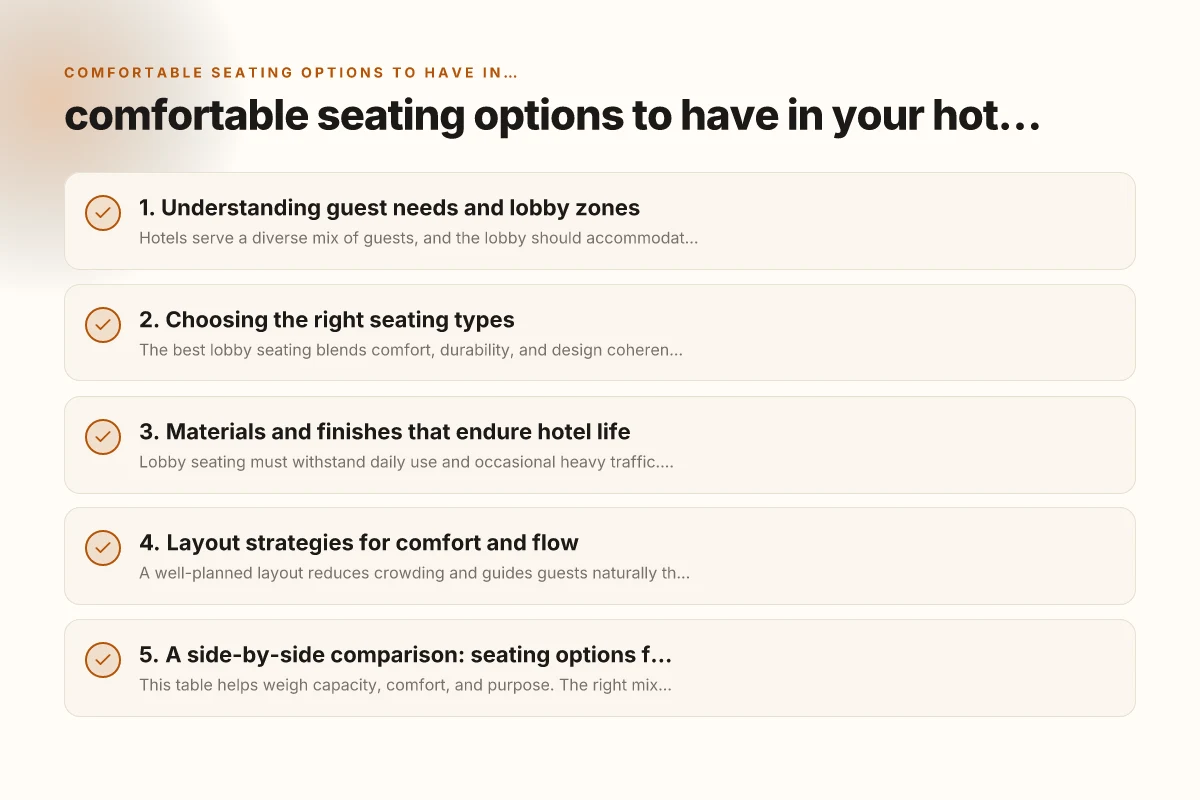
2. Choosing the right seating types
The best lobby seating blends comfort, durability, and design coherence. Consider a mix of these options:
- Guest lounge chairs: supportive, with generous padding and good back support.
- Modular sofas: flexible configurations that can be re-arranged for events or peak times.
- Club chairs and settees: create intimate areas without blocking pathways.
- Benches and ottomans: offer extra seating without overpowering the space.
- Sofas with power grommets: convenient for guests who work on devices.
- Bar-height stools at a coffee bar: quick-feel seating for a different activity cadence.
Tip: Prioritize ergonomic design and consider seat depth, height, and lumbar support to accommodate a broad range of guests. 2 Key elements to consider when choosing a luxury dining table set
3. Materials and finishes that endure hotel life
Lobby seating must withstand daily use and occasional heavy traffic. Practical material choices include:
- Upholstery fabrics: performance fabrics like synthetic blends, Crypton, or high-UV-rated weaves that resist stains and fading.
- Leathers: full-grain or corrected-grain leathers that develop patina and are easy to clean.
- Leather-like materials: vinyls or faux leathers for high-traffic zones.
- Surfaces: durable wood veneers, metal accents, and tempered glass for tables that won’t scratch easily.
- Cushions: high-density foam cores with a durable ticking. Consider antimicrobial covers for hygiene.
- Maintenance ease: choose colors and patterns that hide minor stains and wear.
Durability tip: select fabrics with abrasion ratings aligned to your expected traffic. For example, a double rub count above 30,000 is solid for commercial spaces; 100,000 rubs is excellent for heavy use areas.
Side-by-side comparison of materials and finishes
| Material/Finish | Durability (wear) | Stain resistance | Cleanability | Comfort feel | Maintenance needs | Indoor air quality impact |
|---|---|---|---|---|---|---|
| Textured fabric | High | Moderate | Moderate | Cozy | Moderate cleaning | Neutral |
| PU leather | High | High | Easy | Firm | Low maintenance | Neutral |
| Full-grain leather | Very high | Moderate | Moderate | Luxurious | Regular conditioning | Neutral |
| Performance fabric | Very high | Very high | Easy | Comfortable | Low | Neutral |
| Velvet | Moderate | Low | Moderate | Plush | Higher care | Neutral/soft |
| Wood veneer | High | Moderate | Easy | Lively | Occasional polish | Neutral |
Compiled November 2026; check the provider's site for current details. Signs you need a new mattress right now
4. Layout strategies for comfort and flow
A well-planned layout reduces crowding and guides guests naturally through the lobby. Useful guidelines:
- Clear sightlines: avoid blocking access to entrances, elevators, and the front desk.
- Adequate spacing: allocate 36–40 inches (91–102 cm) of walking room around seating clusters; 60 inches (152 cm) for aisles in high-traffic areas.
- Grouping: create 2–4 person clusters for social engagement, and larger sectional configurations for families or business travelers.
- Noise management: place soft seating away from loud pathways. Add acoustic panels to absorb chatter.
- Lighting: pair seating with layered lighting, ambient, task, and accent lighting to create inviting pockets.
- Accessibility: ensure seating is reachable by all guests, including wheelchair users. Keep a few spaces open and adjustable.
A practical seating composition could be a mix of 4-person modular sofas, single lounge chairs, and a couple of ottomans to foster flexible arrangements.
5. A side-by-side comparison: seating options for a midscale lobby
| Seating option | Best for | Pros | Cons | Ideal space type |
|---|---|---|---|---|
| Modular sofas | Large, open lounges | Flexible layouts, easy reconfiguration | Can look blocky if mismatched | Large lobbies, atriums |
| Lounge chairs | Quiet corners or accents | Comfortable, individual seating | Takes more floor space per person | Breakout corners, near windows |
| Club chairs | Intimate conversations | Solid support, premium feel | Limited capacity | Nooks, premium zones |
| Benches/ottomans | Quick seating, footrest | Low-profile, versatile | Less back support | Runways, entry vacuums, coffee zones |
| Sofa-chairs with tables | Work or casual chats | Built-in surface, versatile | Higher cost | Business zones, near outlets |
| Bar-height seating | Quick-service areas | Energetic feel, sociable | Not comfortable for long stays | Coffee bars, beverage corners |
This table helps weigh capacity, comfort, and purpose. The right mix varies by hotel segment: luxury properties may lean toward plush, generous configurations, while midscale hotels benefit from modular systems that flex with events.
6. Accessories and finishing touches that boost comfort
Small details elevate the comfort level without a big cost: Sanctuary setup: create a peaceful bedroom scene with home wall décor
- Textiles: add plush throw blankets and scatter cushions in varied textures (knit, velvet, faux fur) for tactile warmth.
- Micro-wrap cushions: mix firmness to balance long-stay comfort with support.
- Side tables and surfaces: place a mix of coffee tables, nesting tables, and occasional tables within reach of seating groups.
- Power and connectivity: ensure built-in USB ports and power outlets are discreetly integrated into tables or armrests.
- Noise dampening: introduce soft area rugs under seating clusters and consider acoustic wall panels or curtains to reduce echo.
- Greenery: incorporate low-maintenance plants to soften the area and improve air quality.
You’ll want to maintain a balance between visually striking and practical. Bold colors can anchor the space, while neutral bases help hide wear and coordinate with seasonal palettes.
Layout strategies for comfort, flow, and accessibility
| Strategy | Purpose | Typical footprint | Guest experience cue | Accessibility note |
|---|---|---|---|---|
| Zoning by activity | Guide flows | Medium | Clear purpose zones | Sufficient paths |
| Clear sightlines | Supervisory ease | Small | Welcoming openness | No blind corners |
| Sofa clusters with buffers | Conversation comfort | Medium | Cozy groups | Chair-count balance |
| High-traffic hot spots near doors | Quick seating access | Small | Fast seating | Maintain clearance |
| Quiet corners for work | Focused tasks | Small | Private ambiance | Power access optional |
| Flexible modular layout | Adaptability | Large | Change with events | Easy reconfiguration |
Compiled November 2026; check the provider's site for current details.
7. Maintenance and lifecycle considerations
Investing in comfortable seating is only half the job. You must plan for ongoing maintenance and eventual replacement. Benefits of buying custom furniture
- Cleaning schedules: set a routine for vacuuming, fabric spot-cleaning, and deep cleans by professional teams.
- Replacement cycles: high-traffic areas may require seating replacements every 5–7 years. Premium rooms may extend to 8–12 years.
- Textile care: use protective sprays on fabrics and schedule quarterly inspections for wear and discoloration.
- Spot repair: keep a kit handy for quick fixes, including fabric glue, patch kits, and color-matching repair cords.
- Staffing implications: train staff to rearrange seating for events, optimize guest flow, and perform minor upkeep.
A proactive maintenance culture saves money by extending life, maintaining aesthetics, and keeping guest spaces fresh.
8. The final recommendation: designing for a welcoming, durable lobby
When selecting comfortable seating for a hotel lobby, you aren’t just filling space, you’re shaping the guest experience. Start with a clear plan that identifies zones, flows, and use cases. Mix seating types to support different activities: quick check-in, longer waits, informal meetings, and quiet work. Choose durable materials with easy maintenance, and layer in textures, lighting, and accessories to create warmth. Finally, test the layout in real life with staff and a few guests, then adjust based on observed traffic patterns and feedback.
A practical, well-thought-out seating strategy can transform a lobby from a simple waiting area into a memorable first impression. Prioritize comfort, adaptability, and durability, and your lobby will welcome guests with both style and substance.