
The hidden benefits of handmade rug appraisals
Discover why handmade rug appraisals offer more than just price, including provenance, care guidance, and long-term value.
Handmade rugs carry stories, artistry, and centuries of craft. But the value of a handmade rug goes beyond its current market price. A professional appraisal can reveal hidden benefits that protect your investment, guide maintenance, and help you plan for the future. In this article, we’ll explore the concrete advantages of having a handmade rug appraised, and how to get the most from the process.
Comparison of appraisal differences by rug type
| Rug Type | Handmade | Machine-made | Antique/Old | Contemporary | Flat-woven | Kilim/Inventory |
|---|---|---|---|---|---|---|
| Distinguishing factor | Hand-knot/handmade | Not handmade | Very old elements | Modern design | Weave method | Cataloged item status |
| Typical documentation | Certificate of handmade origin | Serial/brand notes | Provenance possible | Designer notes | Weave structure | Inventory tag presence |
| Common valuation driver | Labor, rarity | Materials, production cost | Historical significance | Brand value, trend | Guild/region reputation | Stock status |
| Typical price confidence | Moderate to high | Moderate | High if provenance clear | Moderate | Variable | Low to moderate |
| Verification method | Sample inspection | Manufacturer records | Provenance chain | Designer references | Weave pattern check | Inventory check |
Compiled November 2026; check the provider's site for current details.
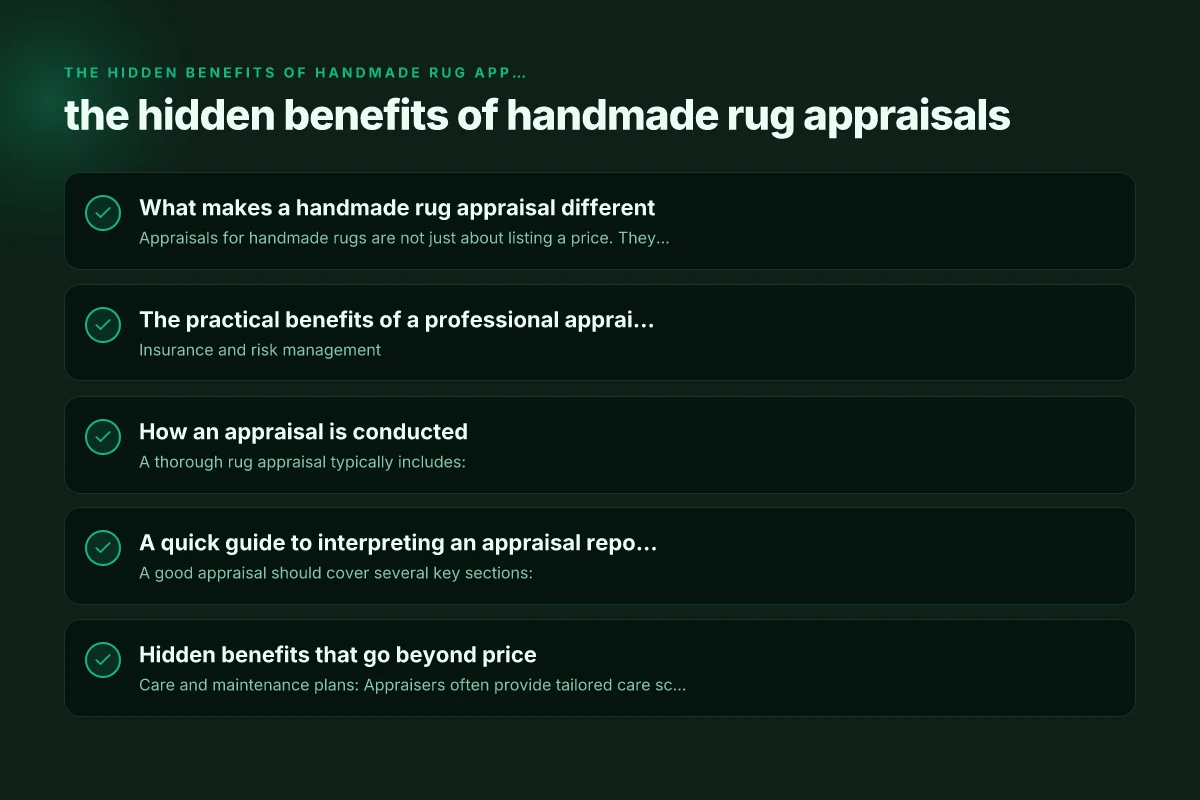
What makes a handmade rug appraisal different
Appraisals for handmade rugs are not just about listing a price. They are comprehensive assessments that consider:
- Origin and culture: country or region, tribal group, and weaving tradition.
- Materials and techniques: wool, silk, dyes, knot density, and loom method.
- Authenticity and age: how the rug was made and how it has aged.
- Condition and restoration: wear, repairs, and any current damage.
- Provenance and accompanying documentation: certificates, previous appraisals, and seller history.
This combination creates a fuller picture of value and risk, beyond what a casual cued price tag offers.
Why provenance matters
Provenance establishes a rug’s backstory. It helps buyers and insurers understand:
- Whether it’s a genuine antique, vintage piece, or contemporary reproduction.
- The cultural and regional significance that can influence desirability.
- Historical events or migrations that might affect its value over time.
A well-documented provenance can elevate a rug’s status in the eyes of collectors and museums, and it can smooth the path for resale. How to choose the right sectional for your home a comprehensive guide
The practical benefits of a professional appraisal
- Insurance and risk management
- An accurate appraisal provides a documented replacement value for insurance.
- It helps ensure you receive appropriate compensation after loss or damage.
- If you have a rider or scheduled item policy, a current appraisal is often required.
- Mortgage or loan considerations
- Some lenders accept appraisals of high-value rugs as part of collateral.
- A professional estimate reduces uncertainty when applying for a loan or line of credit.
- Resale clarity
- Buyers trust an appraisal that outlines condition, authenticity, and repairs.
- It can shorten negotiation time and support fair pricing.
How an appraisal is conducted
A thorough rug appraisal typically includes:
- Visual inspection: overall condition, colorfastness, and signs of wear.
- Material identification: fiber type, dyes (natural vs. synthetic), and finishes.
- Knot density and construction: number of knots per square inch (KPSI) and loom type.
- Age estimation: based on weave style, materials, and signs of aging.
- Condition grading: ranges from excellent to poor, with notes on repairs.
- Documentation review: any certificates, previous appraisals, or trade records.
Professional appraisers also photograph the rug and may request purchase receipts, photographs, or prior appraisals to corroborate the valuation.
What to prepare before an appraisal
- Any existing certificates of authenticity or previous appraisals.
- Photos of the rug in situ, especially close-ups of borders, knots, and dyes.
- A note of where and how you acquired the rug (gallery, auction, gift, inheritance).
- A list of known repairs or restorations and dates if available.
Practical benefits and decision factors for hiring a professional appraisal
| Factor | Yes/No | Benefit summary | Impact on decision | Typical cost range | Time to complete |
|---|---|---|---|---|---|
| Needed for insurance | yes | Replacement value clarity | High | Moderate | 1–2 weeks |
| Required for sale | yes | Buyer trust, smoother sale | High | Moderate | 1–3 weeks |
| For tax purposes | yes | Deduction/valuation documents | Medium | Moderate | 1–2 weeks |
| For probate | yes | Legal asset valuation | High | Moderate | 2–4 weeks |
| Optional for collectors | yes | Documentation of care | Medium | Low | 1–2 weeks |
| Quick informal opinion | yes (limited) | Preliminary guidance | Low | Low | Same day |
Compiled November 2026; check the provider's site for current details. Discover the invaluable benefits of vehicle donation
A quick guide to interpreting an appraisal report
A good appraisal should cover several key sections:
- Description: rug size, origin, materials, knot density, and construction.
- Condition: wear patterns, fading, repairs, and any current damage.
- Valuation: replacement value, insured value, and market value if different.
- Supplements: provenance documents, photos, certificates, and care recommendations.
Below is a simple comparison to help you understand terms you might see.
| Term | What it means | Why it matters |
|---|---|---|
| Replacement value | The cost to replace the rug with a similar piece | Key for insurance and risk planning |
| Market value | Likely resale price in current market | Helps with selling strategy |
| Condition grade | Overall wear and integrity of the rug | Guides maintenance and future value |
Hidden benefits that go beyond price
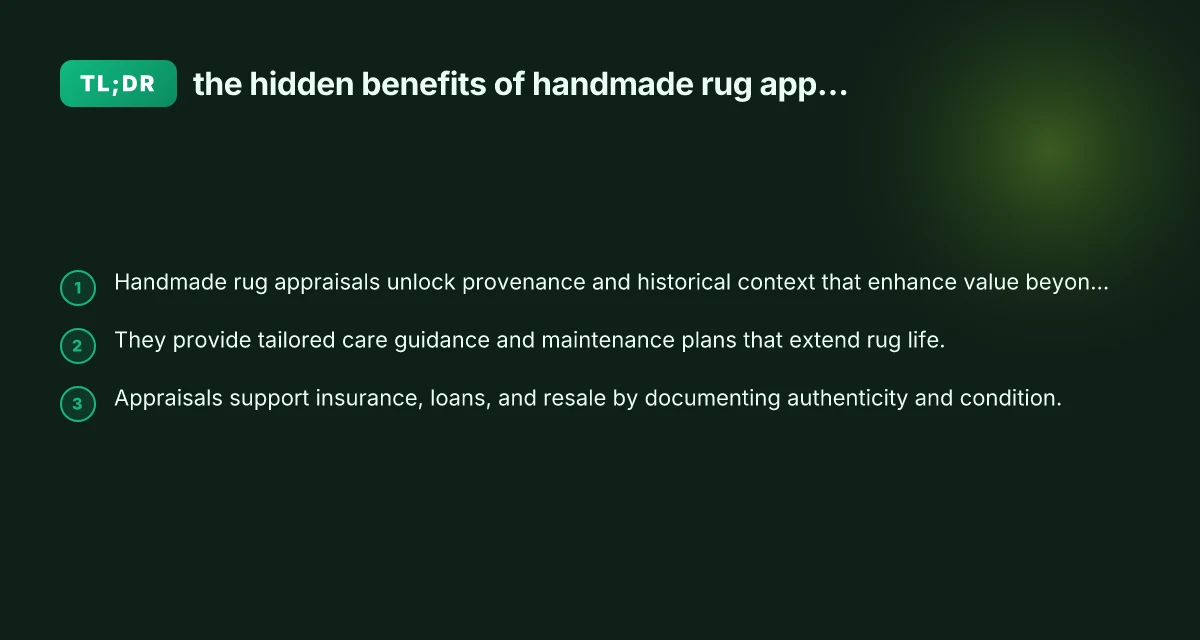
- Care and maintenance plans: Appraisers often provide tailored care schedules, cleaning guidelines, and recommended professionals for repairs. Following these plans can dramatically extend rug life and preserve value.
- Cultural and educational value: Documentation about the rug’s origin, weaving tradition, and the artisan’s possible workshop context adds depth to any collection.
- Peace of mind for collectors: Knowing a rug’s authenticity and history reduces uncertainty when expanding a collection or participating in auctions.
- Competitive advantage for estates and trusts: Clear appraisals streamline inheritance processes and ensure beneficiaries understand the asset’s value and care needs.
How to choose the right appraiser
- Credentials: Look for appraisers affiliated with recognized associations, such as the American Society of Appraisers, the International Society of Appraisers, or a national rug-specific body.
- Specialization: Rugs in particular require expertise in regional weaving traditions, materials, and dye chemistry.
- Independence and transparency: Prefer appraisers who provide a clear scope of work, methodology, and a written report without conflicts of interest.
- Experience with your rug type: For rare or antique pieces, seek someone with demonstrated familiarity with the specific era and region.
The process you can expect when you commission an appraisal
- Initial consultation: Clarify purpose (insurance, sale, estate planning) and scope.
- On-site evaluation: A hands-on examination of the rug’s construction, materials, and current condition.
- Documentation gathering: Collect any provenance records, previous appraisals, and purchase documentation.
- Report preparation: A formal document with descriptions, valuations, and photos.
- Review and delivery: A final walkthrough of findings and implications, plus a copy for your records.
A good appraiser will also explain any factors that could affect value over time, such as market trends, dye stability, or restoration quality. They may suggest regular reappraisal intervals, especially for valuable or aging pieces.
Making the most of your appraisal: tips and best practices
- Ask for a scope that matches your goals: Insurance value tends to be higher than market value shows, so ensure you’re clear on which valuation you need.
- Request high-quality photographs: Photos of borders, corners, and any repairs help future appraisers or buyers.
- Understand restoration notes: Some repairs can affect future value positively or negatively. Get specifics on materials and techniques used.
- Keep a dedicated file: Archive the appraisal, provenance documents, care guides, and future maintenance records in one place.
- Schedule routine reviews: If you acquire more pieces or your collection grows, periodic reappraisals maintain accuracy and coverage.
Process overview and steps for commissioning an appraisal Enhancing your living space with custom leather furniture
| Step | Description (short phrase) | Required documents | Typical timeframe | Outcome | Notes |
|---|---|---|---|---|---|
| 1. Define purpose | Clarify goal | Ownership records | 1–2 days | Appraisal scope | Align with goal |
| 2. Gather rug info | Photos, history | Photos, receipts | 3–7 days | Informative data | Full set improves value |
| 3. Appointment | In-person or remote | Access to rug | 1–2 days | Inspection plan | Schedule logistics |
| 4. Inspection | Examine materials & condition | Photos, appraiser notes | 1–2 days | Condition report | Include measurements |
| 5. Valuation assignment | Appraiser determines value | Market data | 3–7 days | Appraisal report | Specify basis |
| 6. Report delivery | Written document | Client info | 1–5 days | Final report | Signed & dated |
Compiled November 2026; check the provider's site for current details.
When a handmade rug appraisal makes the most sense
- You own high-value or historically important rugs.
- You’ve inherited a rug and want to understand its worth and care needs.
- You’re buying, selling, or insuring a rug and want confidence in the price or replacement cost.
- Your collection requires ongoing management for tax, insurance, or loan purposes.
Conclusion and recommendation A handmade rug appraisal offers more than a price tag. It builds a durable framework for protecting your investment, guiding care, and supporting future transactions. Whether you’re insuring a prized heirloom, planning a sale, or simply preserving a family treasure, a thoughtful, well-documented appraisal is a valuable asset. If you’re considering an appraisal, start by outlining your goals, then consult a reputable, credentialed rug specialist who can provide a comprehensive, transparent report. This approach will help you unlock the hidden benefits of handmade rug appraisals and keep your collection thriving for generations.