
Solid Wood Bedroom Furniture: A Timeless Guide to Quality, Comfort, and Style
Discover why solid wood bedroom furniture lasts, how to choose, care tips, and style ideas to elevate your space.
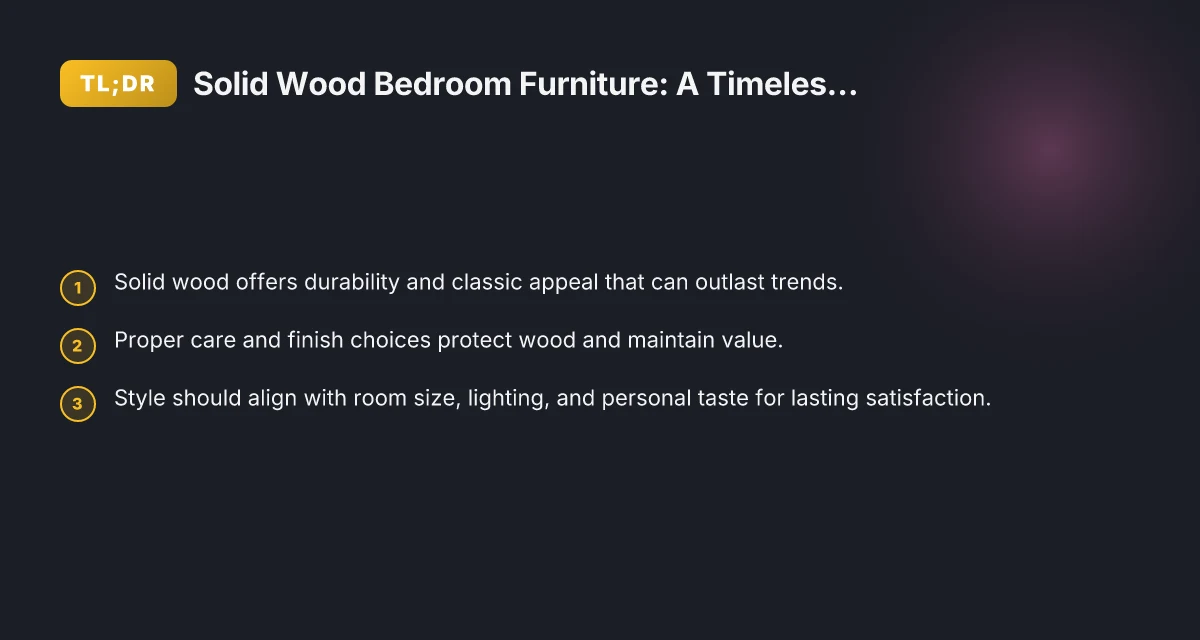
Solid wood bedroom furniture stands out for its durability, beauty, and timeless appeal. When you choose solid wood, you’re investing in pieces that can be sanded, refinished, and passed down through generations. This guide covers why solid wood matters in the bedroom, how to select it, care tips, and style ideas to help you create a calm, lasting retreat.
Comparison of solid wood vs. engineered wood for bedroom furniture
| Criterion | Solid Wood | Engineered Wood | Notes |
|---|---|---|---|
| Durability | High | Moderate to high | Species and construction affect results |
| Price range | Higher | Lower to mid | Varies by brand and wood type |
| Stability/warping | Low tendency with seasons | More stable with humidity | plywood core helpful |
| Repairs/refinishing | Easy to sand and refinish | Limited; veneer layers | Solid wood can be refinished multiple times |
| Weight | Heavy | Lighter to moderate | Depends on core materials |
| Sustainability considerations | Natural, may use reclaimed | Can be engineered from scraps | Certification varies |
Compiled November 2026; check the provider's site for current details.
Why choose solid wood for the bedroom
Longevity and value
- Solid wood furniture is typically more durable than composite or veneer options.
- It can be repaired or refinished, extending its life far beyond particleboard or MDF builds.
- While the upfront price may be higher, the long-term value often justifies the cost.
Aesthetic and warmth
- Natural wood tones add warmth and texture, creating a restful atmosphere.
- Each piece has unique grain patterns, making every item one-of-a-kind.
- Classic silhouettes stay stylish as trends come and go.
Environmental considerations
- When sourced responsibly, solid wood can be a greener option due to durability and recyclability.
- Look for certifications like FSC to ensure sustainable forestry practices.

How to choose solid wood bedroom furniture
Wood species and finishes
- Common choices: oak, maple, beech, walnut, cherry, and ash.
- Light woods brighten small rooms. Darker woods add drama or coziness.
- Finishes range from matte to high-gloss. Consider your existing decor and family needs.
Construction quality
- Check joints: dovetail drawers, mortise-and-tenon frames, and reinforced corners indicate solid craftsmanship.
- Look for solid wood drawer fronts and sides rather than veneer over plywood.
- Inspect hardware: durable drawer slides (side-mount or Blum-style) last longer.
Size, scale, and proportion
- Measure your space carefully, including doorways and stairwells for delivery.
- Choose pieces that fit the room without crowding it. Generational furniture often has a room-enhancing, balanced look.
- For bedrooms, consider storage needs: dressers, chests, nightstands, and bed frames with under-bed storage options.
Style and coordination
- Traditional: carved details, sculpted heads, and rich finishes.
- Modern: clean lines, minimal ornamentation, lighter tones.
- Transitional: a blend that pairs well with various decor styles and accessories.
- Create a cohesive look by repeating a wood species or finish across the main pieces.
How to choose solid wood bedroom furniture by key factors
| Factor | What to look for | Indicator of quality | Practical tip | Typical range (price/length/etc) |
|---|---|---|---|---|
| Wood species | Hardwoods vs softwoods | Hardwoods resist dents | Prefer oak, maple, walnut | Oak: mid; Walnut: high |
| Construction method | Solid blocks, dowels, or mortise & tenon | Fewer visible seams | Check joints; feel sturdiness | Joints: visible vs hidden |
| Finish | Thin, even coating | Consistent sheen | Avoid thick lacquer | Finish depth: thin preferred |
| Hardware | Quality hinges and slides | Smooth operation | Open-and-close demo | Stainless steel/ brass common |
| Sustainability | Certifications | FSC/PEFC label | Ask for documentation | Certified: yes / no |
| Dimension stability | Room for expansion | Slight gaps acceptable | Check for seasonal movement | Larger pieces: more adaptation |
Compiled November 2026; check the provider's site for current details.
Care and maintenance of solid wood bedroom furniture
Cleaning and protection
- Dust regularly with a soft, dry cloth.
- Avoid harsh cleaners. Use a mild soap solution sparingly if needed, then wipe dry.
- Use coasters and avoid placing hot objects directly on surfaces.
Finishes and refinishing
- Protect finishes from direct sunlight to prevent fading and warping.
- Periodically polish with a product suitable for the finish (avoid silicone-based polishes on waxed surfaces).
- When scratches or dents appear, consider professional refinishing to preserve value.
Humidity and environment
- Maintain stable humidity (ideally around 40–45%) to prevent warping and cracking.
- Use a humidifier or dehumidifier as needed, especially in extreme climates.
- Avoid placing furniture in direct contact with heat sources like radiators.
How to style a solid wood bedroom for comfort and longevity
Bed frames and storage synergy
- A solid wood bed frame creates a cohesive, grounded feel in the room.
- Pair with dressers and nightstands in the same wood family to unify the space.
- Consider bed-height and headboard design that complements your ceiling height and room layout.
Color and textiles
- Neutral walls allow the wood’s natural grain to shine. Soft whites, beiges, or cool grays work well.
- Textiles like linen, cotton, or wool provide warmth without overpowering the wood’s character.
- Introduce color through bedding, rugs, and throws rather than painting the furniture.
Lighting and ambiance
- Use warm LED bulbs (around 2700K–3000K) to accentuate wood tones.
- Layer lighting with ambient, task, and accent options to enhance texture and depth.
- Mirrors and glass elements can reflect light and make a wood-heavy room feel larger.
Accessorizing thoughtfully
- Keep surfaces relatively clear. A few well-chosen objects highlight wood rather than distract from it.
- Display a mix of fabrics and natural textures (baskets, woven rugs, linen) to balance the wood’s solidity.
- Consider plants or dried botanicals to bring life and soften the angular lines of solid wood.
A practical comparison: solid wood vs. engineered wood for bedroom furniture
| Feature | Solid Wood | Engineered Wood (Plywood/MDF) |
|---|---|---|
| Durability | Very high; can be repaired | Good, but repairs are more limited |
| Longevity | Often lifelong with care | Typically shorter lifespan |
| Repairs/refinishing | Easy; can be sanded and re-stained | Limited; may need replacement |
| Weight | Heavier; feels substantial | Lighter; easier to move |
| Stability with humidity | Stable if well-sealed | More susceptible to moisture changes |
| Cost | Higher upfront | Lower upfront, but may need replacement sooner |
| Aesthetic appeal | Unique grain and character | Consistent, less variation |
Notes:
- The table shows general trends. Quality varies by maker and joinery.
- If you love a specific look, you can find solid wood options that fit most budgets by exploring unfinished or semi-solid builds with solid cores.
Care and maintenance plan table Small dining room ideas: clever ways to maximize space and style
| Life stage | Recommended routine | Cleaning method | Products to avoid | Frequency |
|---|---|---|---|---|
| Initial setup | Dust and polish | Soft cloth; mild cleaner | Ammonia; abrasive pads | Weekly |
| Regular use | Wipe spills immediately | Damp cloth; dry promptly | Silicone-based spray | Daily/weekly as needed |
| Seasonal changes | Check joints | Inspect for looseness | Harsh chemicals | Quarterly |
| After relocations | Re-tighten hardware | Gentle wipe | Over-wetting | After move |
| Stain events | Treat promptly | Mild soap; water | Bleach; solvent cleaners | As needed |
| Long-term refinishing | Sand and reseal | Light sanding | Heavily abrasive tools | Every few years |
Compiled November 2026; check the provider's site for current details.
How to care for solid wood furniture during different life stages
- New purchases: Allow acclimation in your home for 1–2 weeks before heavy use. This helps reduce future warping.
- Family life: Use protective pads under lamps and decor. Consider coasters for drinks.
- Moving and relocation: If possible, hire professional movers experienced with heavy wood furniture. Disassembly may be needed for safe transport.
- Long-term upkeep: Schedule a refinishing check every 7–15 years depending on wear. Early maintenance saves larger restoration costs later.
Where to buy solid wood bedroom furniture
- Reputable retailers: Look for solid wood construction details in product descriptions and build quality in person.
- Local craftsmen and joineries: Custom pieces tailored to your space and budget. Supports smaller businesses and often ensures better fit and finish.
- Sustainable and certified sources: Seek FSC or PEFC certifications and ask about supply chain transparency.
Quick buyer checklist
- Confirm wood species and finish type.
- Inspect joints and drawer construction.
- Check hardware quality and warranty terms.
- Assess delivery options and assembly services.
- Understand care instructions specific to the finish.
The recommendation: invest in solid wood for a bedroom that lasts
If you want a bedroom that feels timeless and continues to look fresh with changing decor, solid wood furniture is a strong bet. It delivers longevity, a natural warmth, and a sense of permanence that mass-produced alternatives often cannot match. Start by selecting a unifying wood family, say, walnut for richness or oak for durability, and build outward with complementary pieces that share the same tone or grain direction. Pair with textiles and lighting that enhance the wood’s natural beauty, and you’ll create a serene, enduring sanctuary that ages gracefully with you.