Small dining room ideas: clever ways to maximize space and style
Smart, space-saving ideas to design a functional and stylish small dining room.
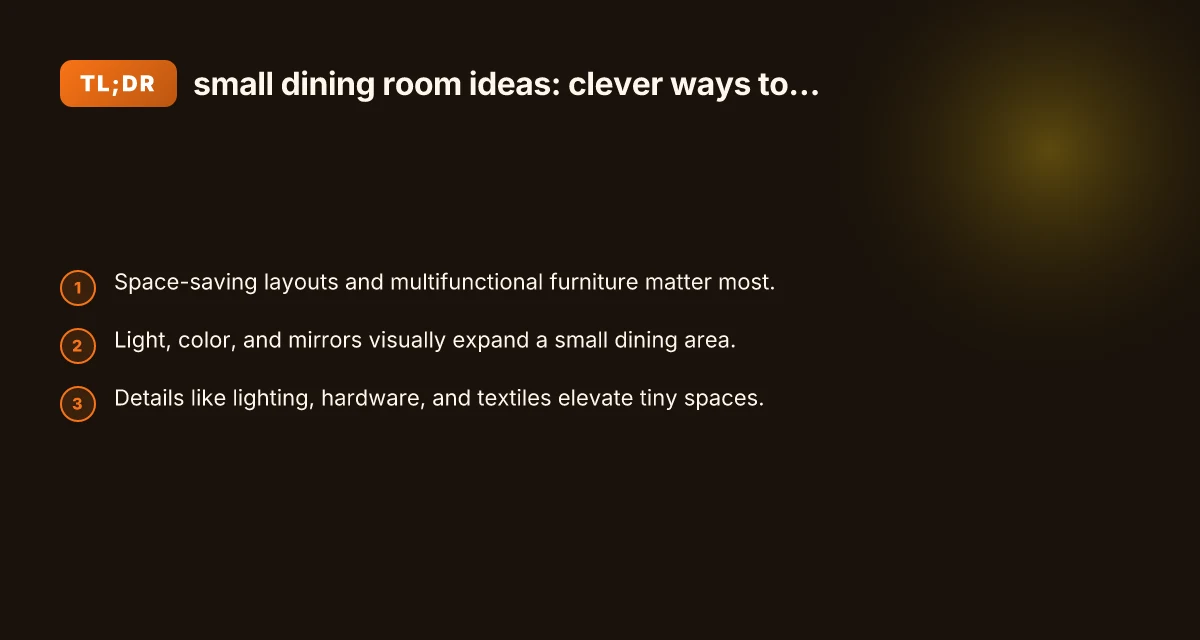
Small dining rooms can feel cozy and polished with the right approach. The goal is to maximize function without sacrificing style. Below you'll find practical ideas that work for anything from a compact apartment to a corner of a larger open plan.
Plan the layout with purpose - Comparison of layout approaches
| Approach | Key Benefit | Space Type Suitability | Typical Room Size |
|---|---|---|---|
| Zoning by function | Clear flow, defined dining vs. prep | Open-plan, small rooms | 8–12 ft wide |
| Central island | Extra prep + dining edge | L-shaped, rectangular | 12–18 ft long |
| Extendable footprint | Flexible footprint | NARROW or irregular | 8–14 ft long |
| Fold-away elements | Hidden storage + seating | Micro-suites, tiny dining | 6–10 ft wide |
| Perimeter layout | walls maximize seating | Very small rooms | 6–8 ft wide |
Compiled November 2026; check the provider's site for current details.
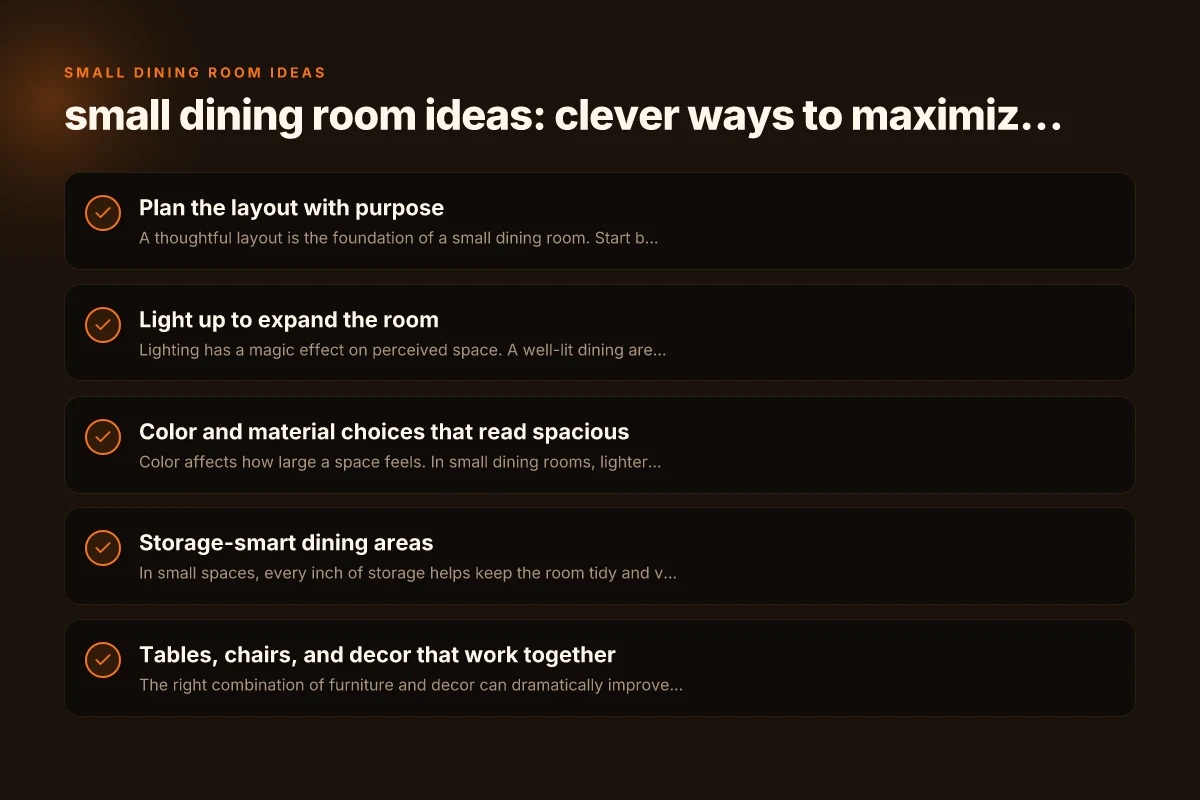
Plan the layout with purpose
A thoughtful layout is the foundation of a small dining room. Start by measuring the space and considering traffic flow. Aim for at least 36 inches of clearance around the table for comfortable movement.
Keep the dining footprint compact
- Choose a table size that fits the room: 28–36 inches wide for a single-person setup, 42–48 inches for a small family.
- Opt for a rectangular or round table depending on space: round tables feel airy in tight corners. Rectangles stretch along a wall.
- Consider a drop-leaf or extendable table to switch from everyday to entertaining mode.
Seating that saves space
- Benches instead of chairs can save floor space and can tuck under the table when not in use.
- Transparent or slim-backed chairs visually recede, making the room feel larger.
- Use built-in seating with storage drawers or lift-lids to reclaim square footage.
Light up to expand the room
Lighting has a magic effect on perceived space. A well-lit dining area feels larger and more welcoming.
Layered lighting
- Overhead pendant or chandelier centered over the table anchors the space.
- Add wall sconces on either side of a mirror or artwork to spread light without crowding the floor.
- Use a dimmer to adjust mood from casual everyday to dinner-party ambiance.
Reflective and bright finishes
- Light-colored walls and a glossy or satin finish bounce more light around the room.
- Mirrors work wonders in small spaces. Place one opposite a window or light source to double the brightness.
- Glass or acrylic tabletops can keep the surface feeling airy.
Light up to expand the room - Lighting options and effects
| Lighting Type | Effect on space | Task suitability | Dimmable | Energy use | Style note |
|---|---|---|---|---|---|
| Ceiling recessed | Perceived height | General lighting | yes | moderate | Minimalist |
| Pendant over table | Focal point | Dining tasks | yes | higher | Modern |
| Under-cabinet LEDs | Bright edges | Prep + dining | yes | low | Subtle glow |
| Wall sconces | Visual width | Side lighting | yes | moderate | Cozy |
| Floor lamp | Adds depth | Casual meals | yes | moderate | Sculptural |
Compiled November 2026; check the provider's site for current details. Sears Bedroom Furniture: A Complete Guide to Styles, Quality, and Buying Tips
Color and material choices that read spacious
Color affects how large a space feels. In small dining rooms, lighter tones often create an open feel, while accents add personality.
Palette ideas
- Soft neutrals with pops of color: warm beige walls, white trim, and a rug or cushions in blue or green.
- Monochrome schemes with a single accent hue for a cohesive, streamlined look.
- Two-tone walls (upper and lower) to create architectural interest without closing in the room.
Surface textures
- Matte walls with a gloss table surface can balance light and depth.
- Natural textures like rattan, wicker, or light wood calm the space and add tactile interest.
- A compact area rug under the table defines the dining zone without overwhelming it.
Storage-smart dining areas
In small spaces, every inch of storage helps keep the room tidy and visually calm.
Smart furniture choices
- Extendable sideboard or console with built-in wine racks or display shelves.
- A banquette with storage underneath can hold linens, placemats, or seasonal decor.
- Nesting tables for serving and display that tuck away when not in use.
Clever organization ideas
- Use vertical space: tall cabinets or open shelving to keep dishes reachable but off the table.
- Clear containers and labeled baskets reduce clutter and create a cleaner look.
- A small bar cart or rolling trolley can serve as a portable prep area and extra surface.
Color and material choices that read spacious - Quick color/material guide
| Color family | Space read | Material feel | Maintenance | Light reflectance | Examples |
|---|---|---|---|---|---|
| Light neutrals | Opens space | Smooth | easy | high | White, taupe |
| Cool whites | Airy feel | Matte/soft gloss | easy | high | Eggshell, alabaster |
| Lighter wood tones | Warms without crowding | Natural grain | moderate | high | Maple, ash |
| Glass/acrylic accents | Invisible bulk | Transparent | easy | high | Glass tabletop |
| Matte finishes | Softens clutter | Non-gloss | easy | moderate | Matte ceramic |
Compiled November 2026; check the provider's site for current details. Sit stand chair: A practical guide to choosing and using this versatile workstation staple
Tables, chairs, and decor that work together
The right combination of furniture and decor can dramatically improve a small dining room’s appearance and usability.
Table and chair harmonies
- Pair a slim, lightweight table with slender chairs to avoid visual bulk.
- If you have a bench, balance it with one or two chairs on opposite sides for varied seating.
- Consider a pedestal table to free up legroom under the surface.
Decor that complements, not crowds
- Choose a single statement piece, an artwork, a striking light fixture, or a bold rug, but avoid stacking too many bold elements.
- Layer textiles: a placemat set, a runner, and cushions on the bench add warmth without bulk.
- Greenery in a compact vase or a tall slim plant near the corner adds life without crowding.
A quick comparison: styles that suit small dining rooms
| Style | Key traits | Pros for small spaces | Cons to consider |
|---|---|---|---|
| Minimalist | Clean lines, sparse decor | Feels open, easy to clean | Might feel cold without warmth |
| Scandinavian | Light woods, neutrals, soft textiles | Bright, airy, practical storage | Can look monochrome if not accented |
| Coastal | Whites, blues, natural textures | Fresh and inviting, reflects light | Lightweight decor can look unfinished |
| Industrial | Metal + wood, exposed hardware | Modern, strong personality | May feel harsh if overdone |
| Rustic modern | Mixed natural textures, warm tones | Cozy but not heavy; blends with many spaces | Needs careful balance to avoid clutter |
Practical tips to implement this week
- Start with a single focal point: a light fixture or a rug that anchors the table.
- Reassess furniture arrangement after a week of daily use. What feels cramped might reveal a new layout.
- Use removable decor for holidays or guests. Avoid permanent clutter on tabletops.
- If you’re renting, consider temporary solutions like adhesive hooks for shelving and freestanding units.
Final recommendation
For a small dining room, prioritize a compact, adaptable layout with a slim, extendable table and seating that tucks away. Pair this with layered lighting, a light color palette, and smart storage solutions to keep the space feeling open and functional. Add a single decorative element, like a mirror, an art piece, or a textile, sparingly to create focus without crowding the room. With these strategies, a small dining area can feel generous, stylish, and perfectly suited to everyday meals and intimate gatherings alike.