
Kitchen Collection: A Complete Guide to Building a Functional and Beautiful Kitchen
Learn how to assemble a cohesive kitchen collection that blends style, durability, and practicality for every home cook.
A kitchen collection isn’t just about buying a lot of gadgets. It’s about organizing the space, selecting tools that actually work together, and choosing finishes that stand up to daily use. When you build a kitchen collection with intention, you get a workspace that feels effortless, reduces clutter, and supports your cooking style, whether you’re whipping up weekday dinners or hosting weekend feasts.
Layout comparison by space and flow
| Feature | Open layout | Zone-based layout | Galley layout | Island layout | U-shaped layout |
|---|---|---|---|---|---|
| Traffic flow efficiency | high | medium | medium | high | high |
| Prep work area | wide | adequate | compact | extensive | adequate |
| Cooking zone access | immediate | good | good | close | good |
| Cleaning area proximity | near sink | near sink | separate | near sink | near sink |
| Visual openness | yes | no / partial | no | yes | no |
| Ideal kitchen size | large | medium | small to medium | large | large |
| Wall storage presence | yes | yes | limited | yes | yes |
Compiled November 2026; check the provider's site for current details.
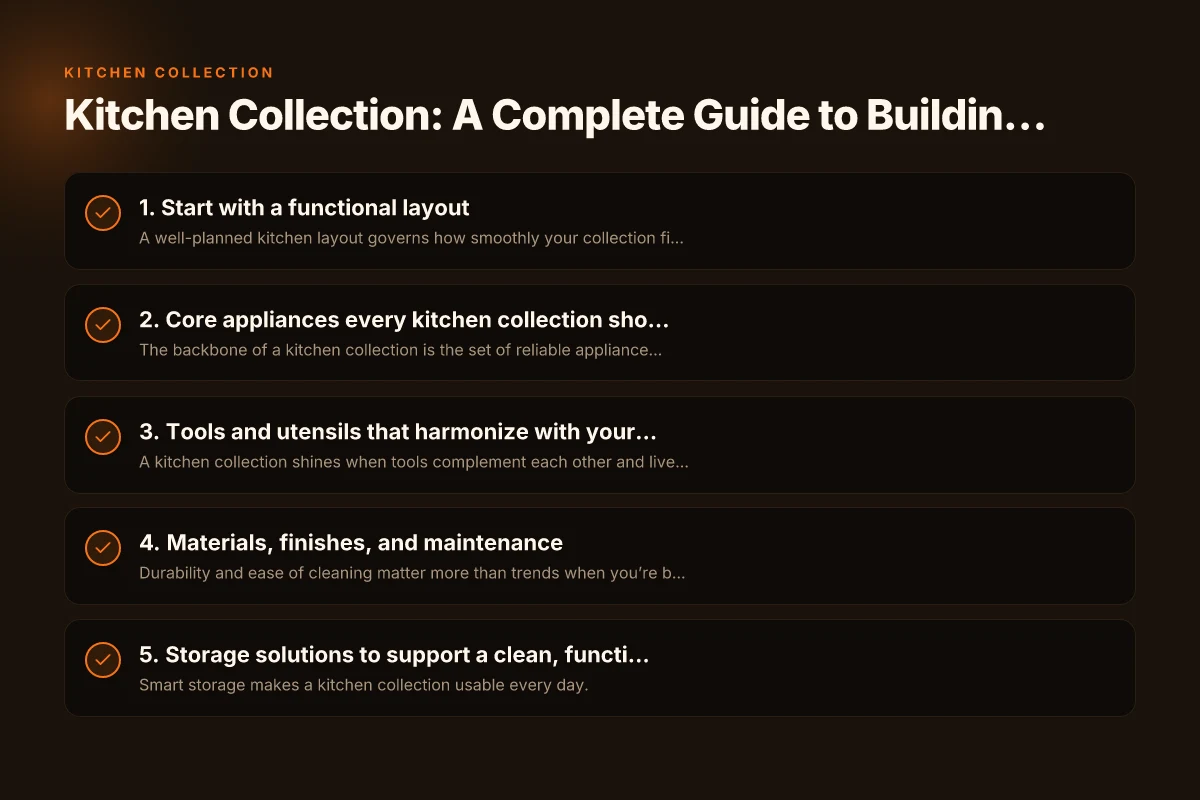
1. Start with a functional layout
A well-planned kitchen layout governs how smoothly your collection fits into daily routines. Start by mapping three core zones: prep, cooking, and cleanup. Each zone should have a clear, unobstructed path between them.
Key layout tips
- Place the sink near the prep area and the fridge in an easy-to-reach position for ingredients.
- Ensure the stove or range has nearby outlets and sensible ventilation.
- Create a trash and recycling station close to cleanup, but out of the main prep path.
Practical zone ideas
- Open-plan kitchens can benefit from a single-line or galley layout for efficient workflow.
- L-shaped or U-shaped kitchens naturally support distinct zones and counter space.
- If you have a small kitchen, prioritize vertical storage and pull-out organizers to keep surfaces clear.
2. Core appliances every kitchen collection should consider
The backbone of a kitchen collection is the set of reliable appliances that fit your cooking style and space.
Essential categories
- Refrigerator: Look for energy efficiency, adjustable shelves, and easy-to-clean interiors.
- Oven and stove: Consider a gas vs. electric debate based on cooking preference, with practical size for your space.
- Dishwasher: Choose a model with solid soil load performance and quiet operation.
- Microwave and coffee/tea station: If space allows, a compact on-counter setup saves time.
How to pick the right size
- Measure height, width, and depth to ensure proper clearance.
- Check door swing and venting requirements.
- Consider future needs, like a larger family or entertaining, when evaluating capacity.
Core appliances suitability by kitchen type
| Appliance | Essential for all | Best for frequent cooks | Best for small spaces | Energy saver option | High-end choice | Replacement ease |
|---|---|---|---|---|---|---|
| Range / stove | yes | yes | no | yes | yes | yes |
| Oven (wall) | yes | yes | no | yes | yes | yes |
| Refrigerator | yes | yes | yes | yes | yes | yes |
| Dishwasher | yes | yes | optional | yes | yes | yes |
| Microwave | optional | yes | yes | yes | yes | yes |
| Hood / ventilation | yes | yes | yes | yes | yes | yes |
Compiled November 2026; check the provider's site for current details. Kitchen Backsplash: A Complete Guide to Elevate Your Space
3. Tools and utensils that harmonize with your collection
A kitchen collection shines when tools complement each other and live in logical places.
Must-have categories
- Knives and cutting boards: A quality chef’s knife, a serrated knife, and a lightweight utility knife plus a sturdy board.
- Cookware: A versatile skillet, a saucepan, and a Dutch oven are often enough for most kitchens.
- Bakeware: A couple of sheet pans, a muffin tin, and a casserole dish cover a wide range of recipes.
- Utensils: Tongs, spatulas, a whisk, and a ladle that feel comfortable in your hand.
Storage strategies
- Use a utensil holder near the stove and magnetic strips for knives in a safe, accessible location.
- Keep a dedicated drawer or small caddy for measuring cups, spoons, and covers.
- Invest in stackable or modular organizers for pan lids and pots.
4. Materials, finishes, and maintenance
Durability and ease of cleaning matter more than trends when you’re building a kitchen collection.
Popular material choices
- Countertops: Quartz, granite, or solid surface offer durability and varying upkeep requirements.
- Cabinets: Matte or semi-gloss finishes are more forgiving of fingerprints and smudges.
- Sinks and faucets: Stainless steel is practical. Matte black or brushed nickel can add a design edge.
- Flooring: Wipeable options like tile or vinyl plank are practical in high-traffic kitchens.
Maintenance tips
- Wipe spills promptly to prevent stains and damage.
- Use coasters, cutting boards, and protective mats to extend the life of surfaces.
- Schedule periodic resealing for natural stone counters if applicable.
5. Storage solutions to support a clean, functional space
Smart storage makes a kitchen collection usable every day.
Smart organization ideas
- Pull-out pantry shelves and corner cabinet carousels maximize space.
- Vertical storage for baking sheets, cutting boards, and lids reduces horizontal clutter.
- A mounted spice rack or pull-out spice drawer keeps flavors within reach and visible.
Budget and upgrade path
- Start with essential organizers in the most-used areas and gradually add specialty storage as needed.
- Consider adjustable shelves and modular drawers to adapt to new tools or cookware sizes.
Tools and utensils compatibility with collection style Kitchen cabinets las vegas
| Tool category | Essential across most sets | Compact kit option | Studio/one-bundle | High-end specialty | Maintenance-friendly | Color/finish variety |
|---|---|---|---|---|---|---|
| Knives | yes | yes | yes | yes | yes | yes |
| Pans | yes | yes | yes | yes | yes | yes |
| Utensils | yes | yes | yes | yes | yes | yes |
| Measuring | yes | yes | yes | yes | yes | yes |
| Storage items | yes | yes | yes | yes | yes | yes |
| Cleaning tools | yes | yes | yes | yes | yes | yes |
Compiled November 2026; check the provider's site for current details.
6. A simple table to compare popular kitchen collections
This table helps you weigh common kitchen collection configurations when planning space, budget, and usage.
| Collection Focus | Ideal For | Typical Components | Pros | Cons |
|---|---|---|---|---|
| Everyday essentials | Small families, rental homes | 1-2 pans, basic knives, 2-3 utensils, compact appliances | Budget-friendly, easy to upgrade | Limited versatility, may feel sparse |
| Medium-duty workhorse | Weeknight cooks, entertaining occasionally | 3-4 pans, chef’s knife, cutting boards, mid-size appliances | Balanced versatility, durable | Some duplication if you already own items |
| Gourmet ready | Frequent entertaining, specialized cooking | Wide range of pots/pans, specialty tools, high-end appliances | Maximum flexibility, quality feel | Higher upfront cost, maintenance matters |
| Minimalist clean | Small spaces, simple routines | 1 pot, 1 pan, few tools, multi-use appliances | Clutter-free, easy to maintain | Limited cooking options, slower prep time |
7. Personalization and style: making the collection yours
A kitchen collection should reflect how you cook and who you are in the space.
Ways to personalize
- Choose a unifying color or finish for hardware and small appliances to create cohesion.
- Incorporate a few statement pieces, like a bold kettle or a distinctive knife block, to add personality.
- Add practical touches such as labeled storage or a “daily use” tray to simplify routines.
Balancing form and function
- Prioritize ergonomics: comfortable heights, accessible handles, and well-lit work areas.
- Ensure electrical outlets are sufficient and conveniently placed for countertop appliances.
- Think about future needs: additional storage, larger family gatherings, or a move to more plant-based cooking.
Final section: recommendation If you’re starting from scratch or revamping an older kitchen, start with a clear plan that identifies zones and your essential tools. Build around durable, easy-to-clean materials and invest in a core set of versatile cookware and utensils that align with how you cook. Keep the layout simple and scalable: choose storage and appliances that can adapt as your needs change. A thoughtful kitchen collection pays off in daily ease, reduced clutter, and a space that feels welcoming every time you step in. Kitchen Appliances: A Practical Guide to Modern Cooking Essentials