Kitchen Appliances: A Practical Guide to Modern Cooking Essentials
A concise guide to choosing, using, and maintaining kitchen appliances for better everyday cooking.
The kitchen is the heart of the home, and the right appliances can transform everyday cooking from a chore into a joy. This guide covers the essential kitchen appliances, how to choose them, and how to care for them so your investment pays off in consistent performance and delicious results.
Core kitchen appliance essentials - comparison of key categories
| Category | Typical function | Example appliances | Energy use indicator |
|---|---|---|---|
| Refrigerator | Cold storage | Fridge, freezer combo | Energy Star yes/no |
| Oven | Cooking heat | Conventional oven, convection oven | Energy use per cycle |
| Stove/Range | Heating surface | Gas range, electric coil, induction | Power type |
| Microwave | Quick heating | Countertop microwave, built-in | Wattage range |
| Dishwasher | Cleaning dishes | Built-in dishwasher | Water/energy efficiency |
| Range hood | Ventilation | Wall/under-cabinet hood | CFM rating |
Compiled November 2026; check the provider's site for current details.
Core kitchen appliance essentials
When you’re outfitting a kitchen, a few key appliances cover the majority of daily tasks:
- Refrigerator: Keeps food fresh, preserves flavors, and reduces food waste.
- Stove or cooktop: The primary tool for most cooking methods, gas, electric, or induction.
- Oven: For baking, roasting, and casseroles. Many homes pair a wall oven with a range.
- Microwave: Quick reheating, defrosting, and simple cooking tasks.
- Dishwasher: Saves time and helps maintain cleanliness with consistent wash cycles.
- Small countertop appliances: Blender, toaster, coffee maker, and mixer handle frequent, quick tasks.
If you’re a new kitchen setup or upgrading, prioritize these categories first. Budget and space will guide whether you choose freestanding units or built-in models, and whether an appliance suite or modular configuration fits best.
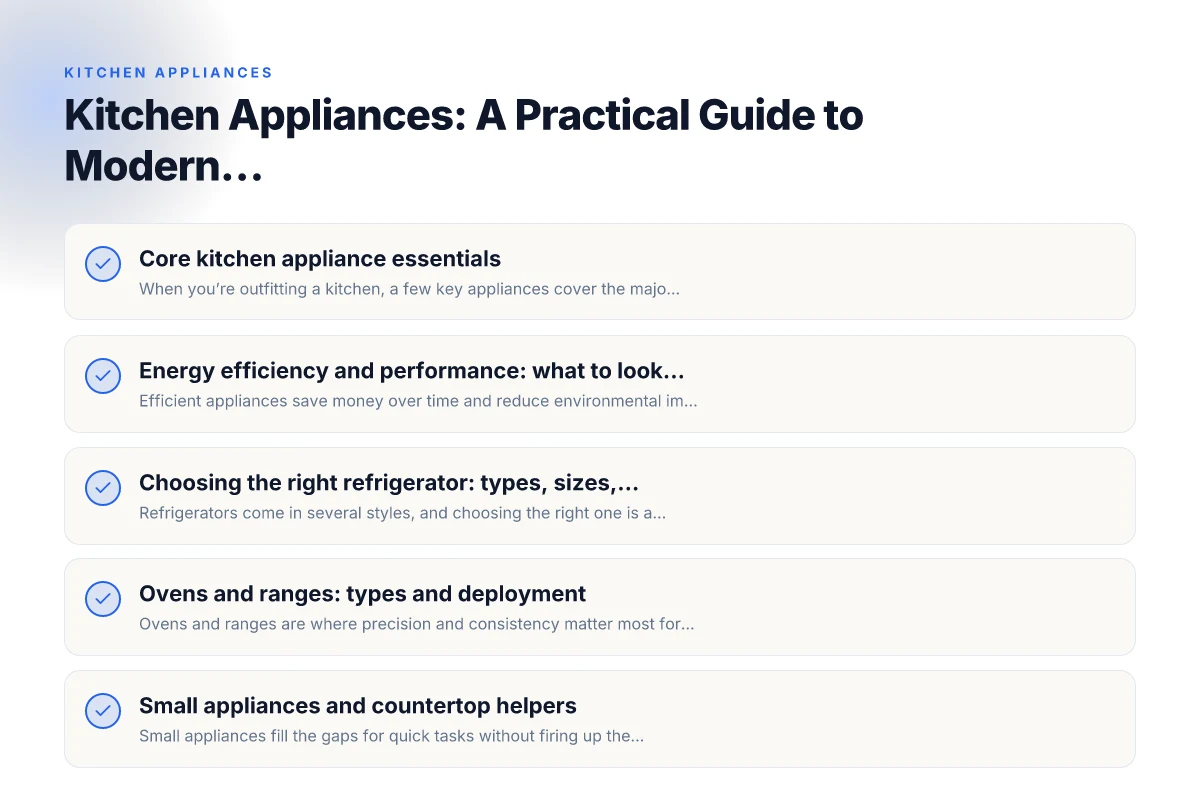
Energy efficiency and performance: what to look for
Efficient appliances save money over time and reduce environmental impact. Here are the key considerations:
- Energy Star or equivalent ratings: Look for recognized efficiency certifications.
- Inverter technology: Particularly in refrigerators, washers, and air‑based appliances, for steady performance and lower energy use.
- Size and capacity relative to your needs: A larger appliance isn’t automatically better if you don’t need the extra volume.
- Noise levels: Measured in decibels. Consider placement and tolerance for open-plan spaces.
- Maintenance requirements: Some models need regular cleaning or filter changes to stay efficient.
- Features that matter to you: Smart controls, timers, or specialized modes should align with your cooking style.
To compare efficiency, examine the energy consumption per year and the total cost of ownership, not just upfront price. A higher upfront cost can be offset by lower operating costs over the appliance’s lifetime. Kitchen and Dining Room Tables: A Complete Guide to Choosing, Caring for, and Styling
Choosing the right refrigerator: types, sizes, and features
Refrigerators come in several styles, and choosing the right one is a balance of space, accessibility, and how you store food.
- Top-freezer: Classic and usually most affordable. Compact footprint.
- Bottom-freezer: Easier access to fresh items. Freezer is lower and less used.
- Side-by-side: Ample water/ice through doors. Narrower shelves can be challenging for tall items.
- French-door: Combines wide fresh food space with a bottom freezer. Often feature-rich.
- Counter-depth: Sleek look with less interior capacity. Fits flush with cabinetry.
Key features to consider:
- Storage flexibility: Adjustable shelves, humidity-controlled crispers, and door bins.
- Ice and water: Internal filtration and compatibility with water lines.
- Temperature zones: Some models offer separate zones for meat, produce, and dairy.
- Smart features: Remote monitoring, beeps, and energy reports can be helpful but aren’t essential.
| Refrigerator style | Pros | Cons | Ideal for | | Top-freezer | Affordability, simple | Narrow fresh-food space | Small kitchens, budget buyers | | Bottom-freezer | Easy access to fresh food | Freezer less accessible | Families who cook daily | | Side-by-side | Ice/water at hand, organized shelves | Narrower shelves, frequent door openings | Busy households, lots of container storage | | French-door | Large fresh-food area, stylish | Higher price, more depth | Open kitchens, entertaining households | | Counter-depth | Sleek look, fits countertops | Less internal volume, higher cost | Modern, integrated designs |
Energy efficiency and performance: what to look for - comparison indicators Kitchen Aid Mixer: A Complete Guide to Choosing, Using, and Maintaining Your Kitchen Aid Mixer
| Indicator | What it means | Typical values / ranges | Best-in-class signals |
|---|---|---|---|
| Energy Star rating | Efficiency benchmark | 1.0+ | 4-5 stars equivalent |
| Annual energy consumption | Yearly use impact | kWh/year | Lower is better |
| Noise level | Quiet operation | dB range | 40-50 dB good |
| Insulation quality | Heat retention | R-value / foam type | R-12+ or closed-cell |
| Delivery performance | Even heat, consistent temps | Preheat time | Shorter is better |
| Duty cycle | Load handling | cycles per hour | Balanced cycles |
Compiled November 2026; check the provider's site for current details.
Ovens and ranges: types and deployment
Ovens and ranges are where precision and consistency matter most for baking and roasting.
- Freestanding ranges: Combine oven and cooktop in one unit. Versatile and widely available.
- Slide-in ranges: Designed to fit between cabinets for a built-in look. Often easier to install.
- Wall ovens: Provide optimal ergonomics by placing the oven at eye level. Can be paired with a separate cooktop.
- Convection ovens: Use a fan to circulate hot air, producing even browning and faster cooking.
- Induction vs gas vs electric: Induction offers fast heating and precise control but requires compatible cookware. Gas provides instant flame control. Electric delivers steady heat with even cooking.
Key features to consider:
- Oven capacity: 4.0 to 6.0 cubic feet is common. Larger families may want more.
- Self-cleaning: Convenient but uses high heat. Other modes are gentler.
- Baking modes: Steam, convection roast, and specialized programs can expand capabilities.
- Cooktop configuration: Number of burners, simmer control, and downdraft ventilation if needed.
Small appliances and countertop helpers
Small appliances fill the gaps for quick tasks without firing up the main oven or stove. King bedroom sets: the ultimate guide for your home
- Blender: For smoothies, soups, and sauces. Choose power (watts), blade quality, and pitcher material.
- Food processor: Versatile for chopping, grating, kneading. Look for feed chute size and blade options.
- Mixer: Stand mixers excel at baking. Hand mixers are versatile and compact.
- Coffee maker: Drip, single-serve, or espresso setups. Consider water filtration and ease of cleaning.
- Toaster or toaster oven: Depending on daily toast habit and baking needs. Toaster ovens expand capability without a full oven.
- Slow cooker/Instant Pot: One-pot meals and batch cooking. Some models function as pressure cookers, rice cookers, and more.
Tips for selecting small appliances:
- Prioritize build quality and easy cleaning.
- Choose appliances with dishwasher-safe parts where possible.
- Consider multi-function devices to save space, but beware of overly complicated controls.
- Check for compatibility with your pantry staples and cookware.
Choosing the right refrigerator: types, sizes, and features - selection guide
| Type | Size (cu ft) | Typical use | Key features | Pros | Cons |
|---|---|---|---|---|---|
| Top-freezer | 14-20 | Small kitchens | Simple controls | Budget-friendly | Less flexible layout |
| Bottom-freezer | 18-28 | Family kitchens | Easy access to fresh | Spacious fridge | Slightly higher cost |
| French-door | 20-30 | Modern kitchens | Wide shelves | Great visibility | More expensive |
| Side-by-side | 22-36 | Large storage | ice/water in door | Easy access | Narrow compartments |
| Counter-depth | 24-30 | Aesthetics | Flush fit | Sleek look | Lower capacity |
| Compact | 1-4 | Dorms, offices | Portable | Ultra-compact | Limited capacity |
Compiled November 2026; check the provider's site for current details.
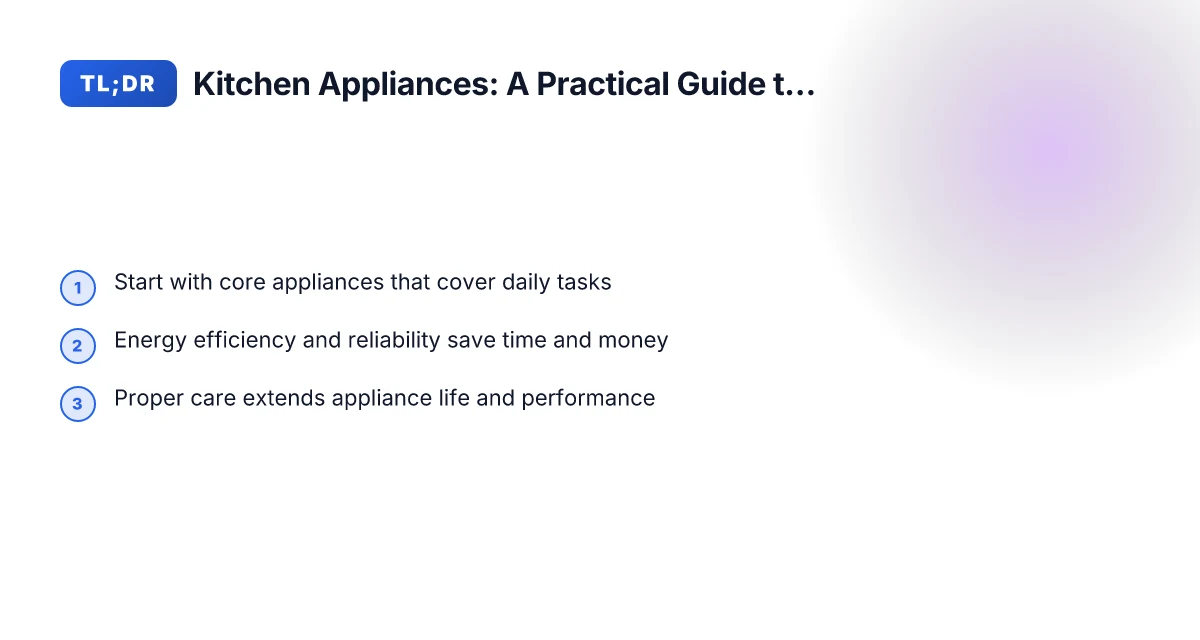
Maintenance, care, and troubleshooting
Proper care extends the life of kitchen appliances and helps them perform as designed. King bedroom furniture sets: what to know to shop smart and sleep well
- Regular cleaning: Wipe down surfaces, clean filters, and descale if needed (especially kettles, coffee machines, and steamers).
- Plan for replacement parts: Check for readily available filters, door seals, and bulbs in warranties.
- Ventilation and placement: Ensure good airflow around motors and heat sources. Avoid placing behind heat-producing appliances.
- Seasonal checks: Inspect seals on refrigerators and ovens. Tighten knobs and replace worn handles if needed.
- Troubleshooting basics:
- Refrigerator not cooling: Check temperature settings and door seals. Listen for compressor noise.
- Oven not heating: Verify power supply, ignition for gas ovens, and thermostat calibration.
- Dishwasher not cleaning: Check spray arms, filters, and rinse aid level.
If you encounter recurring issues, consult the manufacturer’s manual or a certified technician. Many brands offer extended warranties that cover parts and labor for a set period.
Smart features and future-proofing
Smart and connected appliances can simplify routines and help manage energy use.
- Smart control: Remote start, status notifications, and energy use metrics.
- App ecosystems: Compatibility with home assistants and energy dashboards.
- OTA updates: Firmware updates can improve performance and add features.
- Data privacy: Review what data is collected and how it’s used.
When adopting smart appliances, balance convenience with privacy and reliability. If you prefer a simple setup, non-smart models with robust performance are often more predictable and easier to repair.
Final recommendations: building a practical kitchen setup
- Start with fundamentals: A reliable refrigerator, a versatile range or oven, and at least one efficient small appliance that matches your cooking style (for many, a good blender or mixer).
- Prioritize energy efficiency: Look for Energy Star ratings and efficient cooling in refrigerators, or convection in ovens for speed and even cooking.
- Choose a cohesive plan: Aim for appliances that fit your space and workflow. A built-in look is appealing, but freestanding options offer flexibility.
- Think about maintenance: Pick models with accessible filters and parts, and schedule regular cleaning as part of your routine.
- Plan for upgrades: If you cook often, investing in a lead appliance such as a convection oven or a powerful mixer can pay off in better results and fewer batch limitations.
In summary, kitchen appliances are more than just tools. They shape how you prepare food, how efficiently you use energy, and how you enjoy time in the kitchen. By choosing the right core appliances, focusing on efficiency and capacity, and keeping up with maintenance, you can create a kitchen that serves your needs today and adapts to future cooking adventures. Kids Bedroom Furniture: Smart, Safe, and Stylish Picks for Every Age