Dining room furniture: a complete guide to choosing, arranging, and styling
A practical guide to selecting and arranging dining room furniture for style, comfort, and function.
Dining room furniture isn’t just about looking good. It’s about creating a space that supports everyday meals, entertaining, and family moments. The right pieces feel comfortable, function well, and reflect your style. This guide covers how to choose, arrange, and style dining room furniture so you get a room that works as hard as it looks.
Essentials core pieces comparison
| Piece | Key features | Typical dimensions (in) | Comfort/uso | Notes |
|---|---|---|---|---|
| Sofa | Seat depth, sofa height | 82-94 D x 84-100 W x 32-38 H | Very good | 2-3 seat common |
| Armchair | Depth, back height | 32-40 D x 30-38 W x 33-40 H | Comfortable | Pair with sofa |
| Coffee table | Height relative to seating | 16-18 H, 36-48 L, 18-28 W | Stable | Round/rectangle |
| Console/Buffet | Storage, width | 12-18 D x 60-84 W | Useful | Behind sofa option |
| Dining table | Shape, leg clearance | 28-30 H, length varies | Spacious | Extendable common |
| Dining chairs | Seat height, arms | 17-19 H seat | Comfortable | 4-8 per table |
Compiled November 2026; check the provider's site for current details.
Start with the essentials: the core pieces
Before you shop, map out the essentials you actually need. A set of timeless pieces will serve you well over the years.
The table
- Measure the room and decide on a table shape that fits: rectangular, oval, round, or square.
- Leave at least 36 inches (about 92 cm) of clearance around the table for easy movement.
- Consider extension options if your seating needs vary by season or guests.
- Material and finish affect durability and style. Solid wood is classic. Veneers can be more affordable. Metal and glass offer a contemporary vibe.
The chairs
- Choose chairs that balance style with comfort. Padded seats are nicer for long dinners, but upholstered chairs can be harder to maintain in high-traffic spaces.
- If you have a formal dining room, matching chairs work beautifully. For a more relaxed feel, mix and match with one or two statement chairs.
- Don’t neglect a comfortable height relative to the table. A standard seat height is around 18 inches (46 cm).
Storage and side pieces
- Sideboards and buffets provide surface space for placing dishes, a lamp, or a family photo.
- Consider a china cabinet if you own a collection or want display space.
- If space is tight, a slim console with storage can replace a larger sideboard.
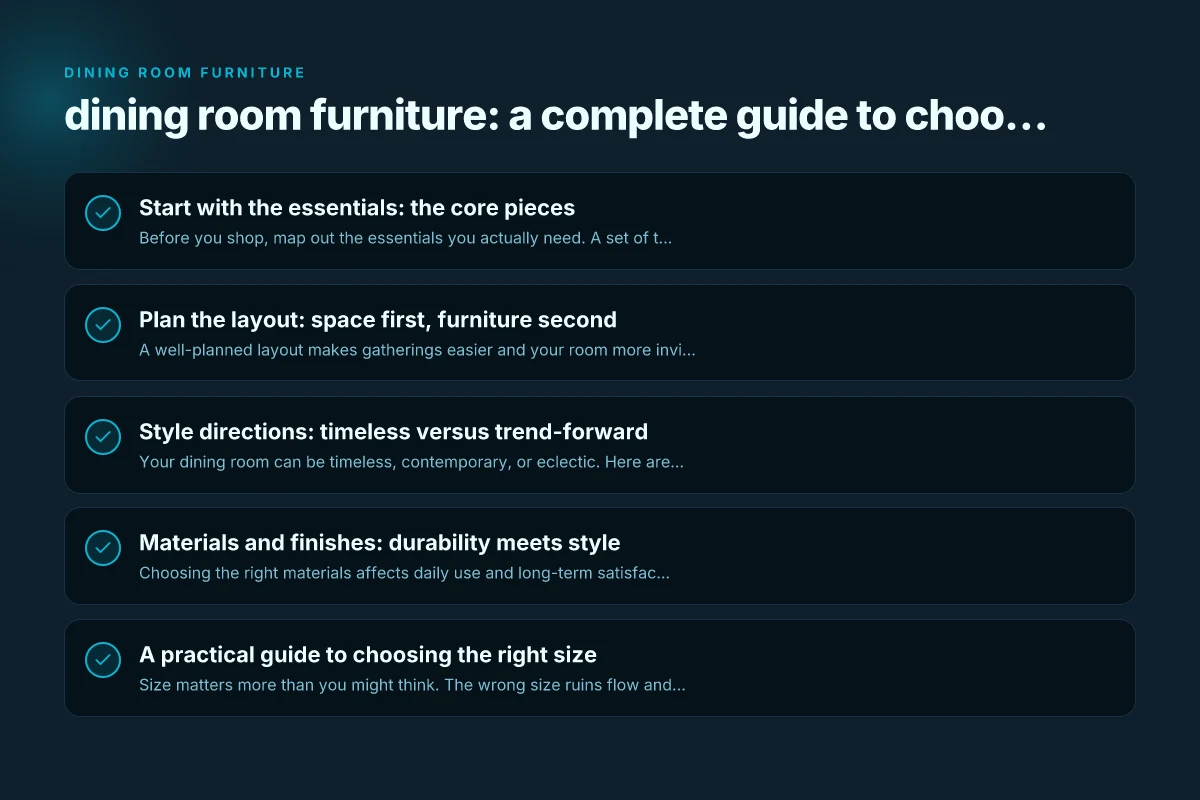
Plan the layout: space first, furniture second
A well-planned layout makes gatherings easier and your room more inviting.
Measure and sketch
- Draw your room to scale and mark doorways, windows, and built-ins.
- Decide where you want the table to sit in relation to the primary seating area and entry points.
- Account for lighting: position lighting fixtures over the table to ensure even illumination.
Traffic flow
- Maintain clear paths around the table. A 36-inch clearance is the minimum; 42–48 inches is ideal in busier spaces.
- If you have a small dining room, consider a drop-leaf or extendable table to maximize space when not dining.
Focal points
- A chandelier or pendant above the table creates a natural focal point.
- If you have a view or artwork, coordinate the dining area to complement it.
Style directions: timeless versus trend-forward
Your dining room can be timeless, contemporary, or eclectic. Here are common directions and how to execute them.
Classic / traditional
- Rich wood tones, carved details, and upholstered chairs.
- Balanced symmetry, a formal rug, and a refined color palette (cream, navy, olive, or burgundy).
Modern / contemporary
- Clean lines, minimal ornamentation, and mixed materials like wood, metal, and glass.
- Neutral base with bold accent colors or statement chairs.
Rustic / farmhouse
- Weathered wood, natural textures, and soft textiles.
- Mixed metals, a rough-hewn table, and casual seating.
Eclectic
- A mix of styles that harmonize through color, pattern, and scale.
- Start with a strong base piece (like a solid wood table) and layer in character through chairs, lighting, and accessories.
Plan the layout comparison Dining room decorating ideas
| Layout principle | Space use | Traffic flow | Measurement tips | Flexibility | Notes |
|---|---|---|---|---|---|
| Room zoning | Zone living, dining | Clear walk paths | Door widths measured | Modular pieces | Rugs define zones |
| Focal point | Align seating | Path clearance | Sofa facing point | Moveable accents | Fireplace / window |
| Scale balance | Large vs small | Grouping balance | 1.5x-2x seating area | Mixed sizes ok | Avoid crowding |
| Clearance standards | 3 ft min around furniture | 4 ft around tables | Door clearance | Adjustable | Use masking tape mockups |
| Extendable pieces | Increases flexibility | Closed shapes preferred | Storage needs | Wall space use | Consider storage |
Compiled November 2026; check the provider's site for current details.
Materials and finishes: durability meets style
Choosing the right materials affects daily use and long-term satisfaction.
Tables
- Solid wood: durable and timeless. Pros: long-lasting; Cons: heavier and pricier.
- Veneered wood: lighter and more affordable. Pros: versatile finishes. Cons: veneer may wear over time.
- Glass: modern and easy to wipe. Pros: makes a small room feel larger. Cons: shows fingerprints and can be less durable.
- Metal: strong and contemporary. Pros: great for industrial looks. Cons: can scratch easily.
Chairs
- Upholstered: comfortable but can stain. Choose stain-resistant fabrics or leather for durability.
- Wood: sturdy and classic. Easy to refinish.
- Metal or mixed materials: modern vibe. Durable but can be cold to touch.
Storage pieces
- Wood finishes should harmonize with the table.
- Consider doors and drawers that provide hidden storage for table linens, placemats, and napkins.
A practical guide to choosing the right size
Size matters more than you might think. The wrong size ruins flow and usability.
Table size and seating
- A table should have about 24 inches (60 cm) of space per place setting for comfortable dining.
- Round tables seat evenly and may feel more intimate. Rectangular tables can accommodate more guests with both ends usable for serving.
Rug sizing (optional but impactful)
- A rug under a dining table should be large enough to accommodate chairs when pulled out. A good rule is 24–36 inches (60–90 cm) beyond the table edges on all sides.
- In smaller rooms, avoid rugs that overpower the space. A smaller, solid rug can still anchor the table.
The one Markdown table: quick size and care comparison
| Aspect | Solid wood table | Glass top table | Veneered wood table | Metal table |
|---|---|---|---|---|
| Durability | Very durable | Moderately durable | Moderate | Very durable |
| Maintenance | Wipe clean; occasional polish | Easy to clean; fingerprints show | Easy; gentle care | Wipe clean; rare scratches |
| Style vibe | Timeless warmth | Modern, airy | Flexible, affordable | Industrial or contemporary |
| Weight | Heavy | Light to medium | Light to medium | Light to heavy (varies) |
| Price range | High to mid | Mid to high | Low to mid | Mid to high |
Notes: Always check care guidelines from manufacturers, especially for upholstery and finishes. Paneled sides or decorative legs can affect leg room and chair placement. Dining room furniture sets: how to choose, compare, and style
Lighting and textiles: the finishing touches
Lighting unifies the space and textiles add warmth and softness.
Lighting
- A central chandelier or pendant over the table provides task lighting and a focal point.
- Layer lighting: add a dimmable overhead fixture plus wall sconces or a buffet lamp for ambiance.
Textiles
- Use a table runner, placemats, and napkins to add color and texture.
- A rug under the dining set can define the zone and add comfort underfoot.
- Chairs with cushions or slipcovers can update the look seasonally.
Accessories
- Art, plants, and decorative bowls on a sideboard can personalize the room without cluttering the table.
- Keep a few guest-friendly items handy, like extra napkins or a small tray for serving.
Style directions comparison
| Style direction | Key vibe | Materials match | Longevity | Trend risk | Best room type |
|---|---|---|---|---|---|
| Timeless | Calm, versatile | Leather, wood, linen | High | Low | Living/dining hubs |
| Modern minimalist | Clean lines | Metal, glass, veneer | Medium | Low-mid | Small apartments |
| Rustic | Warm, cozy | Reclaimed wood, woven | Medium | Medium | Family rooms |
| Transitional | Balance | Mixed finishes | High | Medium | Any room |
| Trend-forward | Bold accents | Velvet, lacquer, brass | Low-Medium | High | Showpiece corners |
| Eclectic | Personal, layered | Mixed textures | High | Medium | Loft spaces |
Compiled November 2026; check the provider's site for current details.
Budgeting and buying tips: quality over quantity
- Prioritize the table and chairs as your core investment. They endure daily use and define the room's look.
- Look for solid construction: check joinery (dovetails, mortise-and-tenon), not just screws and staples.
- Consider timeless finishes that will age well. Neutral woods (oak, walnut) pair with many decors.
- If you’re shopping over time, start with a table and chairs, then add a buffet, then a rug or lighting to complete the space.
Maintenance and care
- Wipe up spills promptly on wooden or upholstered furniture to prevent stains.
- Use coasters and placemats to protect surfaces from heat and moisture.
- Vacuum fabric chairs regularly and rotate cushions for even wear.
- Apply furniture polish or wax as recommended by the manufacturer for wooden pieces.
The final word: a recommended approach
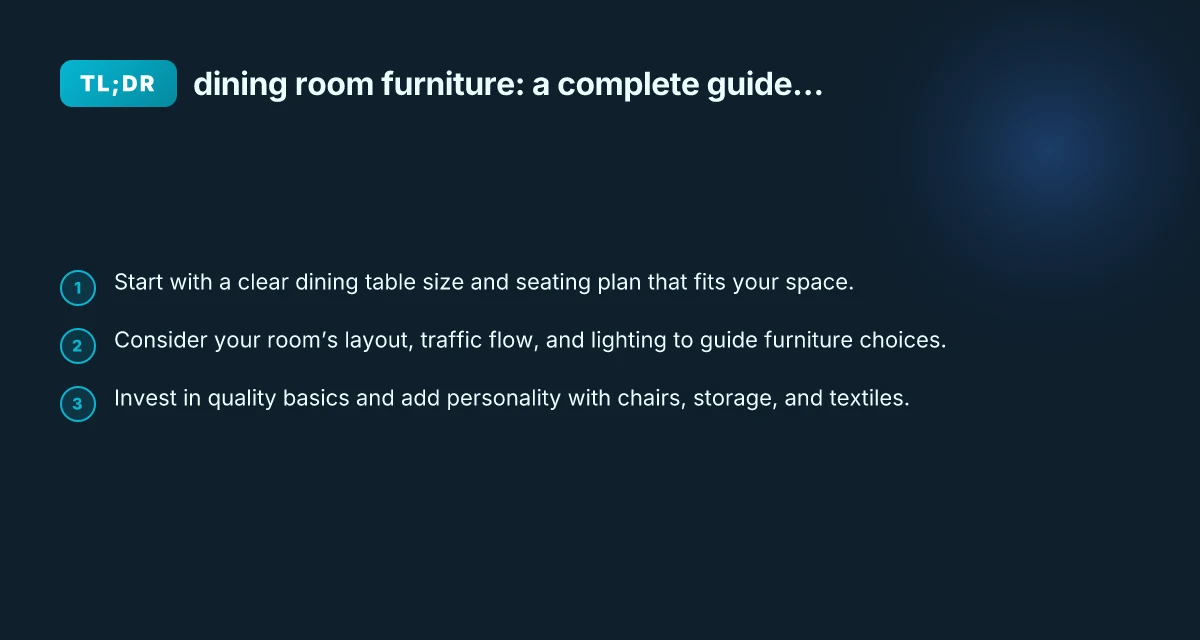
- Begin with a two-step plan: define the table size and seating needs, then map the layout to fit your room.
- Choose a style that matches your home’s character and your daily life. If you host often, prioritize durability and ease of maintenance.
- Layer in personality with chairs, storage, textiles, and lighting. Small changes, like a new rug or a pair of bold chairs, can transform the space without a full redo.
- If you’re unsure, seek samples or swatches for finishes and test how the furniture looks in different lighting conditions and at different times of day.
Recommendation For most dining rooms, a solid wood rectangular table with 6 matching chairs strikes a versatile balance between function and aesthetics. Add a sideboard or buffet for storage and a statement pendant light to complete the look. If space is your constraint, consider a round or oval table with wings or leaves to extend seating as needed. Choose upholstery with stain-resistant fabric and a neutral base color so you can rotate accent pieces seasonally without a full reinvention. Dining Room Decor: Elevate Your Space with Style and Function