Dining Room Decor: Elevate Your Space with Style and Function
Practical tips and inspiring ideas to transform your dining room with cohesive decor and smart layering.
The dining room is more than a place to eat. It’s where conversations happen, celebrations unfold, and daily rituals are shared. If your dining room feels dated or disconnected from the rest of your home, you can refresh it with thoughtful decor that balances beauty and practicality. This guide walks you through practical ideas, from choosing a cohesive color story to selecting lighting, textiles, and furniture that work in harmony.
Lighting scenarios and their ambiance
| Type | Purpose | Amount / placement | Mood | Controls | Notes |
|---|---|---|---|---|---|
| Ambient | overhead fixture | even spread | warm/soft | dimmable | main light |
| Task | dining area | above table | focused | adjustable | improves visibility |
| Accent | art/ shelves | targeted glow | cozy detail | wall or table | adds depth |
Compiled November 2026; check the provider's site for current details.
Start with a cohesive color story
A successful dining room often hinges on color. Start by choosing a base color that you love and that pairs well with the rest of your home. Then add one or two accent hues to keep things interesting without overwhelming the space.
- Base colors: warm neutrals (cream, taupe, soft gray) or rich greens and blues.
- Accent hues: metallics (brass, copper), bold jewel tones, or a contrasting pop like saffron.
- Pairings: warm wood with cool stone, or matte finishes with subtle shine to create depth.
If you have an open-plan layout, ensure the dining area shares the same mood as adjacent rooms. Use recurring colors in textiles, artwork, and accessories to create a visual thread that ties the spaces together.
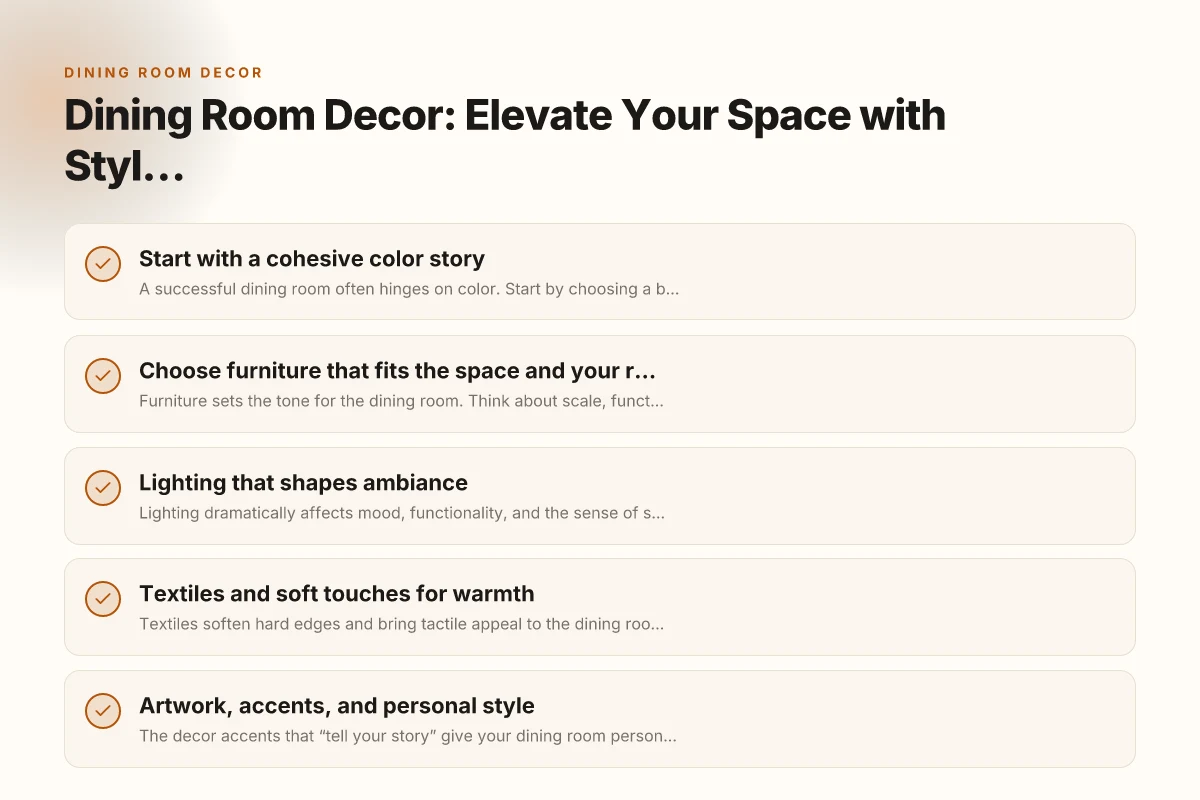
Choose furniture that fits the space and your routine
Furniture sets the tone for the dining room. Think about scale, function, and how you live in the space.
- Table: measure the room to allow at least 36 inches of clearance around it. An extendable table can accommodate gatherings without sacrificing everyday use.
- Chairs: consider upholstered seats for comfort or mixed seating with benches to save space. If you use a long table for big dinners, matching chairs provide a cohesive look.
- Storage: a sideboard or buffet adds surface for serving dishes and a place to store linens and serveware.
- Materials: wood brings warmth. Metal can add modern contrast. Glass can lighten a heavy room but needs balance with solid pieces.
A practical approach is to choose a table in a natural wood finish and pair it with chairs in a complementary material. If you prefer a more eclectic vibe, blend styles, but keep a shared motif, like a common wood tone or similar metal finishes, to anchor the space. Dining Room Curtains: How to Choose, Style, and Use Them for a Polished Dining Space
Lighting that shapes ambiance
Lighting dramatically affects mood, functionality, and the sense of scale in a dining room. The right layered lighting plan includes ambient, task, and accent lighting.
- Chandeliers or pendant lights over the table create a focal point and soften the room’s center.
- Dimmer switches give you control over the mood from casual meals to intimate dinners.
- Sconce lighting or wall lamps on the side walls can add warmth and reduce glare.
- Accent lighting highlights art, a decorative piece, or a textured wall.
Consider a statement fixture if your ceiling height allows it. For low ceilings, choose a flush-mount or a compact pendant. If you have a long, narrow dining room, install multiple lighter fixtures to even out brightness along the table’s length.
Textiles and soft touches for warmth
Textiles soften hard edges and bring tactile appeal to the dining room.
- Table linens: a runner or placemats in a coordinating color can define the table’s personality without overwhelming it.
- Chair cushions: add comfort and a pop of color or pattern. Remember to choose fabrics that are durable and easy to clean.
- Window treatments: light, breezy drapery can soften the room and control glare, while heavier curtains offer privacy and insulation.
- Rugs: a rug under the table anchors the space and can protect floors. Choose a rug large enough to accommodate chairs pulled out from the table.
Mix patterns sparingly. Pair a subtle pattern with a solid that echoes one of the colors in the pattern. Layer different textures, linen, velvet, jute, or wool, to create depth and interest. Dining room colors: how to choose the perfect palette for your space
Artwork, accents, and personal style
The decor accents that “tell your story” give your dining room personality without overpowering it.
- Gallery wall: a curated collection of framed prints, photos, or botanical art can add character.
- Sculptural objects: a few striking pieces on a sideboard or shelf can serve as conversation starters.
- Greenery: a vase of fresh flowers, a tall plant in a corner, or a trailing succulent can bring life to the room.
- Mirrors: a mirror can bounce light around the space and make a small dining room feel larger.
Avoid clutter by selecting a few well-considered pieces rather than filling every surface. Change out seasonal accents to refresh the room throughout the year.
A practical comparison: materials and vibes
| Material | Vibe / Use | Pros | Cons |
|---|---|---|---|
| Solid wood table | Warm, timeless, versatile | Durable, timeless, can be refinished | Can be heavy, pricier |
| Glass-top table | Light, modern, makes rooms feel bigger | Easier to clean, visually lighter | Shows smudges, colder touch |
| Metal chairs | Industrial or modern edge | Durable, sleek, easy to wipe | Less comfortable long-term |
| Upholstered chairs | Comfortable, inviting | Soft seating, color/personality | Stains, cleaning considerations |
| Sideboard / buffet | Storage + surface for serving | Keeps essentials organized | Takes floor space |
| Rugs | Defines the dining zone | Adds texture, color, warmth | Needs size and pile care |
This quick table helps you compare key furniture decisions. Remember, the best choice aligns with how you live. If you host weekly dinners with kids and pets, prioritize stain-resistant fabrics and a durable tabletop.
Design upgrades and budget-savvy tweaks
You don’t need a full remodel to refresh your dining room. Consider these thoughtful upgrades that have big impact without a big price tag. Dining Room Chandeliers: A Complete Guide to Choosing, Installing, and Styling
- Swap or update hardware: new drawer pulls on a sideboard can change the room’s mood.
- Add a gallery or a single large artwork: anchoring the space with art creates a focal point.
- Introduce a statement rug: a rug that extends beyond the chair legs frames the table and defines the dining zone.
- Use color blocking: paint the wall behind the sideboard a slightly bolder shade to create depth without repainting the whole room.
- Seasonal swaps: rotate textiles, like table runners and cushions, to reflect holidays or seasons.
If you’re decorating on a budget, shop secondhand for vintage lighting or a console that can be refinished. Don’t overlook simple updates like a fresh coat of paint on cabinets or a new lampshade, which can dramatically alter the room’s feel.
Practical layout tips for flow and function
A well-laid dining room supports everyday meals and larger gatherings.
- Clearance: aim for at least 36 inches around the table for comfortable movement.
- Traffic routes: keep pathways clear between the dining area and adjacent rooms or the kitchen.
- Multirole spaces: if you need extra work surface, consider a slim sideboard that doubles as a bar or charging station.
- Storage zoning: place everyday dining items in the sideboard for quick setup and casual meals.
If your room has a fixed window seat or awkward layout, consider built-in benches or custom seating to maximize seating without crowding. Use vertical storage like tall cabinets or wall-mounted shelves to keep surfaces uncluttered.
Final recommendation
Start with a simple, cohesive color palette and choose a central piece, the dining table or a standout light fixture, as the anchor. Build around it with complementary chairs, a balanced rug, and a sideboard for essential storage. Layer lighting to create warmth and adjust the mood, then add textiles and artwork that reflect your style. Small changes, such as updated hardware, a fresh rug, or new curtains, can refresh the room dramatically without a full redesign. By focusing on flow, texture, and personal touches, you’ll create a dining room that feels both inviting and functional, ready for everyday meals and special occasions alike. Dining room chairs: everything you need to know to choose the right ones