Church chairs: choosing the right seating for worship spaces
A practical guide to selecting church chairs, from comfort and durability to layout and accessibility considerations.
Church chairs are a core investment for any worship space. The right chairs enhance comfort, support long services, and fit your sanctuary’s aesthetics. This guide breaks down what to consider when choosing church chairs, from materials to layout options, so you can select seating that serves your congregation for years to come.
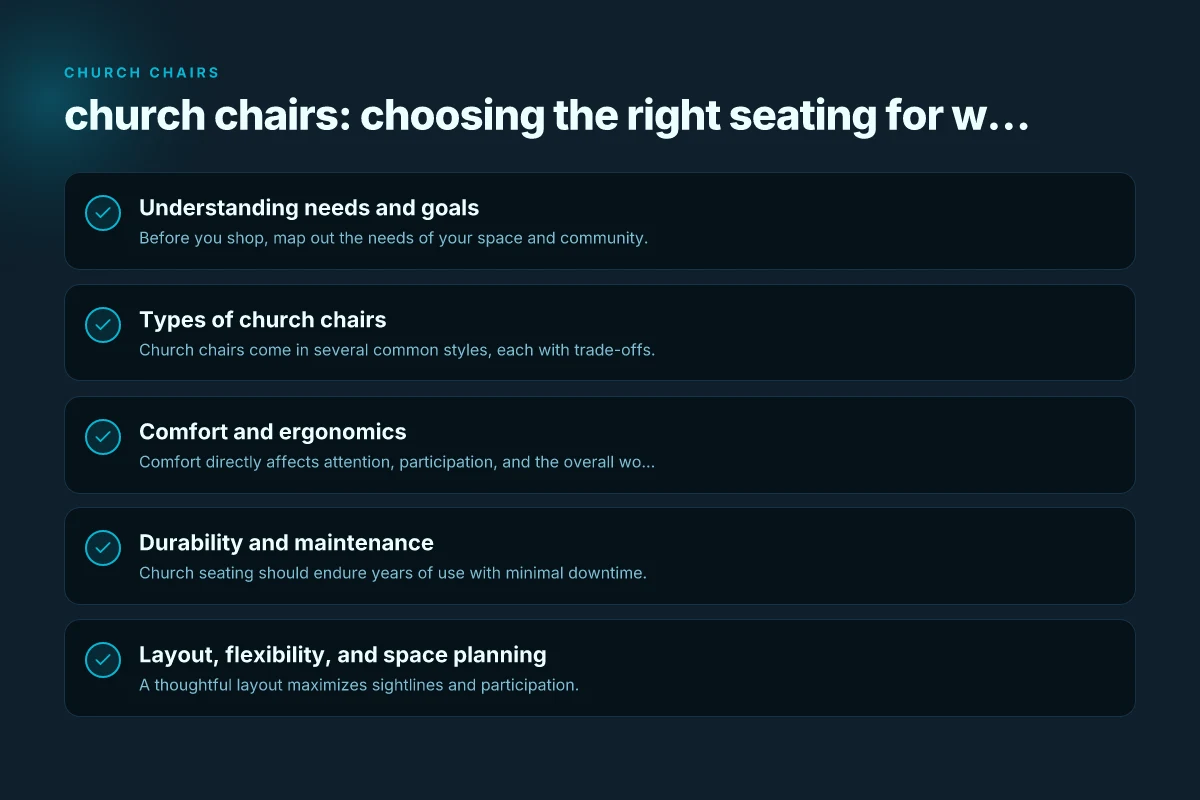
Understanding needs and goals
Before you shop, map out the needs of your space and community.
- Seating capacity: estimate current attendance plus growth. Consider chairs that stack or fold to free up space for events.
- Service length and activity: longer services demand comfortable cushions and supportive backs. Multi-use spaces benefit from lighter chairs.
- Aesthetics: match the sanctuary’s design, from traditional wood tones to modern metal frames.
- Accessibility: ensure seating accommodates worshippers with mobility or seating challenges.
- Maintenance budget: factor replacement cushions, cleaning, and storage into total cost.
Key questions to answer
- Do you need chairs that are mobile for events?
- Will the chairs be used outdoors or in harsh environments?
- Are you prioritizing light weight for easy reconfiguration?
Types of church chairs
Church chairs come in several common styles, each with trade-offs.
- Traditional church chairs: often wood or wood-aluminum combos with padded backs and seats. Sturdy and timeless.
- Padded steel or aluminum chairs: lighter, durable, and excellent in large venues with frequent reconfigurations.
- Stackable or folding chairs: maximize floor space. Watch for comfort on longer visits.
- Auditorium or classroom chairs: built for easy maintenance and high-density use. May lack armrests.
- Banquet or dining style: sometimes used in multi-purpose rooms. May be less supportive for worship.
Pros and cons at a glance
| Style | Comfort for long services | Mobility and reconfiguration | Durability and upkeep | Best use |
|---|---|---|---|---|
| Traditional wood | Often very comfortable; classic look | Moderate | High if finished well; can be heavy | Sanctuaries with a classic aesthetic |
| Padded metal | Very comfortable; good support | High | Very durable; easy to clean | Large gatherings, multi-use spaces |
| Stackable/folding | Moderate; depends on cushions | Excellent | Moderate; hinges and joints wear | Flex spaces, temporary events |
| Auditorium/classroom | Good for seating density | High | High; easy to clean | Multi-purpose rooms, schools |
Comfort and ergonomics
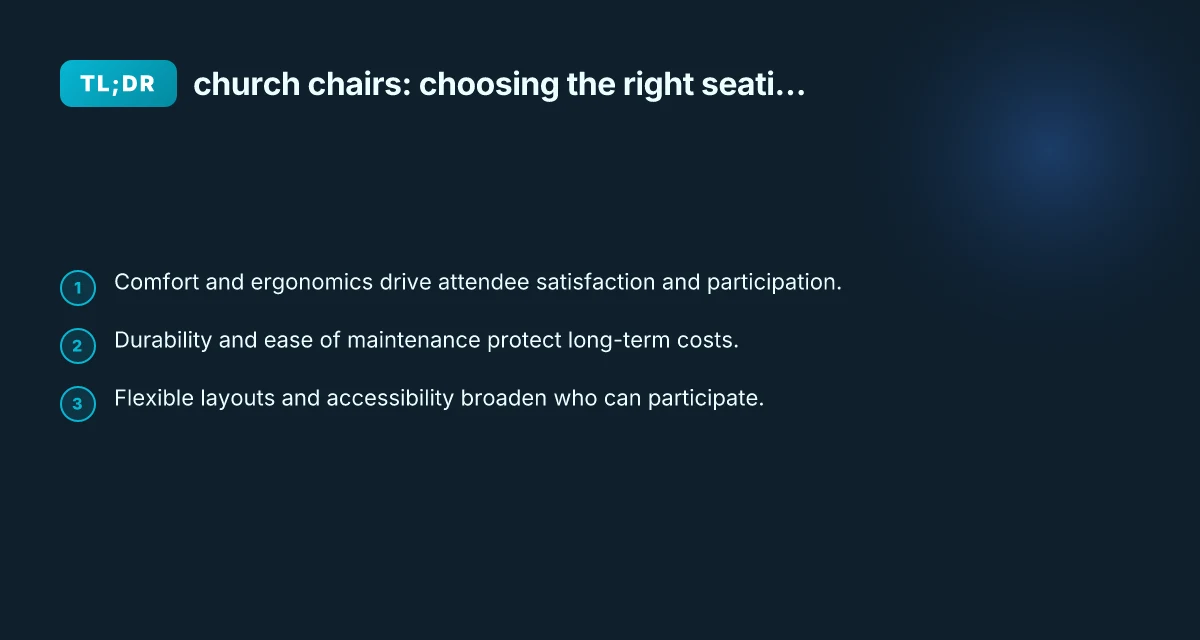
Comfort directly affects attention, participation, and the overall worship experience.
- Seat depth and height: ensure average adult leg clearance and comfortable knee bend.
- Back support: choose chairs with contoured backs that provide lumbar support.
- Cushion firmness: medium firmness tends to suit a wide audience. Consider removable covers for cleaning.
- Armrests: optional but helpful for elderly worshippers. Ensure they don’t hinder folding or stacking.
- Upholstery materials: consider vinyl, fabric, or leather alternatives based on cleaning needs and allergies.
Durability and maintenance
Church seating should endure years of use with minimal downtime. Church chair: choosing the right seating for worship spaces and community rooms
- Frame material: steel frames resist bending and corrosion. Wood offers classic warmth but may require refinishing.
- Finish and coatings: powder-coated frames resist chips. Vinyl or leather alternatives resist stains.
- Cushion covers: removable, washable covers simplify cleaning. Consider moisture resistance.
- Mounting and stacking: verify stacking height and stability. Improper stacking can damage legs.
- Replacement parts: check availability of spare parts, such as feet, armrests, or cushions.
Layout, flexibility, and space planning
A thoughtful layout maximizes sightlines and participation.
- Sightlines: ensure every seat has a clear view of the pulpit, communion table, and screen.
- Aisle width and safety: meet local accessibility codes and consider emergency egress.
- Balcony and main floor: maintain comfortable ratios so no one feels far from the stage.
- Rows vs. clusters: rows are traditional. Clusters or semi-circles can improve engagement in modern spaces.
- Storage: plan for stacking chairs or foldable options to reclaim space between services.
Layout planning checklist
- Measure room length, width, and any obstructions.
- Determine maximum occupancy and desired user experience.
- Decide on primary seating type (rows vs. modular seating).
- Plan entrance, exits, and accessibility routes.
Accessibility and inclusion
Inclusive design ensures everyone can participate with dignity.
- Wheelchair access: provide designated spaces that comply with accessibility standards.
- Clear pathways: keep aisles unobstructed and wide enough for mobility devices.
- Finishes and textures: use non-slip floors and cushioned seating for comfort.
- Hearing and sight considerations: space for assistive listening devices and visible screens for announcements.
Budgeting and procurement
A practical budget helps you choose wisely without overextending resources.
- Total cost of ownership: include purchase price, cushions, maintenance, cleaning, and replacement parts.
- Warranty terms: look for long-term frame warranties and cushion fabric guarantees.
- Lead times: custom finishes or specialty chairs may require longer production times.
- Supplier support: prefer vendors who offer installation, reconfiguration services, and parts.
Comparing common options
When evaluating options, consider long-term value, not just upfront cost. The table below highlights typical trade-offs among common chair styles. Childrens bedroom furniture: smart, safe, and stylish picks for kids’ rooms
| Style | Comfort for long services | Mobility | Maintenance | Aesthetic fit | Ideal for |
|---|---|---|---|---|---|
| Traditional wood | High with cushions | Moderate | Medium (finish care) | Classic sanctuary feel | Traditional churches, chapels |
| Padded metal | Very comfortable | High | Low (easy to clean) | Modern or multi-purpose | Large congregations, multi-use venues |
| Stackable folding | Moderate | High | Medium (fabric care) | Flexible; neutral | Event halls, schools, overflow seating |
| Auditorium/classroom | Good density | High | Medium | Practical, utilitarian | Multi-purpose rooms, educational spaces |
How to choose and where to buy
With needs defined, you can shortlist chairs from reputable suppliers.
- Request quotes for several styles and ask for in-situ demonstrations.
- Check for test chairs to assess comfort, weight, and stacking stability.
- Inquire about customization options: upholstery colors, leg finishes, and logo embroidery if desired.
- Ask about installation and layout services or recommendations for room planning.
Community input can also guide decisions. Involve pastors, choirs, ushers, and maintenance staff to gather perspectives on comfort, accessibility, and daily care. If possible, stage a week with sample chairs to observe real-world performance.
Final recommendation
For most congregations seeking a balance of comfort, durability, and flexibility, padded metal chairs offer a strong value proposition for large, multi-use spaces. They end-to-end perform well in daily worship, weddings, funerals, and events. If your sanctuary emphasizes a traditional look and you don’t need frequent reconfiguration, traditional wood chairs with high-quality cushions provide timeless appeal and lasting comfort. For very tight budgets or high-density needs, stackable or folding chairs can fill spaces without permanent changes, provided you select models with comfortable cushions and sturdy frames.
When purchasing, prioritize chairs with ergonomic back support, a durable frame, and removable, washable coverings. Confirm that the chairs can be safely stacked or reconfigured without damaging the floor or chair legs. Finally, ensure your choice aligns with accessibility requirements and sightline considerations to keep every member of your congregation connected to the service. If you want a specific recommendation tailored to your space, share your room measurements, attendance patterns, and any design constraints, and I can help narrow the options. Childrens bedroom decor Australia intended for present home