
Childrens bedroom furniture: smart, safe, and stylish picks for kids’ rooms
A practical guide to selecting durable, stylish, and safe childrens bedroom furniture that grows with your child.
Children’s bedroom furniture isn’t just about looks. It’s about creating a space that supports play, study, sleep, and storage, without compromising safety. When you invest in the right pieces, a child’s room can grow with them, adapting from toddler to teen. This guide breaks down what to look for, how to mix and match styles, and what questions to ask before buying.
Comparison of bed types and sleep setups
| Bed Type | Pros | Cons | Ideal For | Price Range |
|---|---|---|---|---|
| Platform bed | Sleek, low footprint | May require new mattress | Standard rooms | $$ |
| Loft bed | Maximizes floor space | Stairs may be risky for toddlers | Small rooms, play area above | $$$ |
| Cabin/tunk bed | Fun look, extra storage | Heavier, assembly time | Shared rooms | $$$ |
| Adjustable bed | Customizable positions | Higher cost | Ergonomic needs, growth | $$$$ |
| Storage bed | Built-in drawers | Weight in loading | Tidy rooms, small spaces | $$ |
| Canopy bed | Playful aesthetic | Maintenance cleaning | Creative styling | $$$ |
Compiled November 2026; check the provider's site for current details.
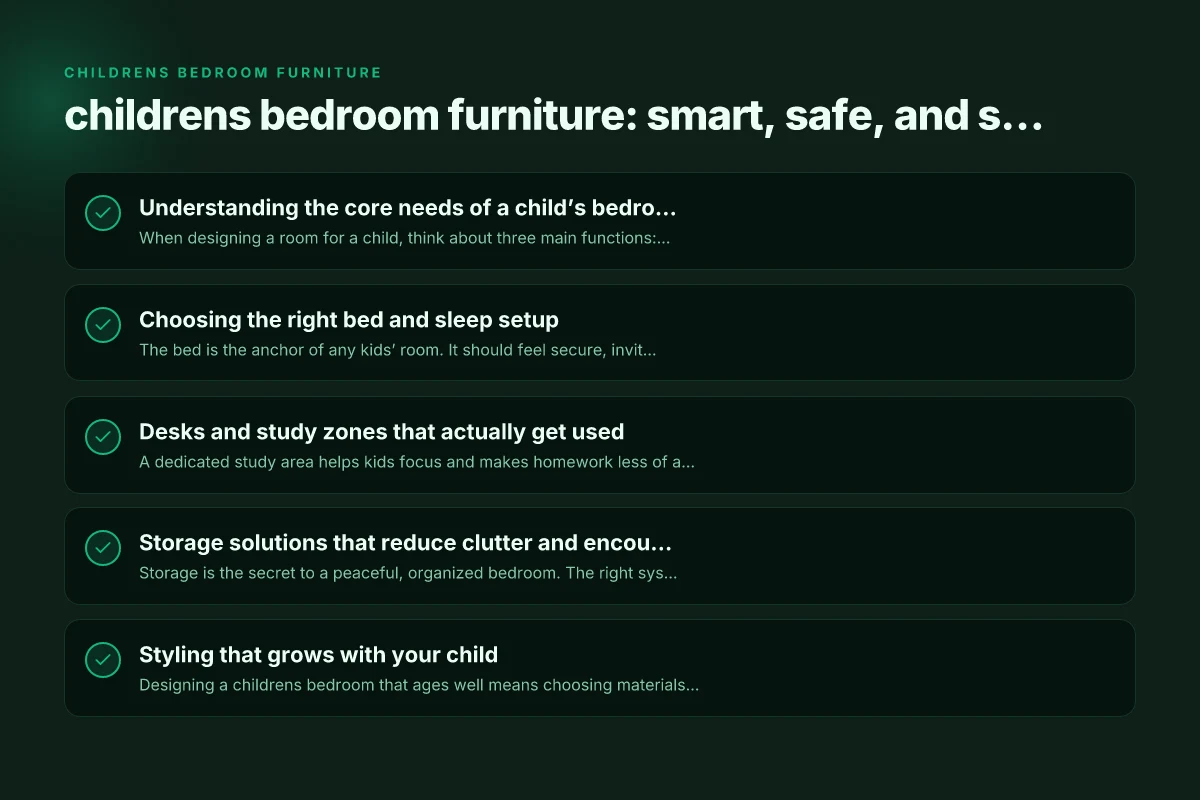
Understanding the core needs of a child’s bedroom
When designing a room for a child, think about three main functions: sleep, study, and play. Furniture should reinforce these activities rather than hinder them.
- Sleep: A sturdy bed with a low profile for easy access, a reliable mattress, and a space-saving nightstand.
- Study: A desk at the proper height, a comfortable chair, and adequate lighting.
- Play and storage: Ample storage for toys and clothes, plus a surface for crafts or puzzles.
Safety is the backbone of every decision. Always check for:
- Non-toxic finishes and paints
- Sturdy construction with no sharp edges
- Slower-growing features (like height-adjustable desks)
- Proper clearance around furniture to prevent tipping
Choosing the right bed and sleep setup
The bed is the anchor of any kids’ room. It should feel secure, inviting, and sized appropriately for the child.
- Toddler to preschool: A low bed or a toddler bed with guard rails helps transition from cot to bed.
- Primary school: A standard single bed or low loft bed to maximize floor space.
- Tweens and teens: A full or long single bed offers comfort as they grow, sometimes with underbed storage drawers.
Key considerations: Childrens bedroom decor Australia intended for present home
- Materials: Solid wood frames tend to last longer, while engineered wood can be lighter and budget-friendly.
- Guard rails: Essential for younger children. Choose rails that prevent climbing.
- Mattresses: A medium-firm mattress with a breathable cover supports healthy sleep and grows with the child if you choose a convertible option.
If space is tight, consider a loft bed with a desk or storage underneath. This combo frees up floor area for play and learning.
Desk and study zone effectiveness for kids
| Desk Type | Ergonomics | Storage | Surface area | Kids use frequency | Assembly / futz | Price Range |
|---|---|---|---|---|---|---|
| Standard desk | Comfortable height | Drawer(s) | Moderate | High | Straightforward | $$ |
| Standing desk | Encourages movement | Less table storage | Medium | Moderate | $$$ | |
| L-shaped desk | Double surface | Corner storage | Large | High | Moderate | $$$ |
| Wall-mounted desk | Space-saving | Minimal | Small | Moderate | Easy | $ |
| Desk with hutch | Built-in shelves | Plenty | Large | High | Moderate | $$$ |
| Floating desk | Minimal footprint | No legs clearance | Small | Low | Easy | $ |
Compiled November 2026; check the provider's site for current details.
Desks and study zones that actually get used
A dedicated study area helps kids focus and makes homework less of a battle. The best setup grows with them, adapting from handwriting to digital work. Chic apartment bedroom design ideas regarding your own home
- Desk height: For a child around ages 6–12, desks typically range from 20-28 inches high. An adjustable-height desk is ideal for long-term use.
- Chair: Sit-height should allow feet to rest flat, with a slight knee bend. Look for ergonomic support and a washable seat.
- Lighting: A combination of ambient light and task lighting reduces eye strain and sets a study routine.
Practical layout ideas:
- Place the desk near a window for natural light, supplement with a desk lamp.
- Choose a desk with built-in storage, drawers or cubbies, to keep supplies organized.
- If space is limited, a wall-mounted folding desk can provide a study surface without occupying floor space.
Storage solutions that reduce clutter and encourage independence
Storage is the secret to a peaceful, organized bedroom. The right systems teach kids to pick up after themselves and keep their room usable.
- Open bins and baskets: Easy to access for smaller kids learning to sort toys by category.
- Tall wardrobes: Maximize vertical space for clothes and costumes.
- Under-bed storage: A clever way to reuse space without bulky dressers.
Helpful storage ideas:
- Label bins with pictures for younger children to understand where things go.
- Use a mix of closed storage (drawers/doors) for a tidy look and open shelves for displaying favorites.
- Integrate a small wardrobe area with a hanging rail and shelf for outfits, keeping clothes off the floor.
Styling that grows with your child
Designing a childrens bedroom that ages well means choosing materials and palettes that aren’t tied to a single phase or trend. Cheap dining room sets: how to find affordable style without sacrificing quality
- Neutral base with pops of color: Start with a calm, versatile foundation and add color through removable textiles like cushions, curtains, and rugs.
- Durable finishes: Opt for hard-wearing laminates, solid woods, or powder-coated metal to resist wear from active kids.
- Personal touches: Allow kids to influence the look with their own shelves for books, artwork, and collectibles.
Modular furniture offers flexibility:
- Intervention-free changes as tastes change
- Easy to replace one piece without overhauling the room
- Keeps the room cohesive even when you update accents
Storage solutions comparison (clothes, toys, books)
| Storage Type | Capacity | Access (kids) | Safety features | Assembly complexity | Longevity | Cost |
|---|---|---|---|---|---|---|
| Chest of drawers | High | Easy | Tips to avoid tipping | Moderate | Long | $$ |
| Toy chest with lid | Large | Safe lid with assist | Soft edges | Easy | Medium | $ |
| Modular cube system | Flexible | Easy to customize | Corner brackets | Moderate | Long | $$$ |
| Wardrobe with rails | Good for clothes | Easy peasy | Sliding doors | Moderate | Long | $$ |
| Under-bed drawers | Low height access | Minimal | Easy | Low | $ | |
| Hanging organizers | Very accessible | Portable | Hooks only | Easy | Short | $ |
Compiled November 2026; check the provider's site for current details.
A practical comparison: modular vs traditional bedroom sets
| Feature | Modular furniture | Traditional set |
|---|---|---|
| Growth potential | High (reconfigurable pieces) | Limited (fixed layouts) |
| Customization | High (mix-and-match pieces) | Moderate (preset layouts) |
| Space efficiency | Often better (stackable/overlapping use) | Generally fixed footprint |
| Price impact | Can be higher upfront, save over time | Often cheaper upfront, may need replacement |
| Longevity | Longer with adjustments | Shorter if room needs change |
| Safety considerations | Wide safety options with adjustable heights | Fixed safety features, less adaptability |
When choosing between modular and traditional systems, think about your space, budget, and how you expect the room to evolve over 5–10 years. If you want a room that can shift from playroom to study space to sleep sanctuary, modular furniture is often the smarter long-term bet. Cheap dining room chairs
Materials, finishes, and maintenance
Durability is a key concern in a kids’ room. The materials you choose affect not only safety but longevity and ease of cleaning.
- Wood: Solid wood is durable and repairable but heavier and pricier. Engineered wood can be a budget-friendly alternative with decent longevity.
- Finishes: Low-VOC, non-toxic paints and sealants protect little lungs and reduce odor. Water-based finishes are generally easier to clean.
- Surfaces: Smooth, rounded edges prevent scrapes. Avoid heavy or sharp corner guards that can trap dust.
- Maintenance: Choose washable fabrics for upholstery, including slipcovers that can be removed and laundered.
Tips:
- Regularly tighten screws and check for wobble in beds, desks, and shelves.
- Use coaster pads under furniture to protect floors and reduce noise.
- Clean high-touch surfaces weekly with child-safe cleaners.
Safety first: practical checks before you buy
- Certification: Look for furniture that meets safety standards appropriate to your country (for example, safety certifications like BIFMA in the U.S., or EN standards in Europe, depending on product category).
- Weight limits: Ensure the piece can handle active kids and any potential growth in weight and height.
- Tip-over risk: Anti-tip hardware should be included or easily added to tall wardrobes and dressers.
- Finish and materials: Avoid MDF with high formaldehyde emissions. Prefer solid wood, plywood, or certified composites with low VOCs.
- Assembly: If you’re not handy, choose furniture with straightforward assembly or professional setup options.
How to plan a room that feels cohesive yet flexible
A well-planned room blends function with a sense of personality. Start with a simple layout and add pieces as needs grow.
- Define zones: Sleep area, study corner, and play or reading nook.
- Scale and rhythm: Keep a consistent visual rhythm by repeating colors or materials across furniture pieces.
- Accessorize thoughtfully: Use rugs, curtains, and wall art to anchor the color palette without overpowering the space.
Practical layout tips: Cheap bedroom furniture: smart ways to furnish your space without breaking the bank
- Put the bed away from the door to reduce anxiety and create a focal point.
- Position the study desk near natural light but away from the bed to minimize distractions.
- Use multifunction pieces, such as a bed with drawers underneath or a storage bench at the foot of the bed.
Final recommendation: choosing a balanced, future-proof setup
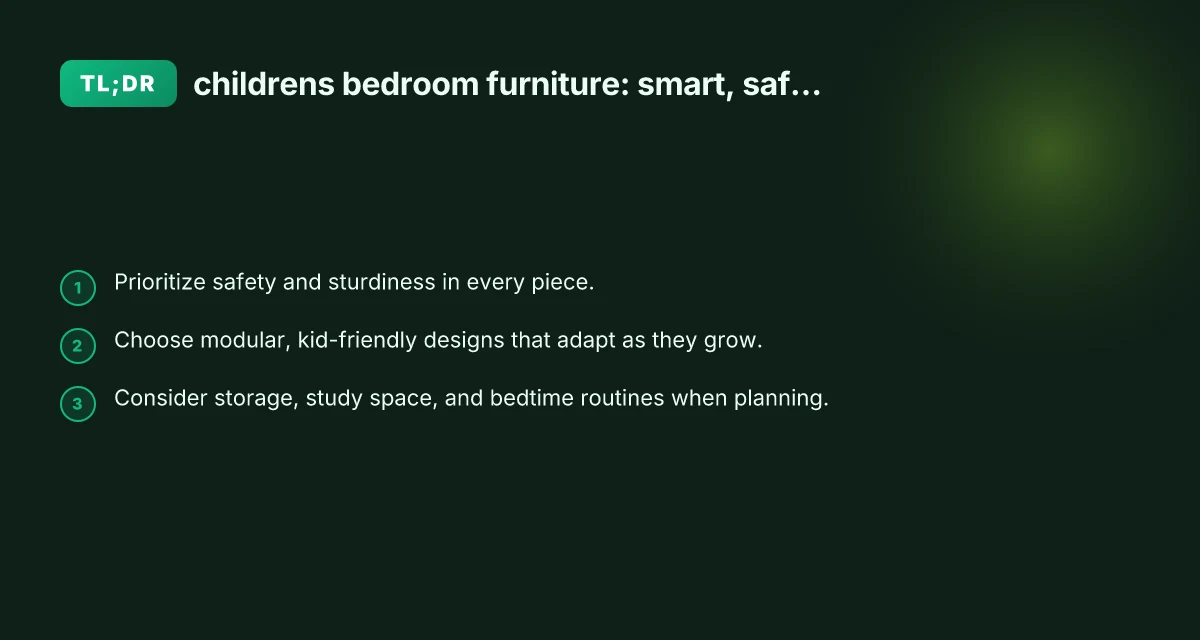
To create a children’s bedroom that remains inviting, flexible, and safe, prioritize a balanced mix of sturdy foundational furniture with modular, adaptable pieces. Start with a solid bed and a functional desk, then layer in storage that is easy for kids to access and maintain. Choose finishes that are non-toxic and easy to clean, and plan for growth with adjustable or modular designs. Finally, involve your child in the process to foster ownership and excitement about their space. With thoughtful planning, the room will evolve with them, supporting sleep, study, and play for years to come.