What to consider when purchasing office furniture
A practical guide to choosing office furniture that fits your space, budget, and work style.
Office furniture purchases should support productivity, comfort, and longevity. Before you shop, map out how your space and teams work. The right pieces can boost focus, reduce fatigue, and adapt as your business grows. Below is a practical framework to guide your decision.
Quick option comparison by space and budget
| Option | Space suitability | Budget range | Modularity | Aesthetics |
|---|---|---|---|---|
| Option A | fits small/medium | $500-$1,000 | limited | modern |
| Option B | fits medium/large | $1,000-$5,000 | expandable | neutral |
| Option C | fits large | $5,000+ | highly modular | premium |
Compiled November 2026; check the provider's site for current details.
Define your space, needs, and budget
Assess the room
- Measure the floor area, ceiling height, and access points.
- Check windows for natural light and glare that might affect screens.
- Note electrical outlets and data cable routing for desks and storage.
Clarify usage patterns
- How many people will use the space regularly?
- Are desks used for drafting, computer work, or meetings?
- Do you need flexible setups that can reconfigure for projects?
Set a realistic budget
- Allocate a baseline for essential pieces (desks, chairs, storage) and a separate fund for ergonomic accessories.
- Factor in delivery, installation, and potential return or exchange policies.
- Consider durability over price for high-traffic areas.
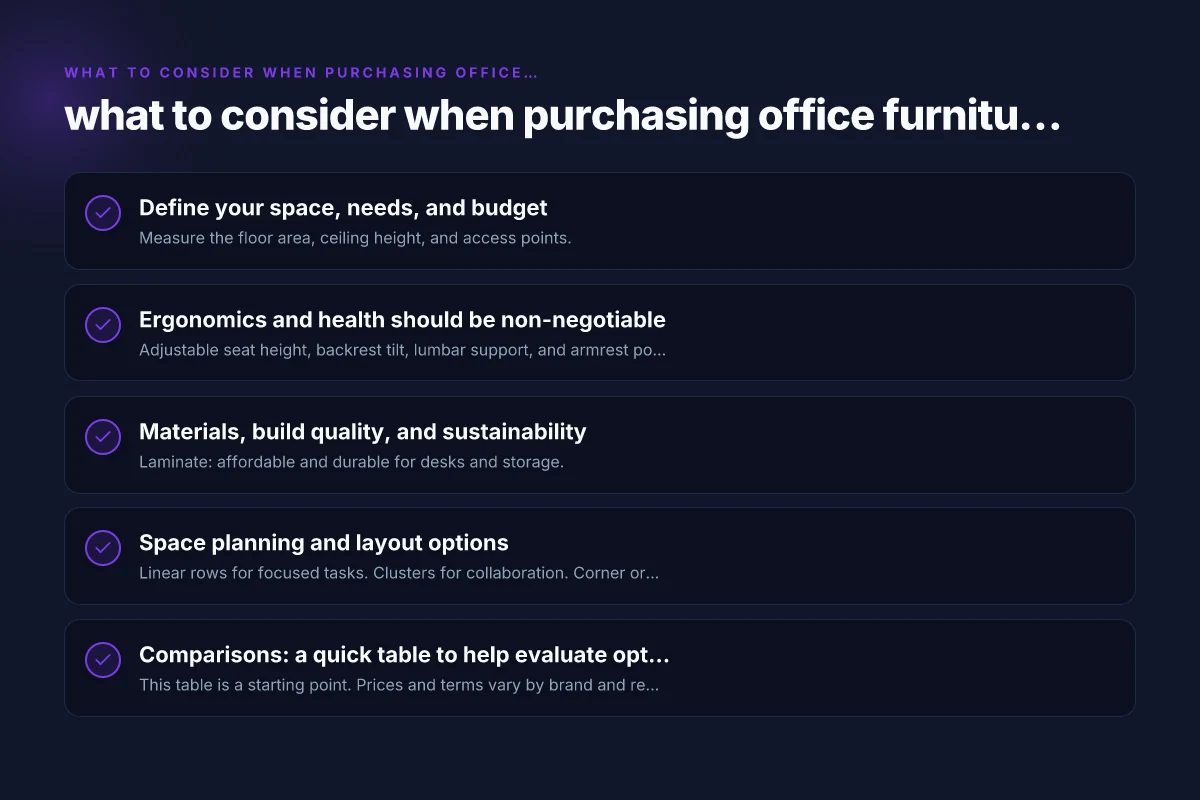
Ergonomics and health should be non-negotiable
What to look for in chairs
- Adjustable seat height, backrest tilt, lumbar support, and armrest position.
- Seat depth and cushion firmness suitable for the user’s height.
- Materials that are breathable and easy to clean.
Desk and workstation design
- Height-adjustable desks promote varied postures. Check the range and stability.
- Keyboard trays or adjustable monitor arms for proper alignment.
- Cable management features to reduce clutter and trip hazards.
Accessories that matter
- Anti-fatigue mats for standing desks.
- Ergonomic peripherals (split keyboards, vertical mice).
- Monitor risers to keep eyes level with the top of the screen.
Materials, build quality, and sustainability
Common materials
- Laminate: affordable and durable for desks and storage.
- Melamine or high-pressure laminates: scratch-resistant for heavy use.
- Solid wood or metal: premium feel with varying weight and maintenance needs.
Build quality indicators
- Weight and sturdiness of desks. Check for wobbles and finish quality.
- Drawer slides: soft-close mechanisms and full-extension slides.
- Joints and fasteners: quality hardware reduces squeaks and loosening over time.
Sustainability considerations
- Recycled or FSC-certified wood. Low VOC finishes.
- Longevity as a sustainability driver: longer-lasting furniture reduces waste.
- Recyclability at end of life or take-back programs from manufacturers.
Ergonomics and health criteria checklist
| Criterion | Adjustable chair | Sit-stand desk | Monitor height | Keyboard/mouse | Seating support |
|---|---|---|---|---|---|
| Lumbar support | yes | yes | - | - | yes |
| Adjustable arms | yes | - | - | yes | - |
| Height adjust | chair: seat | desk: yes | - | - | - |
| Wrist alignment | - | - | yes | yes | - |
| Materials safety | low VOC | low VOC | - | - | - |
Compiled November 2026; check the provider's site for current details.
Space planning and layout options
Desks and configurations
- Linear rows for focused tasks. Clusters for collaboration. Corner or L-shaped desks for space efficiency.
- Personal storage: pedestal drawers under desks vs. standalone filing cabinets.
Seating and collaboration zones
- Quiet private spaces vs. open collaboration zones.
- Flexible seating like lounge chairs or height-adjustable meeting tables.
Visual and acoustics
- Color schemes that reduce glare and promote focus.
- Acoustic panels or dividers to manage sound in open spaces.
- Desk height and chair style that visually coordinate with the room.
Comparisons: a quick table to help evaluate options
| Category | Budget range | Mid-range advantages | Premium features |
|---|---|---|---|
| Desks | $150–$400 per unit | Good stability; options with cable management | Height-adjustable, premium finishes |
| Chairs | $60–$150 per chair | Ergonomics basics; adjustable tilt | Advanced lumbar support; breathable fabrics |
| Storage | $100–$250 per unit | Durable; modular systems | Locking cabinets; soft-close drawers |
| Materials/Finish | Laminate or melamine | Durable; easy to clean | Solid wood or metal frames; eco finishes |
| Warranty/Support | 1–3 years | Reasonable replacement parts | 5–10 year warranties; on-site service |
Notes:
- This table is a starting point. Prices and terms vary by brand and region. Always read warranty specifics and return policies.
Vendors, warranties, and service
What to check in a warranty
- Coverage: parts, labor, and frame/structure.
- Duration: typical ranges from 5 to 12 years for high-use items.
- Exclusions: cosmetic damage, wear from misuse, or furniture used beyond intended capacity.
Service options
- On-site assembly and installation.
- In-home or in-office delivery, including removal of old furniture.
- Replacement parts availability and lead times for common items like chair casters or desk gaskets.
Vendor relationships
- Training and consistency of parts across product lines.
- Availability of scale: can a vendor supply multiple offices nationwide or internationally?
- Accessibility of customer support and clear escalation paths.
How to test items before buying (when possible)
In-store or showroom tests
- Sit and adjust every chair’s height, tilt, and lumbar support.
- Check desk stability by applying weight and inspecting finish.
- Inspect drawers and glide quality with a few items inside.
Virtual or on-site demos
- Request video demonstrations of assembly and usage.
- Ask for a layout mock-up or 3D rendering to visualize how furniture fits your space.
- If possible, trial a small batch in one area before scaling up.
Post-purchase checks
- Verify packaging was complete. Check for hidden damages during transit.
- Confirm setup aligns with ergonomic guidelines (eye level with monitor, armrests positioned at 90 degrees, etc.).
- Schedule minor adjustments after the first week of use if needed.
Build quality, materials, sustainability rating Tips to consider when shopping for dining room tables
| Item | Frame material | Surface material | Finish durability | Recycled content | Sustainability claim | Warranty support |
|---|---|---|---|---|---|---|
| Chair 1 | steel | laminate | high | moderate | certified | 5 years |
| Chair 2 | aluminum | veneer | medium | low | compliant | 3 years |
| Desk 1 | steel | melamine | high | high | verified | 10 years |
| Desk 2 | wood composite | laminate | medium | moderate | eco-friendly | 5 years |
Compiled November 2026; check the provider's site for current details.
Final recommendations
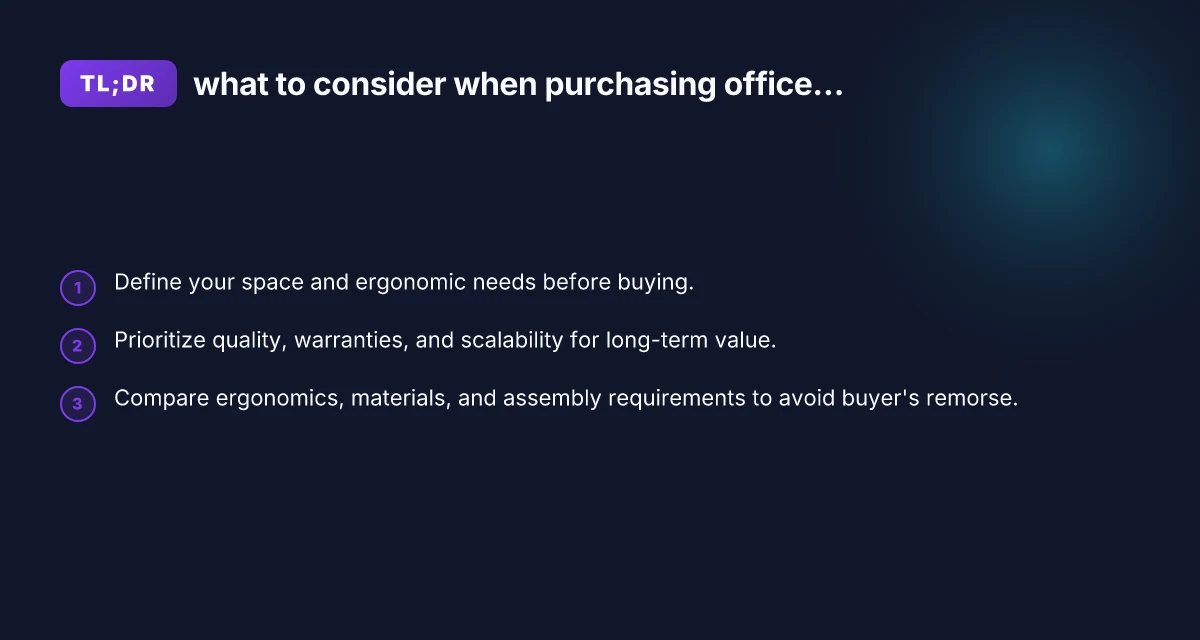
- Start with a needs audit: list users, tasks, and space constraints, then rank priorities by importance (ergonomics, storage capacity, flexibility).
- Prioritize adjustable, modular pieces that can adapt to evolving teams and projects.
- Invest in chairs with robust ergonomic features and durable upholstery, even if it costs a bit more upfront.
- Choose desks with cable management and stable construction. Consider height-adjustable options for varied work styles.
- Compare warranties and service levels across brands. Good support saves time and money later.
- Balance cost against longevity and total cost of ownership rather than focusing solely on upfront price.
- If sustainability matters, favor furniture with recycled content or certified wood and look for low-VOC finishes.
- Plan for installation and maintenance: ensure you have space for delivery trucks, access routes, and a clear return policy.
In short, what to consider when purchasing office furniture is a blend of space, ergonomics, build quality, and long-term value. By starting with a concrete plan, testing key pieces, and choosing adaptable options, you can create a productive, comfortable workspace that lasts.