
Vintage Bedroom Furniture: How to Choose, Style, and Care for Timeless Pieces
A practical guide to selecting, decorating with, and maintaining vintage bedroom furniture.
Vintage bedroom furniture brings history into your personal space. Rather than a uniform, mass-produced look, vintage pieces offer detailing, craftsmanship, and unique silhouettes. This guide helps you understand how to find authentic or well-made vintage items, how to blend them with modern comforts, and how to care for them so they last for generations.
Understanding vintage definitions comparison
| Criterion | Vintage definition | Age range | Typical features | Common sources | Notes |
|---|---|---|---|---|---|
| Time window | |||||
| Common eras | |||||
| Distinguishing marks | |||||
| Value drivers | |||||
| Authenticity cues |
Compiled November 2026; check the provider's site for current details.
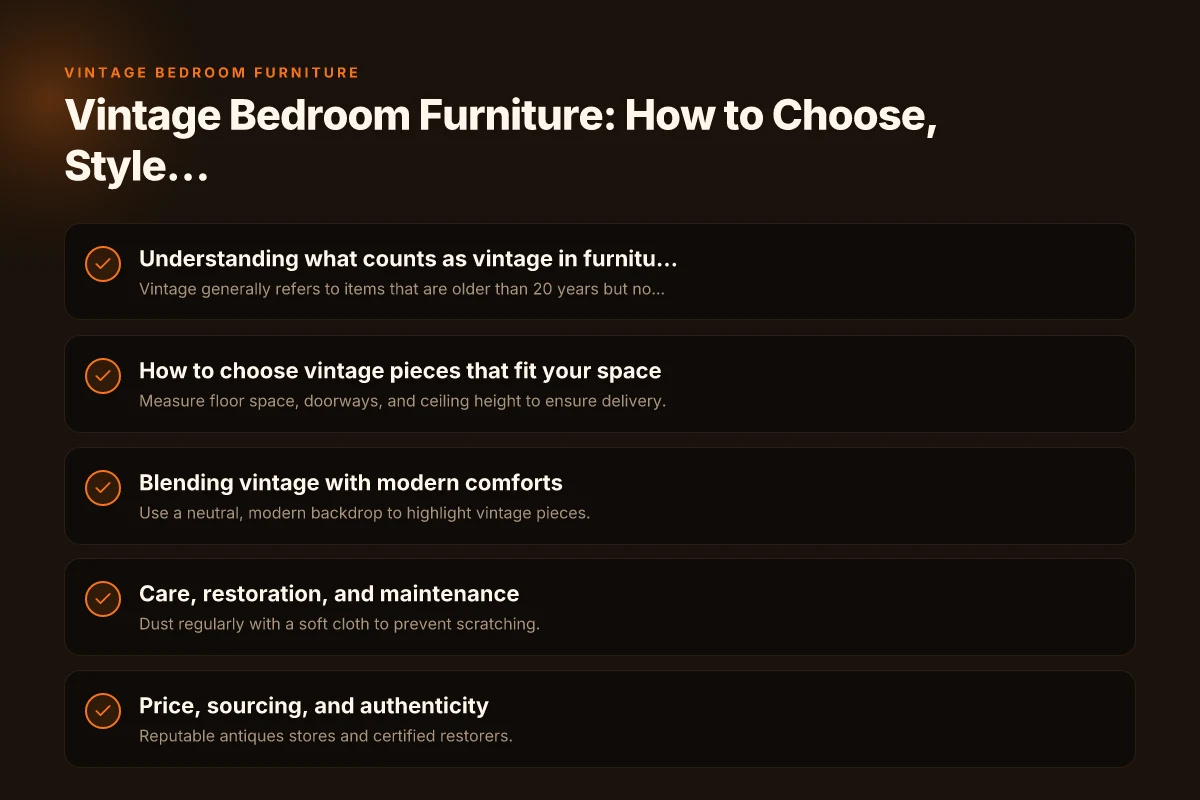
Understanding what counts as vintage in furniture
What qualifies as vintage versus antique
- Vintage generally refers to items that are older than 20 years but not yet antique.
- Antique usually means 100 years or older.
- Some pieces labeled as vintage may be reproductions, so check construction and provenance.
Common vintage bedroom pieces
- Bed frames: metal, wood, or upholstered headboards with era-specific details.
- Dressers and chests: dovetail joinery, patina, original hardware.
- Nightstands: compact, often with decorative drawers or lips.
- Vanities and mirrors: ornate frames, tilting mirrors, or built-in storage.
- Wardrobes or armoires: tall, spacious storage with wood grain or painted surfaces.
How to choose vintage pieces that fit your space
Assess your room and measuring must-dos
- Measure floor space, doorways, and ceiling height to ensure delivery.
- Consider the scale of the piece in relation to your room. Oversized items can overwhelm small spaces.
- Leave enough room around beds, dressers, and dressers for movement and lighting.
Match style without sacrificing comfort
- Classic styles: mid-century modern, art deco, Victorian revival, colonial, and shaker.
- Seating and surfaces: balance ornate pieces with simpler, modern lines to avoid a crowded look.
- Function first: ensure the piece serves your daily needs (storage, surface area, or seating).
Materials and construction signals
- Solid wood (oak, maple, cherry, walnut) with clear age signs is a good indicator of longevity.
- Wood veneers can be genuine, but look for consistent grain and solid edges.
- Metal beds from the 20th century often show rivets, patina, and hand-wrought detailing.
- Painted finishes may indicate a refined restoration or a newer coat. Check for flaking and repairs.
Blending vintage with modern comforts
Create a cohesive base
- Use a neutral, modern backdrop to highlight vintage pieces.
- Choose a consistent color palette across finishes and fabrics.
- Balance ornate pieces with clean-lined furniture to prevent a dated feel.
Fabrics, lighting, and textures
- Mix textures: velvet, linen, and natural fibers complement wood tones.
- Lighting should be layered: overhead, bedside lamps, and ambient light to showcase the pieces.
Layout ideas
- Place a bold vintage dresser against a neutral wall with a simple mirror.
- Use a vintage bed frame as a focal point and keep other furniture understated.
- Consider a single vintage piece per room if you’re new to this style, then gradually add.
Choosing vintage pieces for space comparison
| Space/Need | Size fit | Style harmony | Functionality | Maintenance | Storage considerations |
|---|---|---|---|---|---|
| Living room | |||||
| Bedroom | |||||
| Dining | |||||
| Small spaces | |||||
| Light and color |
Compiled November 2026; check the provider's site for current details.
Care, restoration, and maintenance
Everyday care tips
- Dust regularly with a soft cloth to prevent scratching.
- Avoid direct sunlight on wood finishes to reduce fading and cracking.
- Use coasters and blotting pads to protect surfaces from moisture and heat.
Minor repairs you can do yourself
- Tighten loose hardware with a screwdriver. Avoid overtightening.
- Replace missing knobs or pulls with period-appropriate hardware.
- Clean wood with a mild solution of water and soap, then dry immediately. Avoid harsh cleaners.
When to call a professional
- Structural cracks, extensive veneer damage, or warped panels require a professional restorer.
- Antique pieces with potential value should be assessed by a conservator before major repairs.
Price, sourcing, and authenticity
Where to shop for vintage bedroom furniture
- Reputable antiques stores and certified restorers.
- Estate sales and auctions can yield valuable finds with authentication.
- Reputable online marketplaces with detailed photos and seller history.
How to spot a good deal
- Look for solid construction, intact hardware, and a readable maker’s stamp or label.
- Check for signs of woodworm, rot, or structural instability.
- Be mindful of refinished surfaces that may affect value or authenticity.
Quick comparison: authentic versus mid-century reproductions
| Feature | Authentic vintage | Reproduction/mid-century copy |
|---|---|---|
| Construction | Dovetails, solid wood, hand-cut joints | Modern screws, plywood, machine-cut joints |
| Hardware | Original knobs/ pulls | Replacements may differ in shape/metal |
| Finish | Patina; minor wear is normal | Uniform finish; no natural aging |
| Value | Higher with provenance | Lower; depends on period and maker |
| Care | Gentle maintenance, specialized products | Standard furniture care |
Decorating with vintage pieces: inspiration and tips
Color and finish directions
- Embrace warm wood tones like walnut and cherry for a traditional look.
- For lighter rooms, consider whitewashed or pale-stained pieces to brighten the space.
- A single bold piece, like a carved headboard or a lacquered dresser, can anchor the room.
Accessorizing without clutter
- Use a few carefully selected vintage accessories: a vanity mirror, a jewelry box, a ceramic vase.
- Keep window treatments simple to let the furniture shine.
- Add texture with a contemporary rug, layered textiles, and a soft throw.
Themed room ideas
- Victorian revival: ornate bedframe, carved dresser, brass lamps, damask fabrics.
- Mid-century modern: tapered legs, simple lines, muted woods, and bright accents.
- Coastal vintage: light whites and blues, weathered finishes, linen textiles.
Care, restoration, and sourcing comparison
| Topic | Restoration ease | Materials care | Repairs risk | Sourcing options | Authenticity checks | Budget impact |
|---|---|---|---|---|---|---|
| Polished wood | ||||||
| Upholstery | ||||||
| Veneer | ||||||
| Metal hardware | ||||||
| Sourcing channels |
Compiled November 2026; check the provider's site for current details. Vintage bathroom accessories white: timeless charm for a classic bath
The final recommendation
If you’re new to vintage bedroom furniture, start small: a single focal piece like a dresser or headboard, and build from there. Prioritize pieces with good joinery, manageable size for your room, and finishes you enjoy. Combine authentic vintage items with modern comforts, soft lighting, new hardware, and durable fabrics, to create a bedroom that feels timeless, livable, and uniquely yours. If you’re unsure about restoration or provenance, consult a reputable dealer or restorer to avoid missteps and to protect both your space and potential value.