
Outdoor Kitchen: Create a Functional, Beautiful Space for Al Fresco Living
A practical guide to designing, choosing, and maintaining an outdoor kitchen that fits your space and lifestyle.
Outdoor kitchens extend your living space and boost the value of your home. A well-designed outdoor kitchen lets you grill, entertain, and dine outdoors with comfort and style. Whether you’re a weekend griller or a true outdoor chef, the key is thoughtful planning, durable materials, and a layout that fits your space and how you cook.
Comparison of Outdoor Kitchen Spaces by Planning Factors
| Factor | Space Type A | Space Type B | Space Type C | Space Type D |
|---|---|---|---|---|
| Size (sq ft) | 150 | 250 | 350 | 500 |
| Budget suitability | moderate | high | moderate | high |
| Primary usage | entertaining | daily cooking | family meals | remote cooking |
| Zoning / permits | yes | yes | no | yes |
| Maintenance effort | medium | high | medium | high |
Compiled November 2026; check the provider's site for current details.
Planning your outdoor kitchen: space, budget, and usage
Before you buy appliances or pick materials, map out how you’ll use the space.
- Define the primary activities: grilling, food prep, refrigeration, storage, bar seating, dining.
- Measure your site: consider sun, wind, shade, and proximity to indoor kitchen.
- Set a realistic budget: allocate for core appliances, base cabinets, countertop, utilities, and installation.
- Plan for zones: food prep, cooking, refrigeration, cleaning, and seating should flow logically.
Think about seasonal use. If you live somewhere with cold winters or heavy rain, you may want a covered area or a pergola. If you entertain year-round, plan for a weatherproof, easy-to-clean space. Don’t forget lighting, power outlets, and water access. A simple but scalable plan helps you add features later on without major renovations.
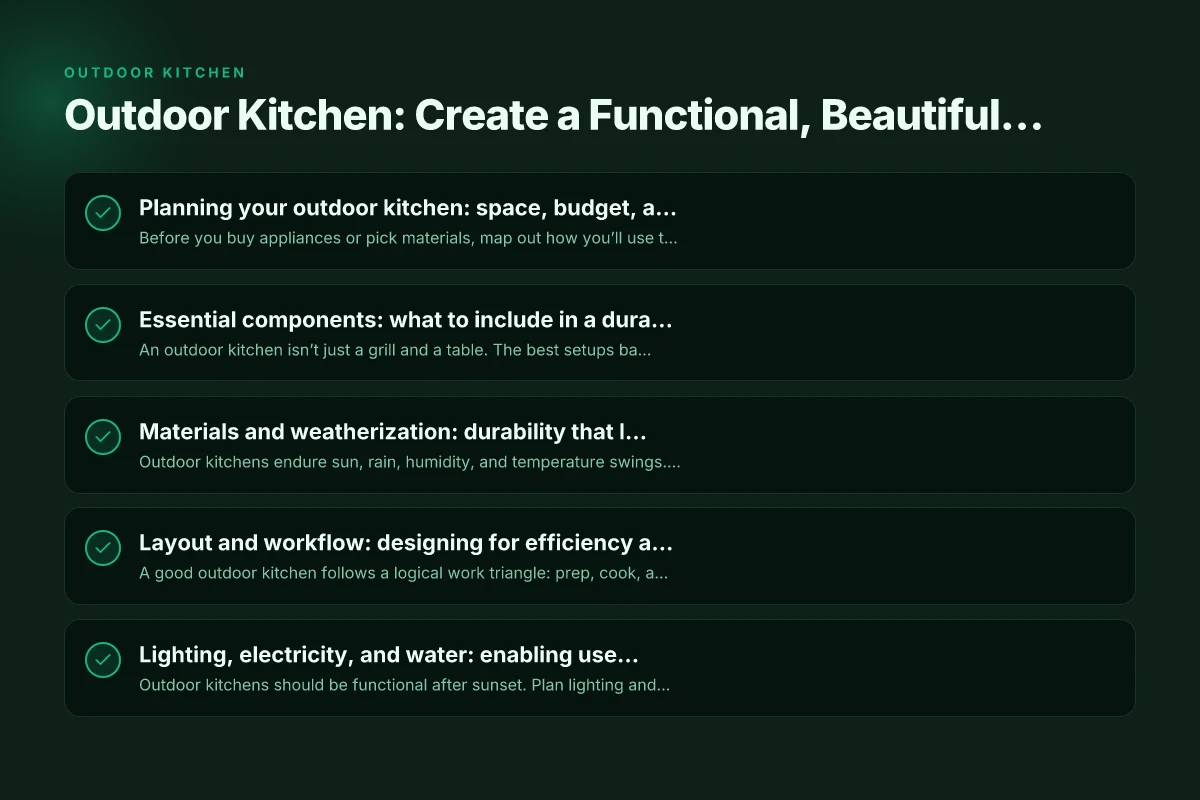
Essential components: what to include in a durable outdoor kitchen
An outdoor kitchen isn’t just a grill and a table. The best setups balance cooking power, convenience, and resilience to the elements.
- Grill or multi-burner cooktop: This is the centerpiece. Choose propane for quick heat, natural gas if you have an existing line, or even charcoal for flavor.
- Countertops: Durable, weather-resistant surfaces like concrete, stone, stainless steel, or quartzite. Avoid high-maintenance materials that stain or warp with moisture.
- Cabinets and storage: Use weatherproof cabinetry with proper seals. Stainless steel, powder-coated aluminum, or marine plywood with a rot-resistant core are common choices.
- Refrigerator and ice: A compact outdoor-rated refrigerator is a must for drinks and perishable ingredients. An ice maker or cooler drawer adds convenience.
- Sinks and water access: A splash zone for prep and cleanup saves trips inside. Consider a pull-down faucet and a drain that channels to a proper line.
- Food prep area: A durable prep space with cutting boards and easy-clean surfaces. Include a dedicated knife block or magnetic strip for efficiency.
- Bar or serving area: An elevated bar counter or pass-through window helps guests mingle without crowding the work zone.
- Ventilation and weather protection: A canopy, pergola, or outdoor hood can protect from sun and rain while enabling safe ventilation around flames.
- Lighting: Layered lighting for safety and ambiance, task lighting over prep, ambient lighting for dining, and accent lighting for atmosphere.
- Electrical and gas hookups: Plan outlets near seating and prep zones. A dedicated circuit for outdoor appliances improves reliability. Have gas lines installed by a licensed professional.
If you’re starting small, prioritize a solid grill station, one or two weatherproof cabinets, a compact fridge, and a durable countertop. You can always add more features as you go. Office Chairs: A Complete Guide to Comfort, Support, and Productivity
Essential Components Checklist for Outdoor Kitchens
| Component | Required? | Typical Placement | Weather concern | Notes |
|---|---|---|---|---|
| Grill | yes | center | high | gas or charcoal |
| Sink | yes | near prep area | medium | below-counter drain |
| Counter space | yes | around work zones | low | non-porous surface |
| Refrigerator | optional | adjacent to prep | medium | outdoor-rated |
| Trash/recycling | yes | convenient | low | enclosed bin |
Compiled November 2026; check the provider's site for current details.
Materials and weatherization: durability that lasts
Outdoor kitchens endure sun, rain, humidity, and temperature swings. Materials should resist corrosion, fade, and moisture.
- Countertops: Quartzite, granite, concrete, or stainless steel offer durability and heat resistance. Avoid soft woods or untreated stone that can stain or crack.
- Cabinets: Stainless steel or powder-coated aluminum cabinets hold up well against moisture. Use marine-grade plywood with waterproof adhesive if you want wood aesthetics.
- Sinks and faucets: Stainless steel sinks with corrosion-resistant finishes are standard. Use weatherproof, sealed fixtures designed for outdoor use.
- Appliances: Look for appliances rated for outdoor use or with high IP ratings. Some brands offer dedicated outdoor-rated models.
- Finishes: Low-maintenance sealants and UV-resistant finishes protect against sun damage. Regular cleaning reduces staining and mold growth.
- Flooring: Outdoor-rated tiles, stamped concrete, or sealed pavers are common. Choose slip-resistant textures for safety.
Seasonal maintenance is part of the recipe. Power wash surfaces, reseal countertops if needed, and inspect seals around cabinetry. Regular checks prevent moisture damage and keep things looking sharp. Oak Bedroom Furniture: Timeless, Durable Style for Every Space
Layout and workflow: designing for efficiency and safety
A good outdoor kitchen follows a logical work triangle: prep, cook, and serve. The goal is to minimize steps and avoid cross-traffic that disrupts conversations or creates safety hazards.
- Prep zone: A clean, dry surface close to storage and refrigeration. Keep knives, cutting boards, and wearable items (gloves, towels) within reach.
- Grill zone: Have the grill at a comfortable height with clear clearance around it. Avoid placing it under overhangs or near flammable materials.
- Cleaning zone: A sink and trash/recycling area at a reachable distance from prep and cooking zones. A dedicated grease trap or drainage system helps with cleanup.
- Serving zone: A counter or bar that opens to seating for easy dining and conversation. Include a pass-through window or a shallow storage drawer for servingware.
- Storage and cold zone: A fridge, freezer, or cooler space for perishables, beverages, and ingredients. Keep frequently used items close to the prep area.
Create a simple floor plan that fits your space. Even a compact setup can feel luxurious if it’s well-organized and visually cohesive.
Lighting, electricity, and water: enabling use after dark
Outdoor kitchens should be functional after sunset. Plan lighting and utilities to keep the space usable and safe.
- Lighting: Use a mix of task, ambient, and accent lighting. Recessed or rail lights over the prep zone, pendant lights above the bar, and soft landscape lighting around the perimeter create a welcoming glow.
- Electrical: Install weatherproof outlets with GFCI protection for safety. Spiral-weatherproof cords and cable management keep the space tidy. Consider a dedicated outdoor circuit for high-demand appliances.
- Water: Ensure a proper drainage plan for sink areas. If you’re in a flood-prone area, consider a trench drain or channel system to direct water away from living spaces.
- Heating: A fire pit, outdoor heater, or radiant heating panels can extend usability into cooler months.
If electricity and plumbing concerns feel overwhelming, hire a licensed contractor to ensure code compliance and long-term reliability. Nice tenage girls bedroom regarding your home
Materials and Weatherization Comparison
| Material | Durability (HD/UV) | Maintenance | Cost | Best for |
|---|---|---|---|---|
| Stainless steel | high | low | high | year-round use |
| Concrete | medium | medium | medium | all climates |
| Teak wood | medium | high | high | warm climates |
| Aluminum | high | low | medium | versatile |
| Synthetics (tile) | medium | low | medium | low-maintenance |
Compiled November 2026; check the provider's site for current details.
Budget-friendly upgrades: high-impact changes that fit many spaces
You don’t have to break the bank to get a stylish, functional outdoor kitchen. Here are cost-conscious ideas that deliver real value.
- Modular components: Start with a core grilling station and essential prep space, then add cabinets and a fridge later.
- Durable, low-maintenance surfaces: Invest in sealed concrete countertops or quartz surfaces that resist staining and heat.
- Outdoor-rated appliances: Choose models designed for weather exposure. They’re built to last longer in outdoor conditions.
- Simple lighting: Solar or low-voltage lighting can create ambiance without a big electrical install.
- Landscaping integration: Frame the kitchen with planters or a privacy screen to define the space and protect it from wind.
Comparison table: Outdoor kitchen materials and their typical pros and cons Moen kitchen faucets: a comprehensive guide to choosing, installing, and maintaining
| Material | Pros | Cons | Best Use |
|---|---|---|---|
| Stainless steel | Durable, easy to clean, weatherproof | Can show fingerprints and dents, pricey | Cabinets, appliances |
| Concrete | Very durable, customizable, heat-resistant | Porous if not sealed, can crack | Countertops, flooring |
| Granite/Quartzite | Natural beauty, high durability | Heavy, can be expensive | Countertops |
| Granite | Heat resistant, long-lasting | Sealing required, expensive | Countertops |
| Powder-coated metal | Lightweight, corrosion resistance | Coating can wear over time | Cabinets, rails |
| Wood (treated) | Aesthetic warmth, relatively affordable | Requires sealing and maintenance | Aesthetic accents, certain cabinet doors |
The right mix depends on your climate, budget, and style. If you value low maintenance with a sleek look, stainless steel and stone dominate. If you want a warmer, more rustic feel, wood accents paired with durable stone can be a great combination.
Maintenance and care: keeping your outdoor kitchen in top condition
An outdoor kitchen flourishes with regular care. A simple routine goes a long way.
- Clean after every use: Wipe down work surfaces, rinse prep areas, and sweep debris. Remove grease spills quickly to prevent staining.
- Deep clean periodically: Seal countertops if needed, clean cabinetry interiors, and inspect seals around doors and drawers.
- Inspect for wear: Check grills, gas lines, and connections for leaks or corrosion. Replace weathered gaskets or worn seals as needed.
- Protect during off-season: If you’re in a region with harsh winters, cover appliances and seal cabinets. Use protective covers to reduce exposure to sun and rain.
- Seasonal checks: Test lighting, outlets, and drainage before peak-use seasons. Re-seal stone countertops or re-apply protective coatings as recommended by the manufacturer.
Safety should always be part of your routine. Keep a fire extinguisher nearby, ensure propane lines are secure, and maintain clear space around heating appliances.
Layout and Workflow Scenarios Modern Dining Room: How to Design a Fresh, Functional Space
| Layout | Efficiency | Safety | Flexibility | Notes |
|---|---|---|---|---|
| Linear | high | medium | low | wall-aligned |
| L-shape | high | high | medium | cornered prep |
| U-shape | very high | high | high | wrap-around work |
| Island | high | high | very high | centralized prep |
Compiled November 2026; check the provider's site for current details.
The final word: a recommendation for choosing your outdoor kitchen
If you’re starting from scratch, begin with a clear concept: an outdoor kitchen that matches how you cook, entertain, and live outdoors. A sensible, high-value approach is to install a primary grilling station with a couple of essential components, counter space, at least one outdoor-rated refrigerator, and weatherproof storage. Add a dedicated prep zone that keeps ingredients organized, and finish with a comfortable seating area and subtle lighting. If your budget allows, choose durable, low-maintenance materials for longevity and ease of care. Prioritize a layout that minimizes steps between prep, cooking, and serving, and plan for utilities (electric, water, gas) by sourcing licensed professionals to ensure safety and code compliance.
In the end, an outdoor kitchen is not just a place to cook. It’s a destination. It’s where you connect with family and friends, where you extend your living space, and where everyday meals feel a little more special. By focusing on planning, durable materials, efficient layout, and practical maintenance, you’ll create an outdoor kitchen that you’ll enjoy for years to come.