
Mirrored Bedroom Furniture: Elevate Your Space with Reflective Style
Discover how mirrored bedroom furniture can brighten, visually expand, and modernize your bedroom with practical tips and design ideas.
The idea of mirrored bedroom furniture is simple: reflective surfaces bounce light, create the illusion of more space, and add a touch of glamour or modern polish to a room. Whether you’re aiming for a sleek contemporary vibe, a glam retreat, or a transitional mix, mirrored pieces can be the focal point or a subtle enhancer. Below, you’ll find practical guidance on choosing, placing, and caring for mirrored furniture so you can design with confidence.
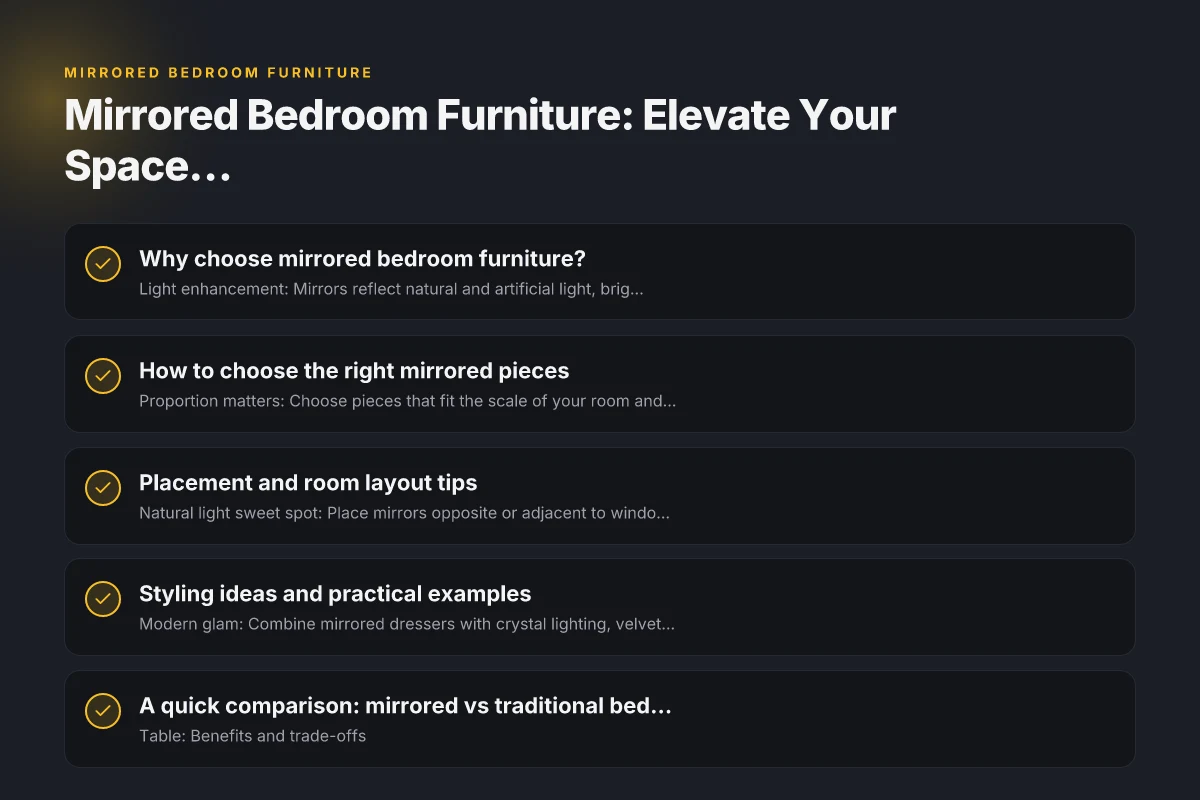
Why choose mirrored bedroom furniture?
The benefits at a glance
- Light enhancement: Mirrors reflect natural and artificial light, brightening the room.
- Visual expansion: Reflective surfaces trick the eye, making small bedrooms feel larger.
- Design versatility: Works across styles, from minimalist to ultramodern to vintage glam.
- Focus and cohesion: A mirrored centerpiece can unify furniture groups and elevate decor.
Common pieces to consider
- Mirrored nightstands: Practical storage with a reflective edge.
- Mirrored dressers or chests: Bold statement with ample storage.
- Mirrored bed frames: Creates a sense of airiness around the bed.
- Mirrored dressers with vanity: Dual-function beauty for adults or teens.
- Mirrored wardrobes: A larger touch of reflective luxury.
How to choose the right mirrored pieces
Size, style, and finish
- Proportion matters: Choose pieces that fit the scale of your room and bed. In small spaces, opt for lighter, smaller mirrored elements rather than large, heavy blocks.
- Edge options: Clear mirrored surfaces with beveled edges feel traditional. Smoked or tinted glass reads modern or moody.
- Frame presence: Some pieces are fully framed in mirrors, while others use mirror panels on only one or two sides. Full-face mirrored pieces can dominate a room. Partial mirrors can complement existing furniture.
Durability and care considerations
- Surface protection: Look for high-quality backing and hardware to prevent wobble or damage.
- Damage control: Frequently asked questions include how to handle chips or cracks. Small repairs can often be DIY with mirror-safe epoxy, but for larger damage, consult a professional.
- Cleaning routine: Use a microfiber cloth and a gentle glass cleaner or a vinegar-water solution. Wipe in circular motions, then dry with a lint-free cloth to avoid streaks.
Placement and room layout tips
Where to put mirrored furniture for best impact
- Natural light sweet spot: Place mirrors opposite or adjacent to windows to maximize daylight.
- Bedside balance: If you have two nightstands, choose mirrored versions that echo the bed’s dimensions without overpowering the room.
- Avoid cluttered corners: In small bedrooms, avoid stacking too many reflective surfaces in one corner to prevent a busy look.
Pairing with other materials
- Wood and metal: Pair mirrored pieces with light wood, iron, or brushed nickel hardware for contrast.
- Textiles: Soften reflections with soft textiles in matte finishes, think bedding, throws, and rugs.
- Accent colors: Use neutral palettes as a base to let mirrors sparkle, or introduce bold accents (royal blue, emerald, or blush) for drama.
Styling ideas and practical examples
Styles that shine with mirrored furniture
- Modern glam: Combine mirrored dressers with crystal lighting, velvet upholstery, and metallic accents.
- Scandinavian-modern: Pair mirrored nightstands with light wood furniture and clean lines to keep a bright, airy feel.
- Transitional chic: Mix mirrored pieces with upholstered headboards, glass-turface tables, and subtle metallic highlights.
Decorating dos and don’ts
- Do reflect art: Position mirrors to reflect a favorite piece of wall art or a feature lighting fixture.
- Do balance symmetry: If you choose two mirrored nightstands, mirror the arrangement on both sides of the bed.
- Don’t overdo mirrors: Too many reflective surfaces can create a cold or busy atmosphere. Mix in matte textures to ground the space.
A quick comparison: mirrored vs traditional bedroom furniture
Table: Benefits and trade-offs
| Aspect | Mirrored furniture | Traditional furniture |
|---|---|---|
| Light reflection | High; brightens the room | Neutral; depends on finish |
| Perceived space | Enlarges visually | Can feel smaller in tight rooms |
| Style versatility | Works with glam, modern, chic | Broad, but may lean classic |
| Maintenance | Requires regular cleaning and care for edges | Generally easier; standard cleaning |
| Weight and durability | Often lighter frames, can be fragile if not well-made | Heavier, sturdy options common |
| Price range | Wide, can be premium depending on design | Broad, from budget to luxury |
Maintenance and durability basics
Keeping mirrored surfaces pristine
- Regular dusting: Use a microfiber cloth to remove dust and prevent buildup.
- Streak prevention: Wipe with a slightly damp cloth followed by a dry microfiber cloth to avoid streaks.
- Seal edges: Check and reseal any exposed edges if recommended by the manufacturer. This helps prevent moisture damage.
- Protective placement: Use coasters or felt pads under items that sit on top of mirrors to prevent scratches.
- Handling with care: When moving large mirrored pieces, lift instead of sliding to avoid edge chipping.
Practical buying tips and common pitfalls
How to shop confidently
- Check for craftsmanship: Inspect the edges, corners, and attachment points. A well-made mirrored piece should feel solid and not flex under pressure.
- Verify backing: A sturdy backing is essential to prevent warping and to improve stability.
- Read warranties: Look for at least a one-year warranty on structural components. Extended warranties are a bonus.
- Test climate suitability: If you live in a humid area, ensure the frame materials and backing are resistant to moisture.
Common pitfalls to avoid
- Over-reflection: In rooms with strong windows or bright light, too many mirrors can produce glare.
- Cheap coatings: Low-quality mirrors can develop yellowing or haziness along the edges over time.
- Mismatched finish: Purely mirrored surfaces without a unifying design element can look disjointed if your room’s decor is varied.
The final recommendation: how to style mirrored bedroom furniture for maximum impact
If you’re aiming for a refreshed, brighter bedroom, start with one or two mirrored pieces as anchor points. For a balanced look, pair a mirrored dresser or set of nightstands with matte textures, plush bedding, a soft rug, and a fabric headboard. This combination lets the mirrors sparkle without overwhelming the space. For smaller rooms, consider a mirrored bed frame or a slim nightstand to maintain a sense of airiness. If your style leans toward glam, add metallic lighting, crystal chandeliers, and glass accents to echo the reflective surfaces. In more minimal or Scandinavian-inspired spaces, choose a single mirrored nightstand or a dresser with a subtle reflective edge to create brightness without adding clutter.
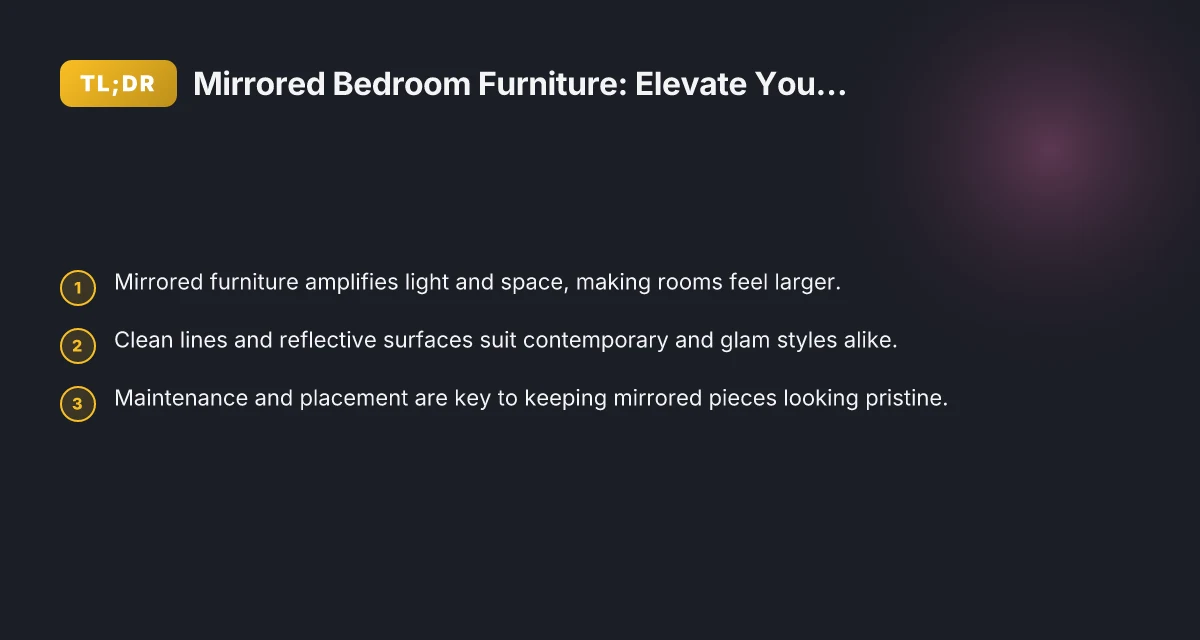
Bottom line: mirrored bedroom furniture can be a smart, stylish way to enhance light, space, and personality. Choose quality pieces with thoughtful placement, pair them with complementary textures, and maintain them with a gentle cleaning routine. When done right, mirrored furniture doesn’t just reflect your room, it elevates it.