
Kitchen tables: choosing, styling, and maximizing your space
A practical guide to selecting, arranging, and caring for kitchen tables to fit any kitchen layout.
Kitchen tables are more than just a surface for meals. They anchor the kitchen’s workflow, shape how you entertain, and influence how you move through the space. The right kitchen table fits your layout, matches your style, and withstands daily life. In this guide, you’ll learn how to pick the right size, shape, material, and features. How to care for and maintain it. And how to style and position it for comfort and efficiency.
Size and layout options for floor plans
| Item | Floor plan type | Best for | Notes |
|---|---|---|---|
| 1 | Rectangular | Long counters, hosting | Fits with island or peninsula |
| 2 | Round | Small kitchens, social meals | Encourages conversation |
| 3 | Square | Compact spaces | Versatile for seating 4 |
| 4 | Extendable | Variable seating | Pulls out for guests |
| 5 | Built-in bench | Cozy, space-saving | Seamless flow |
| 6 | Drop-leaf | Flexible surface | Great for small nooks |
| 7 | Glass-top | Modern look | Easier to clean |
| 8 | Marble-top | Elegant vibes | Higher maintenance |
| 9 | Wood-top | Warm feel | Durable with care |
| 10 | Integrated with island | Unified workspace | All-in-one surface |
Compiled November 2026; check the provider's site for current details.
Size and layout: start with the floor plan
Understanding your space
A kitchen table should feel proportionate to the room and leave enough clearance for chairs and movement. A cramped table makes daily meals stressful. A too-large table can make the kitchen feel closed off. Measure the room with a hinge on a few key points:
- Entry clearance: at least 36 inches (about 91 cm) of walkway around the table
- Chair space: 24 inches (about 61 cm) per person from the table edge
- Table height: roughly 28 to 30 inches (71 to 76 cm), with chairs that match that height
Quick sizing tips
- Small kitchens: consider a small round or square table that seats 2–4 and tucks against a wall.
- Medium kitchens: a rectangular table seating 4–6 works well, offering extra prep space when needed.
- Large kitchens: you can opt for a longer table or even a counter-height island with seating. Adding a leaf or extension can accommodate guests.
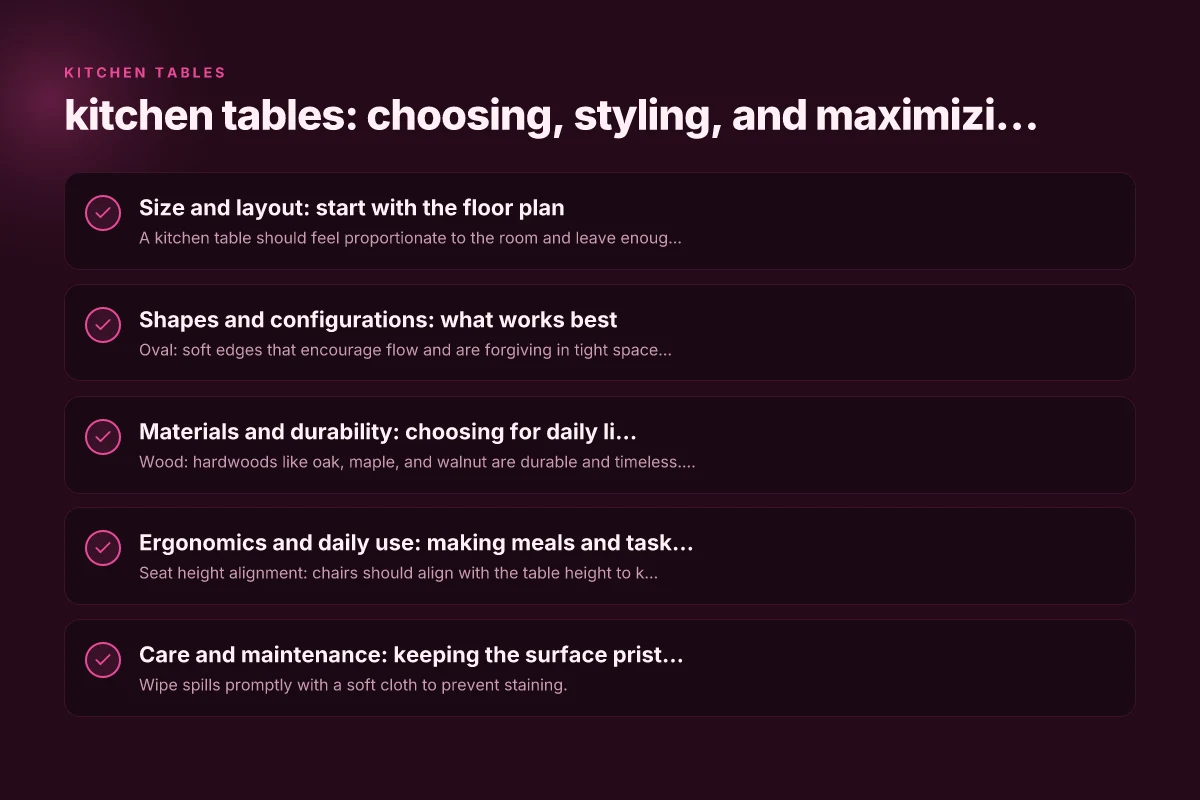
Shapes and configurations: what works best
Common shapes and where they shine
- Oval: soft edges that encourage flow and are forgiving in tight spaces.
- Round: great for conversation and a cozy feel. Best if you’re seating 4–6 and have enough room to pull chairs out.
- Rectangular: the most versatile for dining and work tasks. Works well in most layouts.
- Square: ideal for 4-person layouts in compact rooms, but can feel crowded as more guests arrive.
Extendable and modular options
- Drop-leaf tables: good for tiny kitchens. Fold down when not in use.
- Drop leaf with wheels: easy to move and reconfigure.
- Extendable tables: center leaves or end leaves increase seating when needed.
- Modular tables: multiple components you can rearrange to suit tasks, from supper to baking sessions.
Materials and durability: choosing for daily life
Common table materials
- Wood: hardwoods like oak, maple, and walnut are durable and timeless. Softwoods are lighter but can dent more easily.
- Veneer wood: a wood veneer over a plywood core offers a mix of beauty and affordability.
- Laminate: easy to clean and resist stains. Can imitate wood or stone.
- Metal: industrial look, very durable, often paired with glass or wood tops.
- Stone: durable but heavy and prone to heat damage. Best for premium spaces.
Practical considerations
- Stains and spills: choose surfaces with finishes that withstand water and oil-based foods.
- Scratches: hard-wearing finishes (polyurethane, polyurethane-enriched laminates) protect against everyday wear.
- Maintenance: wood tables may require occasional oiling or waxing. Laminates are generally low-maintenance.
- Comfort: smooth edges reduce injuries, especially in family homes and with kids.
Table legs and stability
- Leg style affects legroom: pedestal bases offer more chair space.
- Stability: wider bases resist wobble. Consider anti-tip hardware if you have active children.
Ergonomics and daily use: making meals and tasks easier
Comfort for everyone
- Seat height alignment: chairs should align with the table height to keep feet flat and postures comfortable.
- Leg room: ensure at least 12 inches (30 cm) of knee clearance from the chair back to the table leg.
- Edge preference: rounded edges are gentler on arms and hips, especially for households with kids.
Multi-use practicality
- Breakfast, homework, and meal prep: a kitchen table often doubles as a workspace.
- Storage integration: choose tables with small drawers or a shelf for napkins, coasters, or utensils.
- Lighting: position the table to benefit from natural light and ensure overhead lighting minimizes shadows on the surface.
Seating options
- Side chairs vs. benches: benches save space and provide flexibility for longer gatherings.
- Bench depth: a 12–14 inch (30–36 cm) deep bench provides comfortable seating without crowding the table.
Shapes and configurations: what works best
| Shape | Space feeling | Seating capacity | Maintenance | Best for |
|---|---|---|---|---|
| Rectangle | Classic, max seating | 6–8 | Moderate | Long counters, dining |
| Round | Social, easy flow | 4–6 | Easy | Small rooms, conversation |
| Square | Cozy, symmetrical | 4 | Moderate | Small families |
| Oval | Gentle corners | 6–8 | Moderate | Entertainment pairs |
| U-shaped | Food prep + dining | 4–6 | Higher | Open-plan kitchens |
| Glass-top | Modern edge | 4–6 | Higher | Minimalist look |
Compiled November 2026; check the provider's site for current details.
Care and maintenance: keeping the surface pristine
Daily care
- Wipe spills promptly with a soft cloth to prevent staining.
- Use a damp microfiber cloth for routine cleaning. Avoid soaking the surface.
- Use coasters and placemats to protect from heat and moisture.
Periodic maintenance
- Wood tables: treat periodically with a furniture wax or oil appropriate for the wood type.
- Glass tops: clean with standard glass cleaner. Avoid abrasive pads that scratch.
- Metal frames: check for rust and tighten any loose screws. Apply a protective coating if needed.
Troubleshooting common issues
- Scratches: minor scratches on wood can be buffed with a wood-safe polish. Deeper marks may require refinishing.
- Wobble: adjust levelers on legs or add a stabilizing crossbar.
- Warping: ensure the table is kept away from moisture and extreme temperatures. Use coasters to minimize moisture exposure.
Buying guide: comparing options at a glance
Here is a quick comparison to help you choose between common kitchen table types. Kitchen table sets: a complete guide to choosing the right dining ensemble
| Type | Pros | Cons | Best for |
|---|---|---|---|
| Wooden rectangular | Classic, durable, versatile | Heavier, longer lead times | Families, frequent hosting |
| Extendable rectangular | Flexible seating, grows with guests | Mechanisms can wear over time | Dinner parties, multi-use rooms |
| Round/oval | Social seating, easy flow | Less surface for cooking prep in small kitchens | Cozy kitchens, small spaces |
| Table with bench | Space-saving, casual vibe | Less formal, seating adjustments needed | Families with kids, casual dining |
| Laminate top | Budget-friendly, easy to clean | Can look less premium; can scratch | First apartments, high-traffic kitchens |
| Stone or glass top | High-end look, great for heat resistance | Heavy, requires careful care | Modern kitchens, showpiece spaces |
Materials and durability: choosing for daily life
| Material | Durability | Scratch resistance | Stain resistance | Maintenance | Best use |
|---|---|---|---|---|---|
| Solid wood | High | Moderate | Moderate | Oil/wax upkeep | All-round daily use |
| Veneer wood | Moderate | Low | Moderate | Gentle cleaning | Budget wood look |
| Laminate | High | High | High | Easy wipe | Busy households |
| Glass | High aesthetic | Low | Low | Frequent cleaning | Modern spaces |
| Marble | Moderate | Low | Low | Sealing required | Luxury accents |
| Steel | Very durable | High | High | Wipe-down | Industrial vibe |
| Quartz | High | High | Very high | Low upkeep | Busy kitchens |
Compiled November 2026; check the provider's site for current details.
Styling and positioning: creating a welcoming space
Color and finish coordination
- Match the table finish to cabinetry or hardware for cohesion.
- If your kitchen has a bold color palette, opt for a neutral tabletop to keep balance.
- Consider contrasting legs or a painted base to add a subtle design touch without overpowering the room.
Seating and textiles
- Use cushions or padded chairs for comfort in long meals.
- Add a rug under the table if you want a distinct dining zone. Ensure it’s large enough to accommodate chairs when pulled out.
Accessories that work
- A simple centerpiece, seasonal flowers, or a low-profile planter keeps sightlines open.
- Functional items like a compact fruit bowl or a tray with napkins can stay neat and organized.
- Consider a small basket or tray on the table for keys, mail, or chargers near the kitchen.
Final recommendations: how to choose your kitchen table
- Measure first: determine the room’s dimensions and the space you want to dedicate to the table, including chair clearance.
- Pick a shape that supports your daily behavior: rectangular for prep and hosting, round for conversation and a cozy vibe, or a bench for family-friendly seating.
- Balance material with maintenance: if you have kids or frequent spills, durable laminates or sealed wood with a protective finish can be practical. For a premium look with longevity, select solid hardwood with a finish that suits your kitchen’s lighting.
- Think about extendability: if your kitchen serves as a social hub, an extendable or modular option lets you scale quickly for guests without sacrificing everyday practicality.
- Plan for comfort: choose the right height and edge style, ensure sufficient legroom, and consider seating options that suit all household members.
If you’re still deciding, a practical approach is to test layouts in your space. Bring a tape measure, sketch the room, and compare a few table shapes against your layout. If you can, visit showrooms with similar kitchen sizes to see how different shapes feel in real life. And finally, don’t forget the practical side: a kitchen table should integrate with your cooking zone, storage needs, and daily routines. A well-chosen table not only elevates the kitchen’s style but also makes every meal, homework session, and recipe test a little easier.