How to recover dining room chairs
Quick, practical guide to reviving worn dining chairs through reupholstery, painting, and protective finishing.
Dining room chairs can show wear from years of meals, spills, and use. If you’re considering how to recover them, you’re not alone. A well-executed chair revival can change the whole look of a dining space, often at a fraction of the cost of buying new chairs. Below is a practical, step-by-step guide to recovering dining room chairs, whether you’re aiming for a fresh fabric look, a updated wood finish, or a mix of both.
Comparison of chair assessment goals
| Goal | Considerations | Indicators | Notes |
|---|---|---|---|
| Structural integrity | Check joints, legs, rails | Wobble, cracks, loose screws | Prioritize repairs if needed |
| Material compatibility | Fabric, wood, metal types | Upholstery type, finish, substrate | Guides path choice |
| Use case & environment | Dining setting, lighting, traffic | Family size, spill potential | Impacts finish and fabric choice |
| Budget & timeline | Cost range, downtime | Fast vs. slow project | Helps select path |
Compiled November 2026; check the provider's site for current details.
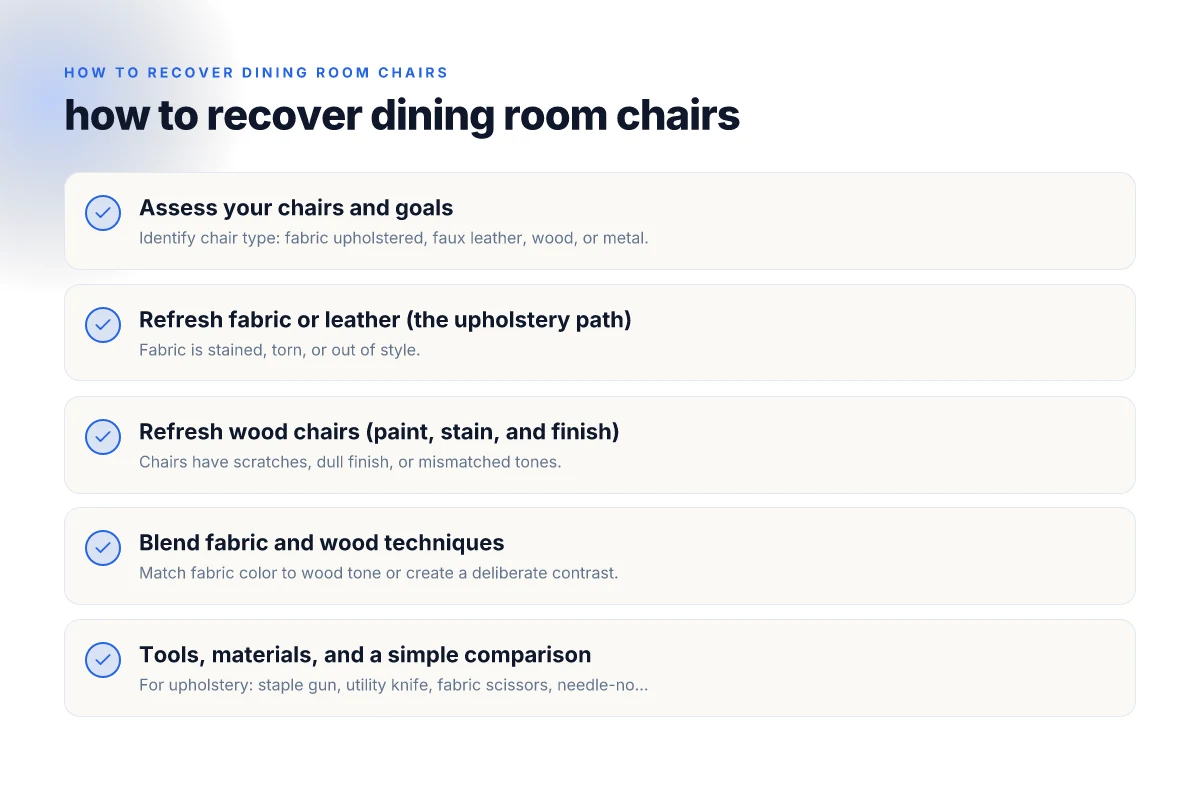
Assess your chairs and goals
Start with a quick audit
- Identify chair type: fabric upholstered, faux leather, wood, or metal.
- Check for structural integrity: loose joints, cracked frames, wobbly legs.
- Decide on a goal: fresh fabric, new paint/stain, or both.
- Note hardware needs: cushions, seat boards, staples, nails, screws.
Decide on the level of work
- Quick refresh: clean, tighten joints, replace cushions.
- Moderate refresh: reupholster seats, repaint or stain frames.
- Full refresh: replace fabric, add padding, refinish wood, update cushions or trim.
Refresh fabric or leather (the upholstery path)
When to reupholster
- Fabric is stained, torn, or out of style.
- Cushions feel flat even after fluffing.
- You have a consistent seating height across chairs.
Steps for reupholstering
- Remove seats: take out screws and detach any fabric backing.
- Inspect padding: replace foam or add a layer for comfort.
- Cut new fabric: allow extra for stapling and seams.
- Attach fabric: stretch tight, staple or nail evenly, trim excess.
- Reattach seat: secure to chair frame and test for movement.
Tips for durable upholstery
- Choose performance fabrics or vinyl for high-traffic dining rooms.
- Use high-density foam (2-3 inches) for a comfortable seat.
- Add a dust cover or fabric backing to extend life.
Refresh wood chairs (paint, stain, and finish)
When to refinish wood
- Chairs have scratches, dull finish, or mismatched tones.
- You want a color update without replacing hardware.
Preparation steps
- Clean thoroughly with mild soap and water or a wood cleaner.
- Lightly sand to remove the old finish and create a tooth for new finish.
- Wipe away dust before applying finish.
Finishing options
- Paint: Chalk or matte paints give a modern feel. Seal with polyurethane or polycrylic.
- Stain: Choose a wood-friendly stain for a natural look. Top with a clear protective finish.
- Wax or glaze: For character and depth, a glaze can highlight details.
Hardware and detailing
- Consider updating chair legs, stretchers, or feet with contrasting stain or paint.
- Replace or refurbish chair seats with a new veneer or cap.
Blend fabric and wood techniques
Coordinating color and texture
- Match fabric color to wood tone or create a deliberate contrast.
- Use a neutral fabric with a bold painted frame, or vice versa.
Practical approach
- Do the upholstery on the least visible chairs first to practice.
- Work in a well-ventilated area for paints and finishes.
- Use painter’s tape to protect areas you don’t want to paint.
Tools, materials, and a simple comparison
Essential tools
- For upholstery: staple gun, utility knife, fabric scissors, needle-nose pliers, foam cutter.
- For wood finishing: sandpaper (120-220 grit), tack cloth, wood conditioner (for stain), brushes, rags.
- Fasteners: wood screws, corner braces if needed, new chair seats.
Materials comparison (quick view)
| Path | Pros | Cons | Ideal for |
|---|---|---|---|
| Reupholstery | Fresh look, comfortable, durable with performance fabric | Time-consuming, requires sewing or fabric expertise | Fabric chairs needing a new look |
| Painting wood | Dramatic color change, modern update, quick for small details | Requires proper prep to avoid chipping | Wood chairs needing color refresh |
| Staining wood | Preserves natural grain, classic look | Difficult on previously stained surfaces, requires proper color matching | Wood with visible grain you want to enhance |
| Mixed finish (paint + stain) | Custom, unique style | Complex to execute well | Designer updates requiring contrast |
Upholstery path vs. wood finish path options
| Path | Typical steps | Pros | Cons | Suitable for | Typical cost range |
|---|---|---|---|---|---|
| Refresh fabric or leather | Remove, reupholster, reattach | Fresh look, widest style range | Higher cost, requires sewing | Fabric chairs | Moderate to high |
| Refresh wood chairs (paint) | Sand, prime, paint, seal | Dramatic color change, low cost | Acrylic wear, repaint later | Painted wood | Low to moderate |
| Refresh wood chairs (stain/finish) | Sand, stain, seal | Natural wood look, durable | Requires color match, longer cure | Natural wood or clear finish | Moderate |
| Blend fabric and wood techniques | Reupholster seat, refinish frame | Hybrid versatility | More complexity | Mixed-material chairs | Moderate |
Compiled November 2026; check the provider's site for current details.
Repairs, joinery, and maintenance
Structural fixes
- Tighten loose joints with wood glue and clamps. Reattach with screws if necessary.
- Replace damaged dowels or reinforce legs with corner braces where appropriate.
- Check seat rails or stretchers for signs of stress and repair as needed.
Maintenance to extend life
- Clean spills immediately with a damp cloth to protect fabric and wood.
- Use coasters or placemats to reduce moisture damage and stains.
- Rotate chairs in the dining set to wear evenly.
Finishing touches and protection
Protect the new look
- Apply a clear protective finish appropriate for the material (polyurethane for wood, fabric protector spray for upholstery).
- For painted chairs, use a wear-resistant topcoat to prevent chipping.
- Use felt pads on chair feet to reduce floor wear and noise.
Quick stylistic accents
- Update chair backs with decorative trims or nailhead trim for a tailored look.
- Replace cushions with a fresh insert color or pattern to modernize without rebuilding.
Practical plan comparison (simple 4-step plan)
| Plan Type | Steps | Timeframe | Tools needed | Notes |
|---|---|---|---|---|
| Quick refresh | Inspect → clean → reseat → protect | 1–2 days | Screwdriver, clamps | Minimal disruption |
| Moderate upgrade | Assess → upholster or stain → finish → protect | 3–5 days | Staple gun, sander, brushes | Balanced cost and look |
| Full restoration | Assess → repairs → upholstery or staining → finishing | 1–2 weeks | Router, chisels, polisher | Best long-term result |
Compiled November 2026; check the provider's site for current details. High end bathroom accessories traditional: elevate your space with timeless luxury
Final recommendations and a practical plan
Starting a dining chair recovery project is best approached with a simple, staged plan:
- Stage 1: Inspect and decide. Note which chairs need upholstery, which need wood finishing, and which need both.
- Stage 2: Gather supplies. Choose fabrics that are durable (stain-resistant), and pick finishes compatible with your wood type.
- Stage 3: Repair first, then refresh. Stabilize the structure before investing time into aesthetics.
- Stage 4: Execute the chosen path. Do upholstery first if needed, then refinish any wooden components.
- Stage 5: Protect and enjoy. Seal new finishes and maintain clean, protective care.
If you’re unsure which path to start with, a simple, high-impact approach is to begin with upholstery on a couple of chairs, while lightly refinishing the frames on the rest. This gives you immediate visual impact while testing your comfort and durability preferences.
Bottom line: Recovering dining room chairs is a doable, rewarding project. With a clear plan, the right materials, and careful execution, you can transform a tired set into a stylish, durable centerpiece for your meals. If you’d like, I can tailor a step-by-step shopping list and a DIY timeline based on your chair type, fabric preferences, and finish ideas.