
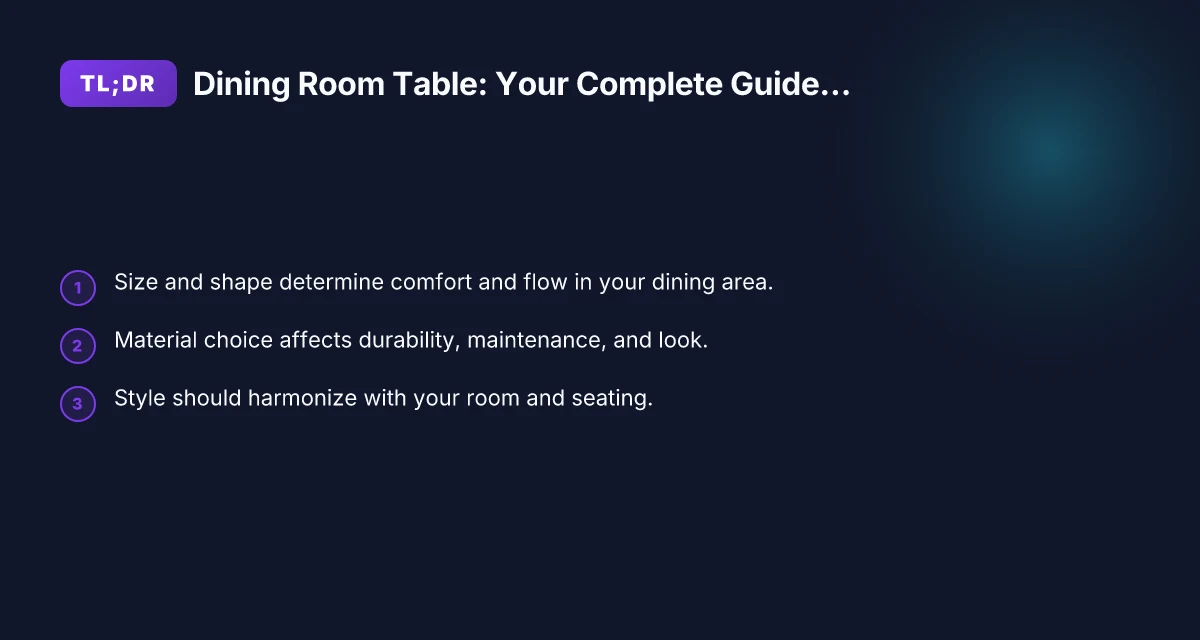
Dining Room Table: Your Complete Guide to Choosing, Caring for, and Styling the Centerpiece of Your Dining Space
Find the right dining room table for your space with practical tips on size, style, materials, and maintenance.
The dining room table is often the room’s focal point, a place for family meals, holiday gatherings, and casual get-togethers. Choosing the right table involves more than just matching a color or a number of chairs. It’s about size, shape, material, and maintenance, all tailored to your space and lifestyle. In this guide, you’ll find practical steps to select a table that fits your needs now and keeps serving you well for years to come.
Comparison by Table Shape and Flow
| Shape | Flow Impact | Seating Capacity | Best For | Notes |
|---|---|---|---|---|
| Round | Promotes conversation, center access | 4–6 | Small spaces, intimate meals | Space-efficient in tight rooms |
| Square | Equal focal area, easy pairing | 4 | Cozy dining nooks | Can feel crowded at 6 |
| Rectangle | Classic, allows longer seating | 6–8 | rectangular rooms, entertaining | Flexible extensions available |
| Oval | Softens edges, visual flow | 6–8 | narrow rooms needing longer length | Curved sides can affect placement |
| Boat/Expanding | Flexible size, adaptable | 6–12 | hosting varied guest counts | Leaves large clear area when closed |
Compiled November 2026; check the provider's site for current details.
Understanding your space and needs
Before you shop, map out the space and define how you’ll use the table most days.
- Measure the area: leave at least 36 inches of clearance around the table for comfortable movement.
- Consider the number of daily diners: think about 2–3 extra seats for guests, and how often you host larger gatherings.
- Note traffic patterns: ensure the table doesn’t block doorways or high-traffic zones.
- Decide on permanence: will the table be a fixed feature or a flexible piece that nests with other furniture?

Table shapes and how they affect flow
Table shape influences room layout, seating capacity, and traffic flow.
Common shapes and when to use them
- Rectangular: Works with most rooms and seating up to 8–12. Good for long, narrow spaces.
- Extendable drop-leaf: Flexible for small rooms. Folds down when not in use.
- Round: Encourages conversation. Fits smaller spaces but can limit seating.
- square: Great for intimate meals and square rooms. Pair with matching chairs for balance.
Practical tips by room size
- Small rooms (8–12 feet): choose a round or square table with extendable options.
- Medium rooms (12–15 feet): rectangular tables that seat 6–8 are ideal.
- Large rooms: consider banquet-style tables or long rectangular layouts with a clear visual anchor.
Materials: durability, feel, and maintenance
The material of your dining table sets the tone and determines upkeep.
- Solid wood (oak, maple, walnut): Durable, timeless, and repairable. Can be heavier and more expensive. Finishes vary.
- Engineered wood with veneer: Cost-efficient, lighter, and more stable across humidity changes. Should be protected from moisture.
- Glass: Brightens a room and creates an airy feel. Tends to show fingerprints and chips. Works best with sturdy bases.
- Metal: Modern and durable. Pairs well with minimalist or industrial styles. Can show fingerprints and scratches.
- Marble or stone: Luxurious and heat-resistant. Requires sealing and regular care. Heavier and pricier.
Maintenance quick guide: Dining Room Table Centerpieces: Ideas, Tips, and Trends to Elevate Your Space
- Wood: wipe with a damp cloth, use coasters, and apply furniture wax or oil as recommended by the finish.
- Glass: clean with a glass cleaner. Avoid abrasive pads.
- Metal: wipe with a soft cloth. Avoid acidic cleaners that can tarnish.
- Stone: seal periodically. Clean with pH-balanced cleaners. Avoid acidic substances.
Style and how to harmonize with your space
Your dining table should feel like a natural extension of the room.
- Coordinating with chairs: matched wood tones or complementary finishes create cohesion. Consider the height and style of the chairs relative to the table.
- Finish and color: lighter finishes brighten small rooms. Darker finishes add warmth and formality.
- Leg styles: trestle, pedestal, or legged bases each alter the table’s visual weight and legroom.
- Table runners and centerpieces: keep centerpieces low to preserve sight lines and conversations.
Practical features to consider
A few features can elevate daily use and long-term satisfaction.
- Extension leaves: Allow you to switch from everyday seating to larger gatherings without a new table.
- Height compatibility: Standard dining height is about 28–30 inches. Ensure chairs are comfortable at that height.
- protective finishes: consider a table with a durable finish like polyurethane or lacquer for families with kids or high-use spaces.
- storage options: some tables come with built-in drawers or shelves for napkins and placemats.
Materials and Maintenance Snapshot
| Material | Durability | Maintenance | Feel/Look | Scratches/Heat | Ideal Use |
|---|---|---|---|---|---|
| Solid wood | High | Moderate | Warm, natural | Yes (visible) | Everyday use, timeless |
| Veneered wood | Moderate | Low | Smooth, uniform | No (scratches mask) | Budget-friendly, stylish |
| Glass top | Moderate | High | Modern, bright | Fingerprints noticeable | Contemporary spaces |
| Marble | High | High | Luxe, cool | Stains, etching | Formal dining, design statement |
| Metal | High | Low | Sleek, industrial | Scratches may show | Modern interiors, high wear |
| composite/laminate | Moderate | Low | Practical | Minor wear | High-traffic homes |
Compiled November 2026; check the provider's site for current details. Dining room rugs: how to choose, place, and style them for a cohesive dining space
Comparison at a glance: table shapes, benefits, and drawbacks
| Shape | Typical Seating | Space Fit | Pros | Cons |
|---|---|---|---|---|
| Rectangular | 6–12+ | Narrow or wide rooms | Flexible, classic, easy to pair chairs | Can dominate small rooms |
| Round | 4–8 | Small to medium rooms | Conversation-friendly, softens corners | Fewer seating in long rooms |
| Square | 4–6 | Compact square rooms | Cozy, balanced look | Limited seating; may feel crowded at larger sizes |
| Oval | 6–10 | Elongated spaces | Combines round intimacy with length | More complex leg space to consider |
How to measure and plan for your space
- Start with your room’s doorway clearance and wall space. Ensure the table’s footprint doesn’t block pathways.
- Decide on a clearance of at least 36 inches around the table for easy movement. Adjust if you have a loveseat or buffet nearby.
- Use painter’s tape to visualize the table’s footprint on the floor. This helps you see how chairs move in and out.
Setting up for daily life and hosting
A well-chosen dining table adapts to everyday meals and big events alike.
- For kids and messes: choose finishes that hide minor scratches and are easy to wipe down. Consider a protective table pad for rough play or crafts.
- For entertaining: keep a set of extra chairs that fit your table’s style. Ensure you have a comfortable distance for guests to converse.
- For multi-use spaces: if the dining area doubles as a workspace or play area, choose a durable finish and consider a leafed table that can be extended or tucked away as needed.
A quick guide to assembly and care
- Assembly: many tables arrive with most components pre-assembled. Set aside a dedicated space for assembly, and use a soft cloth to wipe down pieces before putting them together.
- Regular care: dust weekly, avoid direct sunlight on the finish to prevent fading, and use a cushion or placemats to protect the surface from heat and scratches.
Practical Features to Consider
| Feature | Availability | Impact on use | Maintenance | Space impact | Notes |
|---|---|---|---|---|---|
| Extension leaves | Yes / No | Increases seating | Low / Moderate | Increases length | If you host often, choose leaves |
| Glide/soft-close legs | Yes / No | Reduces movement noise | Low | Neutral spot | Helpful with busy dinners |
| Reclaimed/upcycled options | Yes / No | Eco-friendly | Variable | Unique look | Check finishes |
| Adjustable height | Yes / No | Accessibility | Moderate | Affects chair choice | Rare, niche use |
| Rounded corners | Yes / No | Safer for kids | Low | Affects flow | Good for homes with kids |
| Integrated storage | Yes / No | Clutter control | Low | Reduces room items | Handy in small spaces |
Compiled November 2026; check the provider's site for current details.
Final recommendations: choosing the right dining room table for you
- Start with the space: measure the room, map out traffic, and determine how many people you want to seat regularly.
- Match the style: pick a material and finish that harmonizes with your existing chairs and décor. If your room leans modern, a glass or metal table with clean lines can work. For a traditional space, solid wood with a rich finish often feels right.
- Plan for life: choose a table with extension leaves if you host frequently. Consider durable finishes and practical maintenance routines to keep the table looking great year after year.
- Don’t rush on finish and proof: inspect the table’s construction for sturdy joinery, especially if you expect heavy daily use or frequent family gatherings.
- Think long-term: a table is not just a piece of furniture, it’s a centerpiece of memories. Pick something you’ll love for years to come, not just something that looks good today.
If you’d like, I can help you pick a few concrete options based on your room measurements, preferred style, and budget. I can also provide a shopping list with brand- and retailer-specific suggestions and a quick maintenance plan tailored to the material you choose. Dining room paint colors: how to choose the perfect palette for your space