Dining room chair covers: a practical guide to choosing, cleaning, and styling
A comprehensive guide to selecting, caring for, and styling dining room chair covers.
Dining room chair covers are a simple, affordable way to refresh your dining space, protect your chairs, and adapt your decor for seasons, holidays, or daily use. Whether you’re outfitting a formal dining room, a casual kitchen nook, or a catering setup, chair covers offer a flexible solution that can transform the look and feel of your seating with minimal effort. In this guide, you’ll find practical guidance on choosing the right covers, fitting them correctly, caring for them, and styling tips to get the most from your investment.
Comparison of chair cover materials by suitability
| Material | Durability | Easy to clean | Stretchability | Breathability | Best for |
|---|---|---|---|---|---|
| Polyester blends | high | easy | moderate | moderate | everyday use |
| Spandex blends | high stretch | easy | high | low | form-fitting covers |
| Cotton / cotton blend | moderate | variable | low to moderate | high | natural look |
| Velvet (polyester blend) | good | moderate | low to moderate | low | luxe styling |
Compiled November 2026; check the provider's site for current details.
Understanding the purpose of dining room chair covers
Chair covers serve several purposes, often at once:
- Protection: They shield upholstery from spills, stains, and wear, extending the life of your chairs.
- Aesthetic versatility: Covers can change color, texture, and formality without buying new chairs.
- Hygiene: In high-traffic areas or events, covers can be laundered to maintain a clean look.
- Theme and seasonality: Swap covers for holidays or seasonal decor to keep the dining space fresh.
When shopping, think about your priorities. If you have delicate fabrics on your chairs, sturdy protectors with good fit are essential. If you’re staging events, consider covers that are easy to clean and quick to put on and remove.
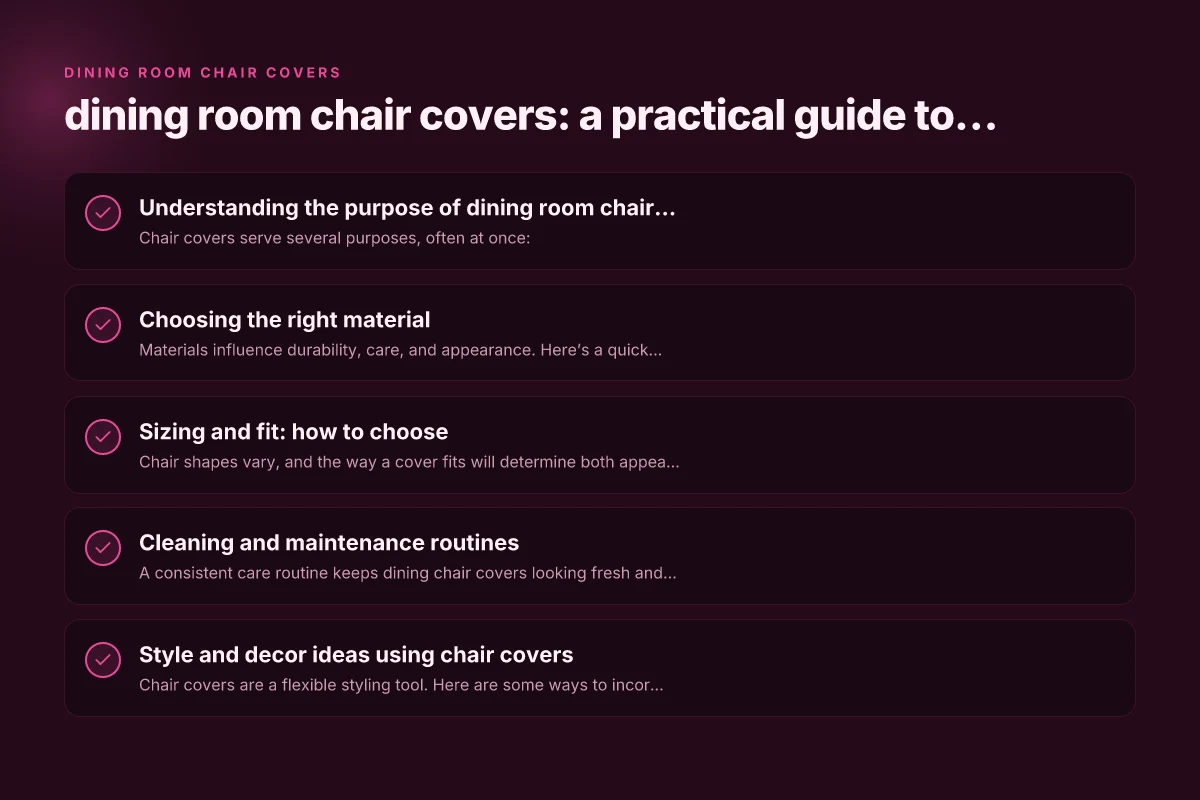
Choosing the right material
Materials influence durability, care, and appearance. Here’s a quick comparison of common options:
- Polyester: Durable, wrinkle-resistant, easy to clean, budget-friendly. Great for everyday use.
- Spandex/Stretch blends: Excellent fit on most chair shapes, smooth drape, snug appearance. Ideal for banquet or modern chairs.
- Cotton: Breathable and soft, but wrinkles easily and stains can be trickier to remove.
- Linen: Elegant, natural texture, but heavier and can wrinkle. Blends may offer easier care.
- Satin or velvet blends: For formal settings, plush look, higher maintenance, may require spot cleaning or dry cleaning.
Fit and finish matter as much as material. A high-quality cover should fit snugly, with elastic, ties, or Velcro that keep it in place without bunching. If you’re unsure about durability, read product reviews and check the fabric weight (measured in GSM or ounces per yard). Dining Room Buffet: A Complete Guide to Choosing, Styling, and Using This Classic Piece
Sizing and fit guide for chair covers
| Chair type | Back height | Seat depth | Coverage options | Fit type | Notes |
|---|---|---|---|---|---|
| Chair with standard back | 16–20 in | 15–18 in | Fitted / Tuck-in | snug | check corners |
| High-back dining chair | 22–26 in | 16–18 in | Fitted / Elastic | snug | secure with ties |
| Bar stool variant | 24–28 in | 14–16 in | Slip-on / Elastic | moderate | avoid overhang |
| Wooden frame with arms | 19–23 in | 16–19 in | Fitted | snug | arm coverage required |
| Parson chair | 18–22 in | 18–20 in | Fitted | snug | straight sides |
Compiled November 2026; check the provider's site for current details.
Sizing and fit: how to choose
Chair shapes vary, and the way a cover fits will determine both appearance and practicality. Consider these factors:
- Chair type: Upholstered dining chairs with a back and seat, ladder-back chairs, or armless chairs each require different cover designs.
- Seating depth and height: Some covers are “box” styles that drape over the back and seat. Others are fully enclosive with separate seat covers.
- Elastic vs. tie closures: Elastic hems offer quick fit. Ties allow more precise adjustment but take time to secure.
- Back contour: If your chair back has a curve, ensure the cover accommodates it without slipping or causing wrinkles.
- Coverage level: Full chair covers that extend to the legs provide the most protection, while slipcovers that only cover the back or seat offer a lighter update.
Tip: always measure before purchasing. Record width, depth, and height of the chair, plus the thickness of the back cushion if applicable. Dining Room Bench: A Practical Guide to Style, Size, and Comfort
Cleaning and maintenance routines
A consistent care routine keeps dining chair covers looking fresh and extends their life. Here’s a practical plan:
- Daily care: Blot spills immediately with a clean cloth. Avoid rubbing that can embed stains.
- Stain treatment: Spot-treat as soon as possible with a mild detergent solution or a fabric-safe stain remover. Test on an inconspicuous area first.
- Washing guidelines: Check the care label. Most polyester and blends are machine washable on gentle cycles with cold water. Use a mild detergent and avoid bleach unless advised.
- Drying: Air-dry when possible to minimize shrinkage and fabric wear. If you use a dryer, choose a low heat setting.
- Ironing: If needed, iron on a low setting or use a steamer to remove wrinkles. Some fabrics, like blends, resist wrinkles better than cotton.
- Storage: Fold clean covers and store in a dry place. Use breathable containers to prevent musty odors.
Pro tip: designate a “dining room cover” washing day so you rotate clean versus in-use covers. This is especially helpful for households with kids or frequent entertaining.
Cleaning and maintenance routines by fabric type
| Fabric type | Stain treatment | Washing method | Drying | Frequency | Special notes |
|---|---|---|---|---|---|
| Polyester | spot clean | machine wash cold | air or tumble low | weekly to monthly | mildew resistant |
| Cotton | pretreat stains | machine wash warm | line dry | every use after spill | wrinkles prone |
| Velvet mix | blot spills | professional cleaning | lay flat | quarterly | avoid heat |
| Linen blend | blot and dab | hand wash / delicate | air dry | seasonal | color fade risk |
| Spandex | rinse and wipe | hand wash | air dry | as needed | keep shape |
Compiled November 2026; check the provider's site for current details. Dining Chairs: Everything You Need to Know to Choose the Right Seat
Style and decor ideas using chair covers
Chair covers are a flexible styling tool. Here are some ways to incorporate them into your design:
- Color coordination: Match or contrast with your table linens, curtains, or wall color to unify the space.
- Pattern mixing: Combine solid covers with subtly patterned runners or placemats for visual interest.
- Texture play: Velvet or sateen covers add luxe texture to a casual room. A matte cotton or linen blend creates a lighter, breezy vibe.
- Seasonal updates: Use lighter colors for spring, warm tones for autumn, and festive hues for holidays.
- Event-friendly looks: For weddings or banquets, choose covers with tight fits and crisp pleats to achieve a polished silhouette.
If you’re unsure about color choices, start with a neutral base (like charcoal, taupe, or ivory) and layer with colorful accents in napkins, candles, and centerpieces.
A practical comparison: what to consider when shopping
This quick table helps you compare common chair cover options. Note that exact features vary by brand, so always check product specs.
| Feature | Full chair cover (elastic) | Full chair cover (ties) | Back-only cover | Seat cushion cover |
|---|---|---|---|---|
| Fit style | Snug, elastic edge | Adjustable, secure | Not covering legs | Covers seat cushion only |
| Ease of use | Fast, simple | Slower, precise | Quick, minimal coverage | Quick to swap |
| Typical fabrics | Polyester blends, spandex | Polyester blends, stretch | Linen, cotton blends | Polyester, cotton blends |
| Protection level | High (full chair) | High (full chair) | Moderate | Moderate |
| Maintenance | Easy, machine wash | Easy, machine wash | Easy to wash if fabric-friendly | Easy to wash, stain-prone |
| Ideal for | Daily use, events with quick turnover | Formal events, banquet seating | Light refresh, rental wear | Accent or seasonal updates |
If you run a venue or host frequent gatherings, consider having a uniform set of covers for a cohesive look. You might also keep a few spare chair covers in a slim, vertical storage bag to save space and simplify event setup. Desk Chairs: How to Choose the Best Desk Chairs for Comfort and Productivity
How to care for sensitive or luxury fabrics
If you own chairs with delicate upholstery or you’re aiming for a high-end look with velvet or satin covers, care becomes more specialized:
- Read care labels carefully. Some fabrics require dry cleaning or professional cleaning.
- Use fabric protectors that are compatible with the specific material. Reapply as directed.
- Prefer cold water washing and air drying to minimize fiber damage.
- Avoid high heat when ironing. Use a steamer to remove wrinkles without crushing fibers.
- Spot-clean immediately to prevent staining from coffee, wine, or sauces.
For rental settings or high-end venues, schedule regular professional cleanings and have a backup stock of covers to swap in when needed.
Practical buying checklist
Before purchasing dining room chair covers, tick off these essentials:
- Chair type and dimensions: Measure height, width, depth, and back curvature.
- Fit type: Elastic edge, ties, or fully enclosed cover.
- Fabric choice: Consider durability, ease of cleaning, and how it complements your decor.
- Care instructions: Ensure you’re comfortable with washing and drying cycles.
- Color and pattern: Determine how it will interact with your table, rug, walls, and accessories.
- Availability of sizes or universal fit: Some covers are designed to fit a range of chairs. Others are chair-specific.
- Return policy and warranty: Check for coverage on wear and tear and colorfastness.
Final recommendations
If you’re new to chair covers, start with a practical baseline: a neutral, durable polyester with elastic edges. It offers easy care, a clean look, and broad compatibility with most dining chairs. As you gain confidence, experiment with a second color or a subtle pattern to refresh the room without a full redecorating project. If your dining space sees frequent entertaining, consider investing in a small set of high-quality covers for comfort and aesthetics, plus a larger stock of casual covers for everyday use. Design set of the best unique chandelier for you
For homes prioritizing elegance, velvet or satin-back covers in a coordinated palette provide a refined look, paired with matching napkins and runners. For family-centric spaces, cotton blends with a wipe-clean finish balance softness with practicality.
In summary, dining room chair covers are a versatile, affordable way to protect chairs and redefine your dining space with minimal effort. By choosing the right material and fit, following sensible care routines, and styling thoughtfully, you can enjoy a refreshed dining room that suits every occasion.