Chair
A comprehensive guide to choosing, using, and caring for chairs for comfort, style, and health.
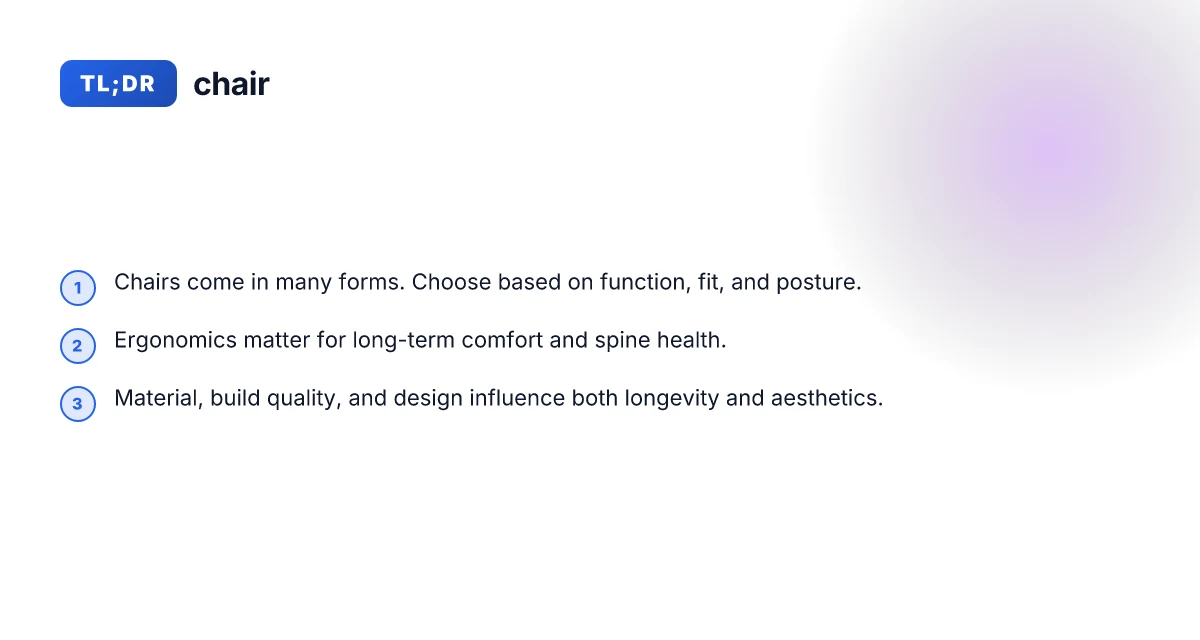
The chair is more than a seat. It is a tool that supports your body, sets the tone of a room, and can influence productivity, posture, and mood. Whether you’re shopping for an office, dining room, living space, or outdoor area, understanding the different types of chairs, how they work with the body, and how to care for them will help you make a choice that lasts. This guide breaks down the essentials: what to look for, how to compare options, and practical tips to keep your chairs looking and feeling great.
Table of chair comfort and support features
| Feature | Description | Typical Impact | Notes |
|---|---|---|---|
| Lumbar support | Lower back curve support | High | Adjustable preferred |
| Seat depth | Front to back length | Medium | 14–18 inches common |
| Seat height range | Floor to top of seat | High | 16–21 inches common |
| Armrests | Presence and adjustability | Medium | 3D adjust recommended |
| Backrest recline | Range of tilt | Medium | 105–135 degrees common |
| Padding firmness | Cushion hardness | Medium | Medium-firm favored |
| Material breathability | Ventilation of seat/back | Medium | Mesh or perforated fabrics preferred |
| Height adjustability | Pneumatic or lever control | High | Easy fine-tuning |
| Build sturdiness | Frame durability | High | Steel or reinforced alloys |
| Mobility | Swivel vs fixed | Medium | Swivel aids reach |
Compiled November 2026; check the provider's site for current details.
What makes a chair comfortable and supportive
A truly good chair fits your body and your tasks. Comfort isn’t a luxury, it’s a design requirement that can prevent discomfort and long-term problems like back pain. Key factors to consider:
- Ergonomics: Seat depth, seat height, and lumbar support should align with your body. A chair that is too high or too low can cause knee strain or slouching.
- Posture alignment: A backrest that supports the natural curve of the spine, with adjustable tilt and lumbar support, helps maintain a healthy posture.
- Materials: Cushioning matters. A firm but forgiving seat, breathable fabric or mesh, and a backrest that doesn’t overheat your back are important.
- Mobility: Swivel, casters, and adjustable arms can enhance reach and reduce awkward twisting.
- Stability: A sturdy base with enough legs or a broad base prevents tipping, especially for adults who lean forward.
Consider your primary use: long desk work, casual computer sessions, dining, or occasional seating. A chair that excels in one setting may not be ideal in another, so many households maintain a mix of chairs tailored to each task.
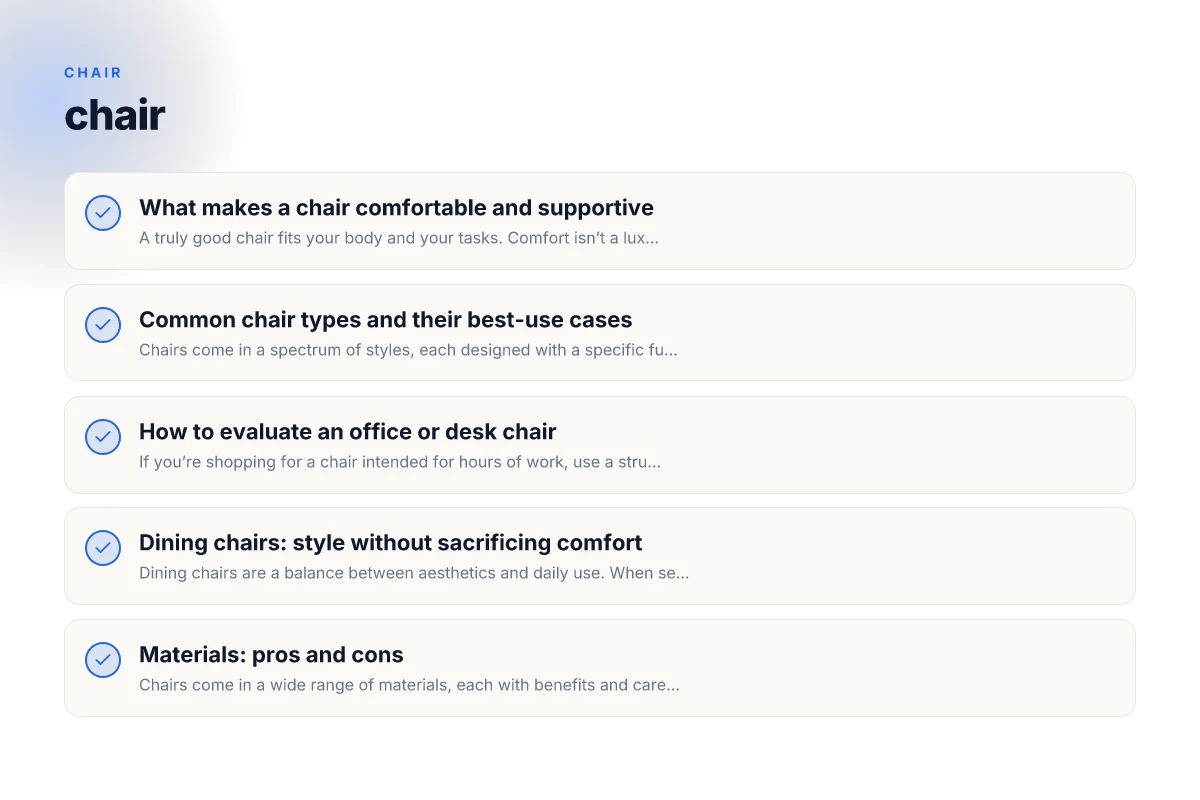
Common chair types and their best-use cases
Chairs come in a spectrum of styles, each designed with a specific function in mind. Here’s a quick guide to help you map needs to options.
- Ergonomic office chair: Best for long hours at a desk. Look for adjustable seat height, lumbar support, adjustable armrests, and a breathable upholstery.
- Task chair: Lighter and more compact than a full ergonomic chair, suitable for short to moderate periods of seated work.
- Dining chair: Focus on comfort and aesthetics. You’ll want a chair with a comfortable seat height relative to the table, supportive back, and easy-to-clean materials.
- Accent chair: A styling piece that can be used in living rooms or bedrooms. Comfort can vary. Prioritize upholstery and back support for casual use.
- Lounge chair: Deep, relaxed seating for relaxation or reading. Often features a reclined angle or lounge stance, with plush cushions.
- Stool: Versatile for high counters or bar areas. Backless stools save space but may not be ideal for prolonged seating.
- Patio chair: Weather-resistant materials for outdoor use. Look for rust-proof hardware and fabrics that resist fading.
- Rocking chair: Gentle movement can aid relaxation or soothing babies and elders. Ensure the rocker glides smoothly and safely.
- Kneeling or chairs for special needs: Designed to encourage a more upright posture. Selection should be guided by a clinician or ergonomic expert.
Table: chair types and best-use cases Understanding chair lift cost: what you need to know before buying or renting
| Chair Type | Best Use Case | Pros | Cons |
|---|---|---|---|
| Ergonomic office chair | Long workdays, adjustable support | Strong support, customization | Heavier, pricier |
| Task chair | Shorter tasks, mobility | Lightweight, affordable | Minimal support often |
| Executive chair | Executive spaces, formal work | Plush comfort, prestige | Bulkier, less breathable |
| Drafting chair | High desks, occasional use | Tall seating, adjustable height | Narrow seat, limited support |
| Dining chair | Dining spaces, social meals | Style, comfort for short sits | Not desk-focused support |
| Stool | Perimeter tasks, standing desks | Simple, portable | No back support |
Compiled November 2026; check the provider's site for current details.
How to evaluate an office or desk chair
If you’re shopping for a chair intended for hours of work, use a structured checklist. It helps you compare models objectively and avoid common pitfalls.
- Height range: Can you sit with your feet flat on the floor and thighs at a 90-degree angle?
- Seat depth and width: Is there at least an inch or two of space behind your knees? Is the seat wide enough for your hips?
- Lumbar support: Is there adjustable lower-back support that fits the curve of your spine?
- Backrest: Does it support a comfortable recline without breaking your posture?
- Armrests: Are they adjustable in height and width to keep shoulders relaxed?
- Tilt and stiffness: Can you adjust tilt tension and lock it in place for preferred posture?
- Materials: Is the fabric breathable? Does the foam maintain shape after extended use?
- Footprint and wheel type: Do you need carpet-friendly wheels or a chair with a gliding base to minimize desk-to-chair friction?
- Assembly: Is it straightforward, or will you need tools and a helper?
- Warranty: What does the manufacturer cover, and for how long?
To make the shopping process smoother, many retailers provide test periods or in-store demos. If you can try before you buy, you’ll understand comfort in a practical setting rather than guessing from specs alone.
Dining chairs: style without sacrificing comfort
Dining chairs are a balance between aesthetics and daily use. When selecting dining seating, consider: Chair covers: everything you need to know to choose, use, and care for them
- Table height compatibility: The standard dining table height is around 28 to 30 inches (71 to 76 cm). Aim for a chair seat height of about 18 inches (46 cm).
- Seat shape: A contoured seat can reduce fatigue on the back of the thighs and hips.
- Back support: A gentle backrest supports posture without imposing discomfort during long meals or conversations.
- Materials and care: Wood and upholstery differ in durability and cleaning needs. A wipeable surface is advantageous in households with kids or pets.
- Stackability or storage: If you have a small space, consider chairs that nest or stack.
When you mix chairs at a dining table, think about a unifying theme, whether it’s material, color, or silhouette, to maintain visual harmony.
Table: quick evaluation checklist for chairs
| Criterion | Yes/No/Notes | Example of good cue | Priority (1-5) |
|---|---|---|---|
| Adjustable seat height | yes | Gas lift lever | 5 |
| Adjustable lumbar support | yes | Adjustable lumbar | 4 |
| Seat depth adjustability | yes | Depth slider | 3 |
| Backrest height adjustability | yes | Height adjust | 3 |
| Armrest adjustability | yes | 3D arms | 3 |
| Breathable material | yes | Mesh | 2 |
| Weight capacity | yes | 250+ lbs | 4 |
| Warranty length | yes | 5+ years | 3 |
| Return policy | yes | 30–60 days | 2 |
| Stabilizer base | yes | Five-point base | 3 |
Compiled November 2026; check the provider's site for current details.
Materials: pros and cons
Chairs come in a wide range of materials, each with benefits and care requirements. Captivating relaxing bedroom color schemes pertaining to the house
- Wood: Classic, sturdy, and versatile. Pros include durability and range of finishes. Cons can be weight and susceptibility to moisture or scratches.
- Metal: Modern, strong, and often stackable. Pros include longevity and industrial vibes. Cons can be hard seats and less warmth.
- Upholstery: Fabric, leather, or faux leather can boost comfort. Pros include softness and insulation. Cons include staining and cleaning needs.
- Plastic or molded materials: Lightweight and often budget-friendly. Pros include easy cleaning and color variety. Cons may include speed-wearing or less durability over years.
- Outdoor materials: Teak, rattan, aluminum, resin wicker, and weather-resistant fabrics. Pros include weather resistance. Cons can include fading or temperature sensitivity.
Care tips by material:
- Wood: Wipe with a damp cloth, avoid excessive moisture, re-finish or seal as needed.
- Fabric: Vacuum regularly. Treat stains promptly. Use fabric protectant if recommended by the manufacturer.
- Leather: Clean with a damp cloth. Condition periodically to prevent cracking.
- Metal: Wipe to remove fingerprints. Check for rust and tighten hardware as needed.
- Plastic: Clean with mild soap and water. Avoid abrasive cleaners.
A quick comparison: ergonomic office chair vs. task chair
| Feature | Ergonomic Office Chair | Task Chair |
|---|---|---|
| Adjustability | High: seat height, depth, back, arms, tilt | Moderate: height, back, possibly arms |
| Back support | Contoured lumbar support, often adjustable | Basic or minimal lumbar support |
| Cushioning | Medium to firm with breathable fabric | Lighter, flexible foam; less padding |
| Footprint | Wider base for stability | Smaller, more portable |
| Typical use | Long hours at a desk | Short to moderate tasks |
| Price range | Moderate to high | Budget to mid-range |
| Ideal user | People who spend most of the day seated | Those needing a simple, flexible seating option |
This table helps clarify when you might choose one over the other. If your day includes many hours at a desk, investing in an ergonomic chair often pays off with long-term comfort and reduced fatigue.
Caring for and maintaining chairs
A chair that lasts looks good and functions well longer. Simple care goes a long way:
- Regular cleaning: Vacuum fabric upholstery to remove dust and debris. Wipe wooden or metal frames with a damp cloth and mild cleaner as appropriate. Avoid harsh chemicals that can damage finishes.
- Protective measures: Use chair mats on carpeted floors to protect wheels and floors. Place seat cushions or covers in households with kids or pets to preserve fabric.
- Tightening and inspection: Periodically check screws, bolts, and armrests for looseness. Tighten as needed to prevent wobble and stress on joints.
- Storage and rotation: If you own multiple chairs, rotate use to evenly wear cushions and finishes. For seasonal outdoor chairs, store in a dry place to prevent moisture damage.
- Repair and refinishing: Minor repairs, like reupholstering a seat or refinishing a wood chair, can extend life significantly. Consider professional services for large repairs.
Final section: recommendation
If you’re shopping for a single chair for a busy desk setup, start with an ergonomic office chair that offers adjustable height, lumbar support, adjustable armrests, and breathable upholstery. It’s a sound investment that supports posture, reduces fatigue, and accommodates long workdays. If you prefer dining or social spaces, prioritize a chair with a comfortable seat and supportive back that matches your table height and room style. For homes with diverse needs, mix and match thoughtfully: one ergonomic chair for work, several dining chairs for meals, and a couple of accent or lounge chairs for relaxation. For outdoors, choose weather-resistant materials designed to withstand sun, moisture, and temperature swings. Captivating loft bedroom ideas pertaining to found residence
No matter the choice, measure your space, test the fit, and consider both function and aesthetics. A chair is not just a place to sit. It’s a foundation for comfort, health, and daily productivity. By prioritizing fit, build quality, and care, you’ll enjoy a chair that serves you well for years to come.