
Antique bedroom furniture: how to choose, restore, and style timeless pieces
A practical guide to selecting, restoring, and styling antique bedroom furniture for lasting beauty.
Antique bedroom furniture can transform a room by adding history, craftsmanship, and a sense of scale that modern pieces often lack. Whether you’re starting from scratch or curating a room full of heirlooms, the goal is to find pieces that speak to your style while remaining functional for today’s use. This guide covers how to choose, restore, and style antique bedroom furniture so it remains both beautiful and practical.
Table for Understanding what counts as "antique" furniture
| Criterion | Common definitions | Regional variance | Typical age range | What to look for | Notes |
|---|---|---|---|---|---|
| Official age threshold | 100 years (common US standard) | May vary by country | 100+ years | Verify date on label or maker mark | Some sources use 80+ or 50+ for “antique-looking” |
| Construction style | Handcrafted joinery | Factory vs. artisan | Traditional methods | Dovetails, mortise & tenon, hand-planed surfaces | Machines may lack craftsmanship signs |
| Material quality | Solid wood preferred | Veneered surfaces possible | Hardwood or fruitwood common | Solid frame, visible grain, absence of plywood edges | Veneers can still be authentic antique feel |
| Provenance cues | Documentation helps | Local trade routes differ | Known maker or era | Labels, stamps, receipts, photos | Gaps don’t exclude value, but affect price |
| Ending dates for “antique” | 20th century often debated | European vs. American dates | 1900s–1930s often targeted | Distinct hardware styles | Define your target before purchase |
Compiled November 2026; check the provider's site for current details.
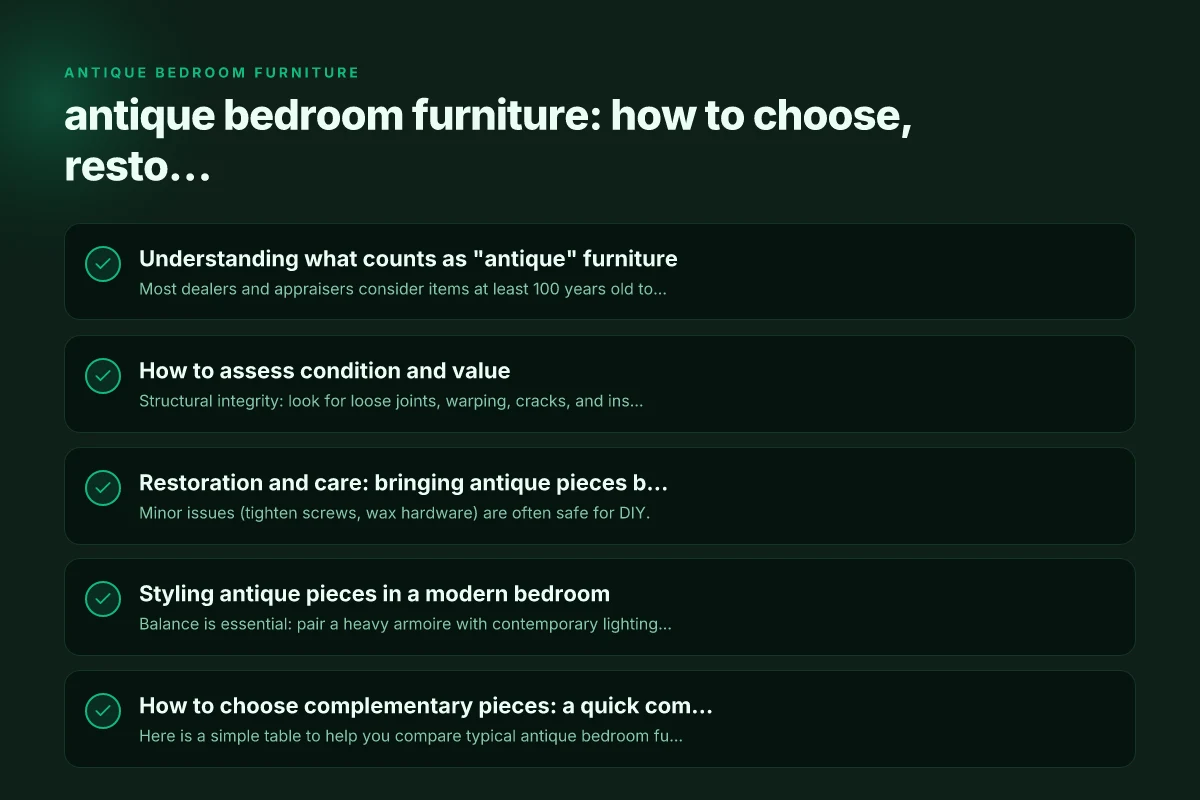
Understanding what counts as "antique" furniture
What qualifies as antique?
- Most dealers and appraisers consider items at least 100 years old to be antique.
- Pieces from the early 20th century (Edwardian, Art Deco) may be labeled antique in some contexts, but design historians often call them vintage or period pieces depending on the era.
- Reproductions exist. Verify age through software labels, maker stamps, hardware, and construction methods.
Common era markers to look for
- Solid wood construction and hand-cut dovetails
- Original brass or iron hardware with patina
- Hand-carved details, tool marks, and signs of traditional joinery (mortise and tenon)
- Finish wear consistent with age, not artificially distressed
How to assess condition and value
Key factors that influence price and longevity
- Structural integrity: look for loose joints, warping, cracks, and insect damage.
- Finish and patina: a well-worn finish can indicate authenticity, but severe damage may require expert restoration.
- Proportions and scale: ensure the piece fits your room and complements other furniture.
- Provenance: any documentation, maker stamps, or family history adds value.
Quick condition checklist
- Joints are solid with no wobbly parts
- Drawers slide smoothly. No sticking or misalignment
- Hardware is present and functional or can be restored
- Surfaces show only minor scratches or clear patina rather than deep gouges
- No active woodworm or pest damage
Restoration and care: bringing antique pieces back to life
When to restore, and when to preserve
- Minor issues (tighten screws, wax hardware) are often safe for DIY.
- Structural repairs (broken rails, major splits) may require a specialist.
- Finishes: stripping old varnish is rarely necessary. Refinishing alters value and should be done thoughtfully.
Basic restoration steps for common pieces
- Clean gently with a soft cloth and mild soap solution to remove grime.
- Stabilize loose joints with appropriate excepting wood glue. Clamp until dry.
- Repair drawers and runners with proper slides that match original hardware dimensions.
- Treat for pests if there are signs of infestation.
Finishes and patina: maintain authenticity
- Avoid heavy sanding. Prefer spot refinishing to maintain original patina.
- If refinishing is unavoidable, document the process for provenance.
- Choose finishes that protect the wood while highlighting grain, such as wax or low-sheen polyurethane.
Tools and materials you may need
- Soft brushes, microfiber cloths, cotton swabs
- Wood glue, clamps, brass brushes for hardware
- Mild soap, mineral spirits, and appropriate cleaners
- Wood conditioner and compatible stain if color matching is needed
Table for Assessing condition and value
| Item aspect | Excellent | Good | Fair | Poor | Notes |
|---|---|---|---|---|---|
| Structural integrity | No loose joints | Minor tightening needed | Visible wobble | Broken/needs restoration | Check for cracks in legs or frame |
| Finish condition | Original gloss intact | Surface wear, faded | Moderate flaking | Severe finish loss | Scratches vs. finish layers matter |
| Hardware state | Original, functioning | Replacements minimal | Missing or damaged | Modern substitutes | Brasses, pulls, hinges matter value |
| Upholstery (if applicable) | Clean, original fabric | Reupholstery recommended | Torn or stained | Requires full reupholstery | Consider cost vs. value |
| Veneer/panel condition | Minimal lifting | Light bubbling | Peeling veneer | Severe warping/repair | Veneer repairs add cost |
| Overall value indication | High collector/functional | Moderate value | Market-adjusted | Low for age | Compare with similar listings |
Compiled November 2026; check the provider's site for current details.
Styling antique pieces in a modern bedroom
Creating harmony between old and new
- Balance is essential: pair a heavy armoire with contemporary lighting or a sleek bed frame.
- Use a cohesive color palette to unify disparate periods.
- Mix textures: linen, wool, and cotton fabrics complement wood tones beautifully.
Recommended layout ideas
- Feature wall: place a tall dresser or chest against a focal wall with simple mirrors or art.
- Bedside symmetry: matching nightstands or a single, well-proportioned piece on each side.
- Seating area: if space allows, include a vintage chair or bench at the foot of the bed for function and style.
Fabrics and color palettes that work well
- Muted tones like warm grays, soft blues, and cream allow wood grain to stand out.
- Rich jewel tones for pillows and textiles add depth against antique wood.
- Natural fiber rugs (jute, sisal, wool) anchor the space without competing with wood detail.
How to choose complementary pieces: a quick comparison
Here is a simple table to help you compare typical antique bedroom furniture pieces by function and care needs.
| Piece | Function | Typical wood types | Care considerations | Styling notes |
|---|---|---|---|---|
| Dresser/Chest | Storage of folded clothes; focal point in the room | Solid oak, walnut, cherry, maple | Clean with dry cloth; wax finishes; avoid water damage | Pair with a large mirror to enhance light and space |
| Bed frame (headboard/footboard) | Sleeping surface and room anchor | Oak, mahogany, maple; sometimes veneers | Check joints; avoid heavy, abrupt movement | Choose a bed height that suits ceiling height and proportion |
| Nightstands | Nighttime storage; surface for lamp | Maple, walnut, birch | Gentle cleaning; hardware maintenance | Match leg style to the bed for cohesion |
| Armoire/Wardrobe | Clothes storage; adds vertical presence | Walnut, oak, chestnut | Inspect doors, hanging rails; avoid overloading | Use as a statement piece or niche storage behind doors |
| Vanity/ desk | Personal grooming or work surface | Mahogany, cherry, pine | Mirror integrity; drawers glide smoothly | Pair with a curved or ornate mirror for elegance |
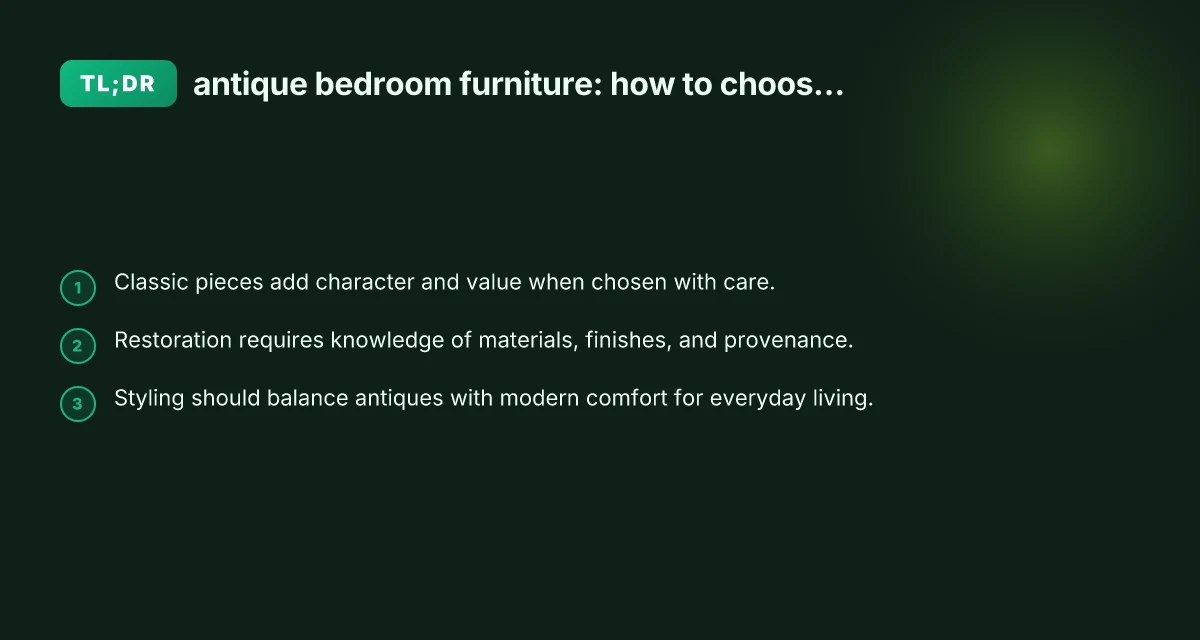
Table for quick comparison of styling and integration Antique bedroom furniture: a complete guide to choosing, caring for, and styling timeless pieces
| Piece category | Traditional heavy oak | Light Refined veneer | Painted historical | Modern reinterpretation | Notes |
|---|---|---|---|---|---|
| Aesthetic vibe | Stately, carved | Sleek, subtle grain | Vintage pastel | Bold contrast, minimal lines | Pick to match room mood |
| Fit with modern bedroom | Moderate | Easy | Varied | Very compatible | Ensure scale matches room |
| Maintenance ease | Moderate | Easy | Moderate | Easy | Finish protection matters |
| Versatility | High for classic decor | Flexible with color | Limited to style era | High, adapts well | Consider future redecoration |
Compiled November 2026; check the provider's site for current details.
Provenance, value, and how to negotiate purchases
What to ask when buying
- Where was the piece made, and who was the maker (if identifiable)?
- Are there any repairs, replacements, or restorations?
- Do you have documentation or ownership history?
Tips for negotiating
- Know the market value for the era and condition. Use comparable listings.
- Be prepared to walk away if the price isn’t fair for the piece’s condition.
- Consider commissioning a professional appraisal for high-value items.
Where to buy wisely
- Reputable antique stores with clear return policies.
- Estate sales or auctions with cataloged items.
- Verified dealers who provide provenance and condition reports.
A short guide to maintenance and ongoing care
- Dust regularly with a soft cloth. Avoid abrasive cleaners.
- Use coasters and pads to protect surfaces from moisture and heat.
- Control humidity to prevent wood from drying or warping. Consider a humidifier in dry climates.
- Rotate textiles and decorative items to prevent uneven wear on finishes.
The final recommendation: what to buy for lasting impact
If you’re new to antique bedroom furniture, start with a single, well-chosen piece that resonates with your style and room scale. A sturdy dresser or a substantial bed frame in a compatible wood tone offers immediate presence without overwhelming the space. As you grow your collection, add complementary pieces that share a common wood family or finish, and gradually introduce period details through hardware, mirrors, or seating. Prioritize pieces with authentic construction and a proven history, but don’t shy away from tasteful restoration or sympathetic updates that preserve integrity while enhancing daily usability.
In short: antique bedroom furniture can be both a practical storage solution and a timeless design statement. Choose pieces with solid construction and authentic details, restore thoughtfully, and style them with modern comfort in mind. With care, your antiques will age gracefully and continue to bring character and warmth to your bedroom for generations.